The story so far: researching the history of my car

When I got my car I was lucky in that it was accompanied by a lot of paperwork, but I wanted to know more about who owned it, and where it had lived, so in 2022 I applied to obtain a Heritage Certificate from the British Motor Museum, who preserve records from a number of British car manufacturers.
Aside from the obvious information such as car make/model and year of first registration which you will already have on your V5 document, heritage certificates tend to list information such as original chassis number, engine number, original paint colour, specs of factory fitted equipment, and depending on the detail of the records kept may contain other interesting information or parts numbers. Of particular interest to me was the date of manufacture, as I suspect my car to be a 1963 build rather than 1964, when it was registered.

Unfortunately the response I received from the museum’s archivist was that the factory records for my vehicle had not survived. I was a little disappointed by this, so since then I have endeavoured to find out what I could by other means.

What did I already know?

To start at the very beginning, being a Morris 1000 saloon means it came from the Cowley plant on the outskirts of Oxford. (Today a portion of the site continues to produce the BMW Mini)
Cowley was the home of Morris Motors from 1913, and by 1964 the plant had a 12,000-strong workforce and boasted 250 strikes a year.

I knew the date of first registration, as detailed on the V5 document: 22/01/1964

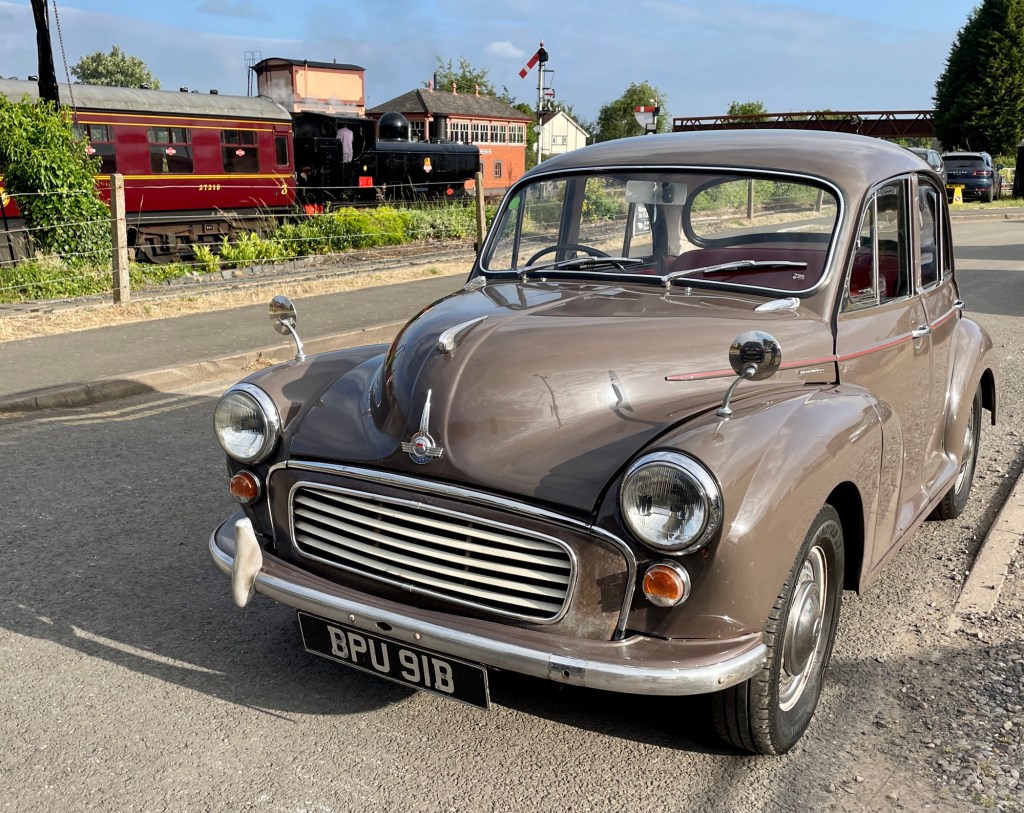
I also knew roughly where my car was first registered, as signified by the letters PU in the number plate, which represent Chelmsford, the county town of Essex. All cars registered in Essex at the time would have had this regional identifier, so I still wanted to narrow this down further.

The breakthrough and the documents

This was actually the last piece of information I obtained, but chronologically it’s the earliest information available about the car, so we’ll start with that; Following the advice of another member of the Morris Minor Owners Club young members branch, I contacted the Essex record office, and was (for a fee) able to get a certified copy of a ledger from 1964 showing who the car was purchased by, their address, the chassis number, and who the sales agent was.
This revealed that first owner was a D W.F Cobbett of Brentwood, and that the car was purchased from a local garage called Savages, less than a 5 minute walk away from their home address.

One of the few photos of Savage’s of Brentwood, taken in 1964 with the staff present. From what I can tell the garage was primarily a Vauxhall dealership.
This is where my car was originally purchased. Unfortunately the building was demolished and the site is now home to a number of flats.

I was lucky enough that my car came with quite a lot of paperwork. I looked through all of the historic documentation and then filed it in chronological order, entered the information I had available to me on each document into a spreadsheet, and worked out where the car had undergone MOT tests, services and repairs, to track where it had moved around. This gave me a base to work from, and gaps in the timeline to fill. The V5 document tells me how many previous owners the car had, and I was able to match up the more significant changes of location with when the car most likely changed hands.

I also used the MOT records to construct a graph showing how much use the car got over time. Exciting stuff!

I entered all of the MOT certificate mileage data into a spreadsheet and created this graph. My car passed 100,000 miles in 2006 and went for another 25,660 before the odometer’s mechanism seized up in 2018.

As the car stayed in southern Essex until the 1990s I then contacted a few Facebook groups dedicated to local history in the areas that cropped up in my research, and several people were able to identify the locations of these garages and provide further information.

The earliest original document I have is from Shenfield Park Garage in 1970, only half a mile away from where the car was bought. This certificate is likely to have been for it’s first MOT. At the time the MOT test wasn’t very thorough at all, and when introduced for the first time in 1960 as a voluntary measure it only examined brakes, lights, and steering, as represented by the three triangles in the MOT logo. In 1968 a tyre check was introduced.

Unfortunately I can not find much information about Shenfield Park Garage.

MOTs and old garages

I had only enquired where the garage was on one of the groups, however, with only 5002 miles on the Odometer at the time, it was passed by the mechanic Harold Nightingale, who I was informed by a Shenfield local was an umpire at Hutton cricket club.
Shenfield Park Garage was located next to the recently demolished Eagle and Child pub on the A1023, which was the main road in the area prior to the Brentwood Bypass. No photo seems to exist of the garage and the site is now being redeveloped for housing.

Somewhat oddly the next year’s MOT test was done at Fore Street Garage in Morchard Bishop, Devon; This time with 11,177 miles on the clock. This garage went out of business years ago, and by some accounts as early as the 1980s, but the building survived until around 2009, when it was demolished to make way for houses.

Now demolished: Fore Street Garage, Morchard Bishop

I can only imagine that this MOT in Devon was done whilst on a holiday. From 1972 ’til 1976 the MOT was carried out by Hammond Motors LTD, Frinton-on-Sea, back in Essex.

On the 1975 and ’76 service documents the owner is noted as Miss Cobbett. Before I obtained the record from the Essex records office this was the earliest mention of an owner in my documents, although I now know that she was the first owner.

The service document shows the car was serviced in Frinton-on-sea at Hammond Motors LTD.
Unfortunately this garage was demolished in the mid 1980s and the site is now home to residential flats.

As you can see from these photos, Hammond’s garage was an extensive site that at one time offered almost everything the early motorist could require, including secure indoor car parking for visitors to the seaside town, servicing and repairs, and fuel pumped at the roadside. As seems to be a common theme with these old garages, this place too has been demolished and is now home to housing, in the form of Hammond Court flats.

In 1977 and 1978 the MOT was carried out at Maldon Road Garage in Colchester (which as of 2024 still survives in it’s original location at Number 84), and then up till 1986 the car underwent regular MOTs every year at Vernon Haddock Cars of Ardleigh, less than 5 miles away from Maldon Road.


1987 is the next mention of a different owner on the paperwork, where a Mr Perry is referenced, and at this time the car’s MOT shows a move west of Chelmsford, to Stanway, first at Alford Garage, then Barrons service station in 1988, The Stratford garage in Stratford St. Mary for 1989 and 1990, back to Barrons in 1991 where Mrs Perry is on the documents, and finally the car is tested at Mile End Garage in Nayland Road, Colchester in 1992 where Mr Perry is once again mentioned.

Still going: The art deco frontage of Barrons garage


No documents seem to exist from 1993 or 1994, but whilst I was researching the car’s origins I was contacted by a family history researcher, who told me he believed the car may have belonged to Stanley William Perry and Lilian Perry of nearby Fordham Heath. Lilian died in April 1992, which explains the car being off the road for the next couple of years.
The car pops up again in 1995 and 1996 at Brian Holmes Auto Repairs, in Ramsey, Essex, and in 1997 was MOT’d at Park Row Garage, Greenwich, London, quite literally in the shadow of Greenwich Power Station, the emergency power source for the London Underground and parts of the National Grid.


In 1989 the car appears to have been in Shadoxhurst, Kent, and then in 1999 at the old British Railway works in Ashford. It’s stay in Kent was brief however.

Demolished: Shadoxhurst Garage, which is now the location of a new housing estate


In 2000 the car was acquired by Caroline Hall of St Albans, who owned the car right up to September 2015. Of all the previous owners she probably did the most to keep the car on the road, and kept documentation for all spare parts, services, MOTs and repairs made to the vehicle throughout that time.

Conclusion: what did I learn from this?

Nothing groundbreaking.
Did I find out the build-date of my car in the end? Unfortunately not – but it is almost certainly a ‘63 car.
Is there any use to knowing the backstory behind your car? No, unless your car is somehow unique or of special historical note, in most cases almost certainly not. There is however some level of satisfaction in solving the puzzle, filling in the blanks and working out what you can from limited information.
2025 Christmas trip to the Numatic Factory with the MMOCYM group

Last year’s MMOCYM christmas meet was at the Shuttleworth Collection; a great assortment of very early aircraft on the grounds of Shuttleworth House in Bedfordshire. It was a relatively smaller scale event with a smaller turn-out compared to Beamish in 2023, but it was considerably closer to home for me, which was nice. Unfortunately on the day I didn’t feel very well and it didn’t feel like a whole trip, so I didn’t take many photos and didn’t post about it.

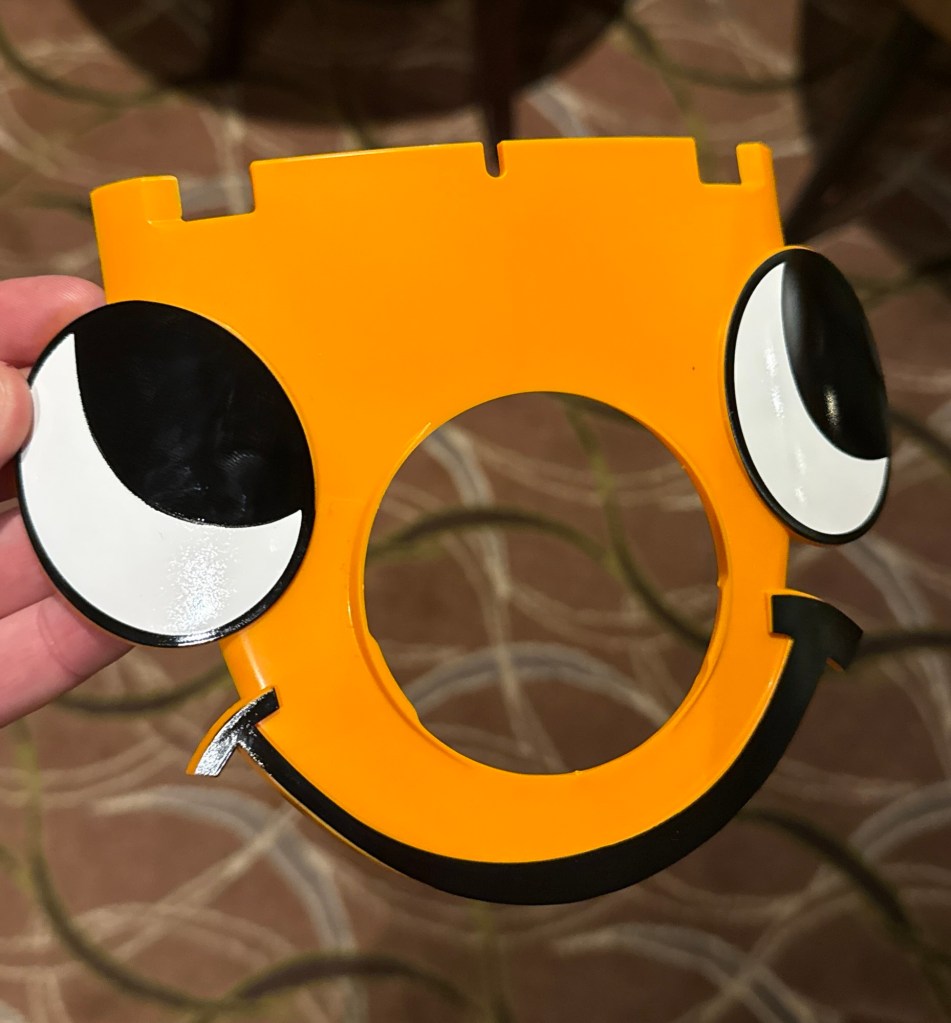
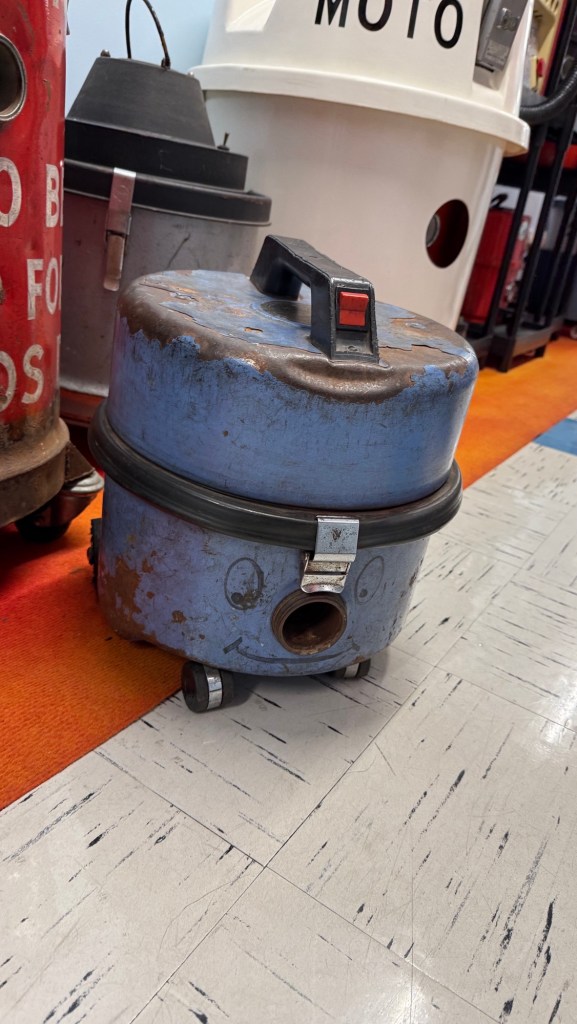
This year’s Christmas Meet on Monday 8th December was a more unusual one, and put a few more miles on the odometer. The focal point being of the trip was an organised tour of the Numatic factory in Chard, Somerset. Numatic of course are most famous for their ‘Henry Hoover’ range.

Henry #1. The OG.

I left Bedfordshire at 2pm on the sunday, and was somewhat indecisive about which route to take, changing my mind several times whilst underway, ultimately making all the worst decisions, leading to a slow and poorly planned journey down to Basingstoke on just A-roads, before following the M3 and A303 down to Yeovil, convoying with Matt after a stop Amesbury, where he caught up to me.

The moggies that made it

The next day, whilst only three Morris Minors were present for the factory meet-up, but at least 10 members of the MMOCYM did make it, be that in modern cars or by train.

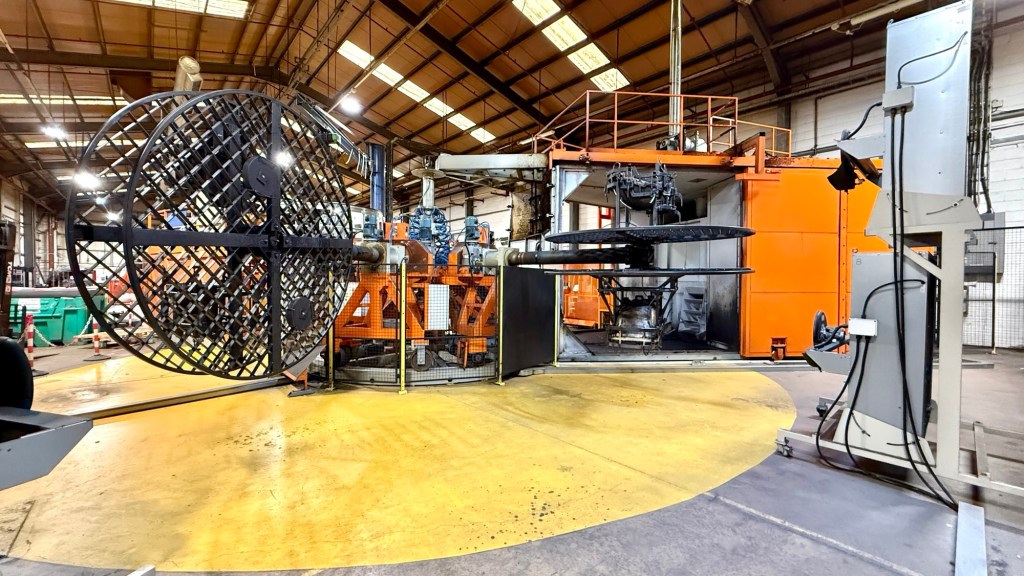
One of the rotational moulding machines that is used to make larger moulded parts.

Numatic offer tours to those interested and enthusiastic about their products and business. I personally found it fascinating to see such a thriving business, employing so many local people, that does almost all of it’s design and manufacturing in Britain, on one main site, which is still innovating and growing, with a new factory facility being constructed on the other side of the road.

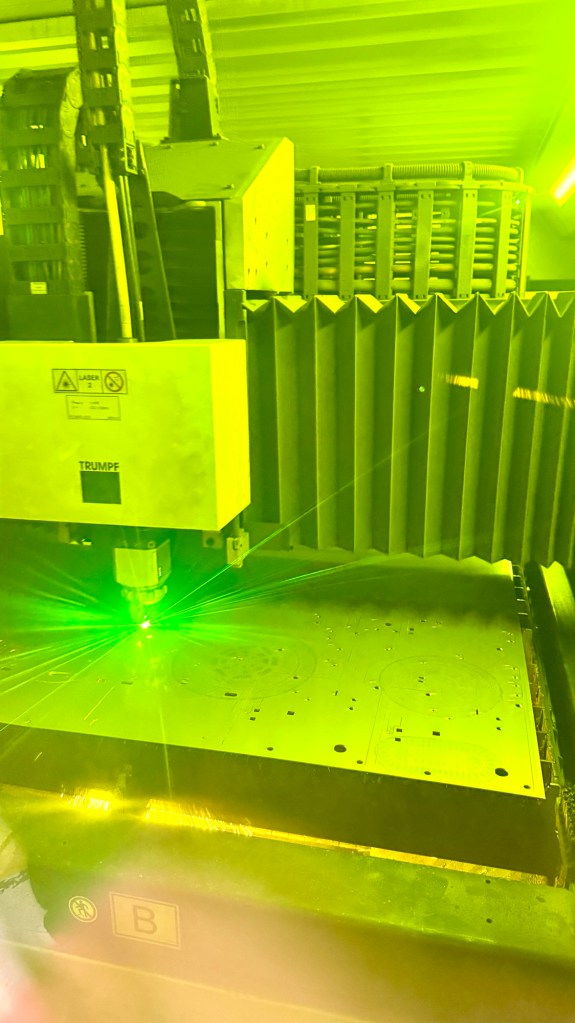
Parts for some of Numatic’s larger comercial products being lazer cut

After the tour, we returned to Yeovil for a Christmas carvery. The trip back home was plain sailing, with the car performing perfectly; however, my ASDA Christmas lights did run out of battery en-route.

Northern Ireland trip with the MMOCYM group

The night before the trip – 12287.0 miles

Since the trip to Beamish in 2023 there was talk of a possible trip to Northern Ireland, which was eventually planned for April 2025.

After some last minute cleaning and prep (including packing a host of spare parts and fluids) Dan and I set off at about 3:30pm on the 9th, with the intention of making it as far North and as close to Anglesey possible, where we would catch the Ferry from the next day.

Originally I had intended to follow the historic route of the A5, Telford’s Holyhead turnpike road for the entire journey, as it leads all the way to the Ferry pier in Holyhead, however, when we stopped for Dinner at the Brewers Fayre in Telford we had a look for accommodation for the evening, having left this until the last minute to allow some flexibility in the journey. A lack of cheap hotel availability for that evening in the Snowdonia area, and with the light quickly fading, we found a Travelodge in Colwyn Bay, and planned a new faster route, heading up the A41, and A55. Approximately 198 miles done, We arrived at about 10pm and checked in.

The following, we headed for the boat. We left early enough so that we could make a few stops, which was just as well, as the A55 was closed in several different places with large tailbacks due to accidents.

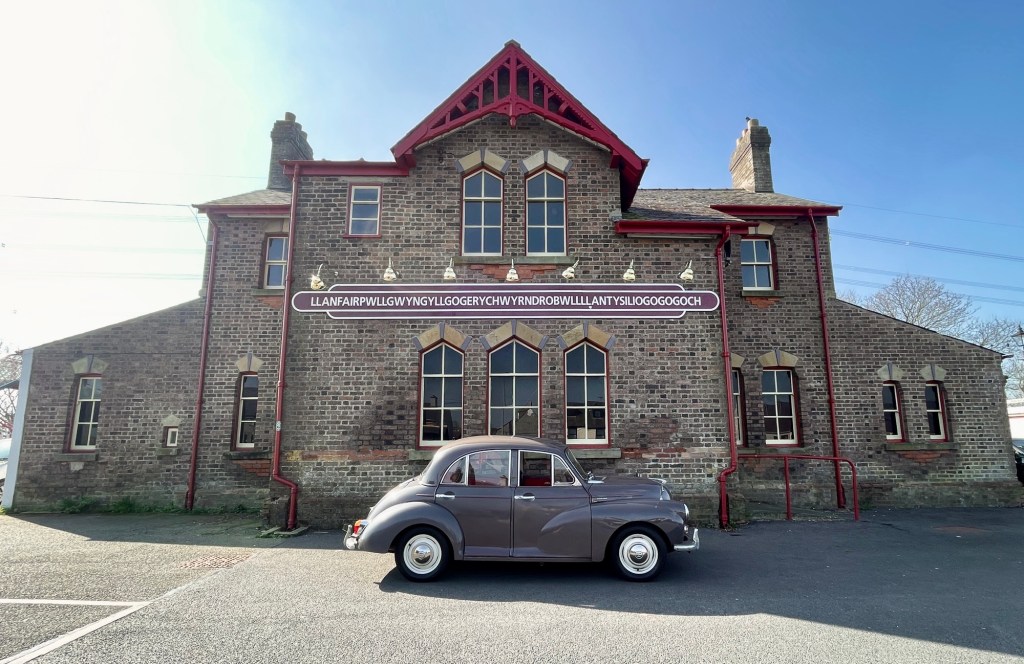
First we visited Llanfairpwllgwyngyllgogerychwyrndrobwllllantysiliogogogoch, famed for having the longest town name in Europe and the longest railway station name sign in the world.

After this, we continued to South Stack – a flying visit, as we didn’t have the time to head down to the lighthouse, but we got some photos.

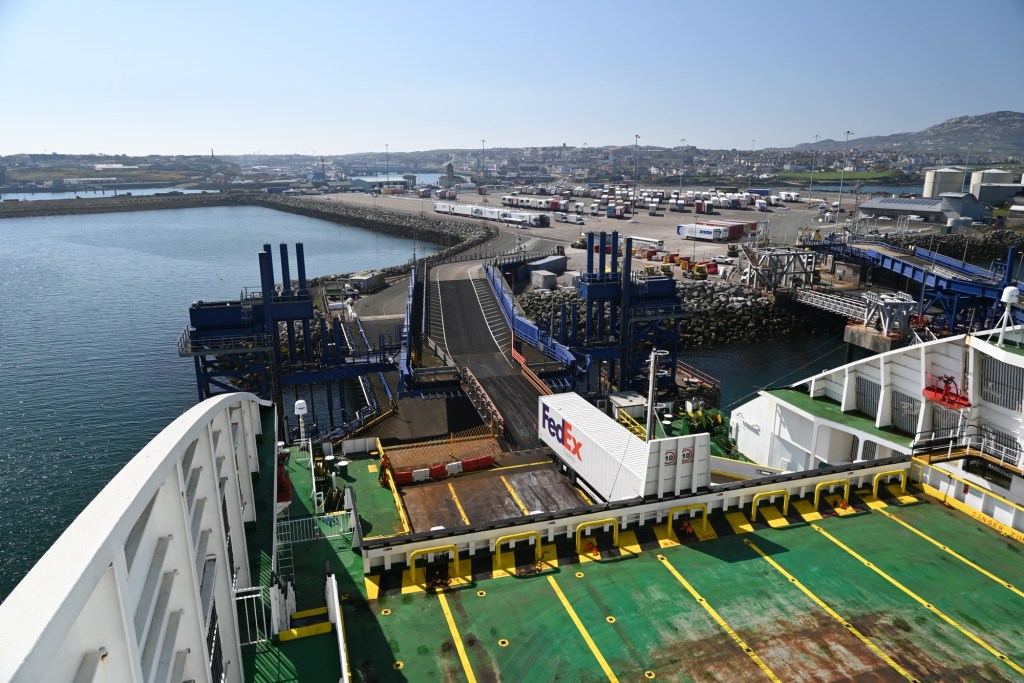
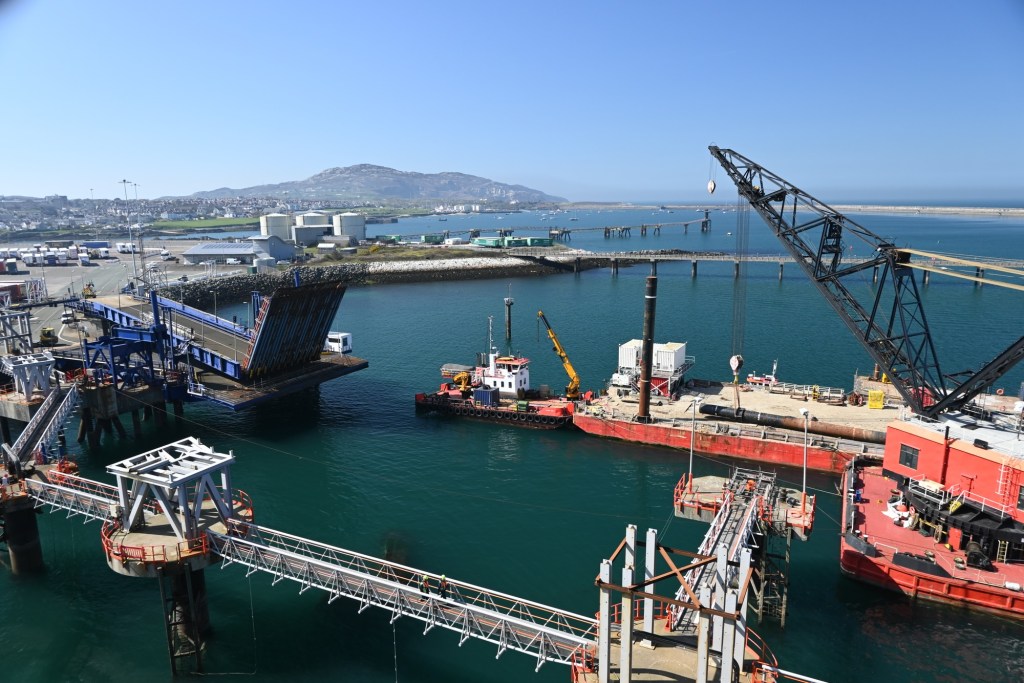
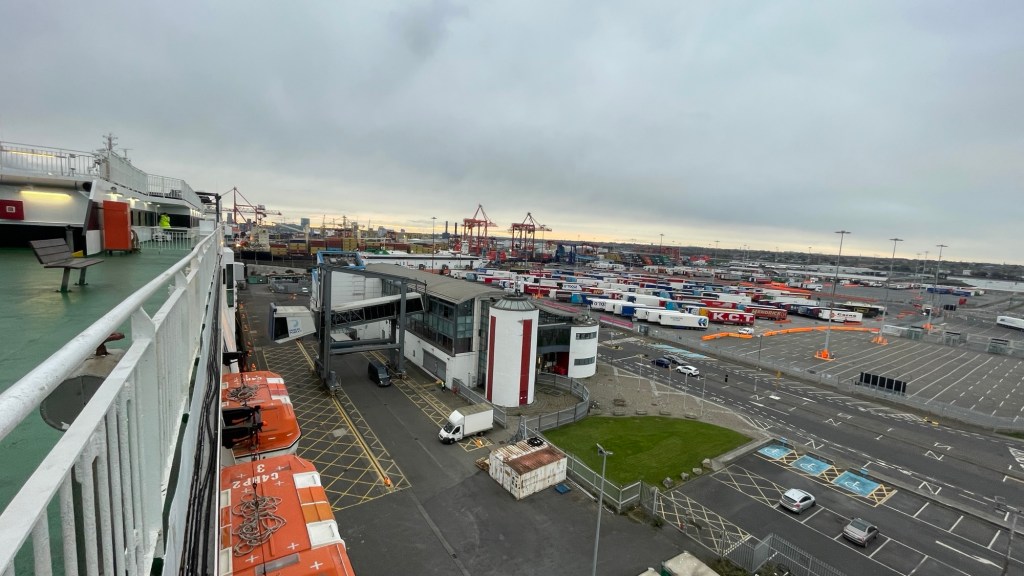
Soon it was time to board the ferry; The departure had been moved forward by an hour due to damage to one of the berths following Storm Darragh in 2024, wherein a ferry made contact with a mooring pile in strong winds, causing it to collapse and putting one of the linkspans out of use.

The out-of-action linkspan. Note the collapsed pile still visible in the water. Work appears to be well underway on fixing it!

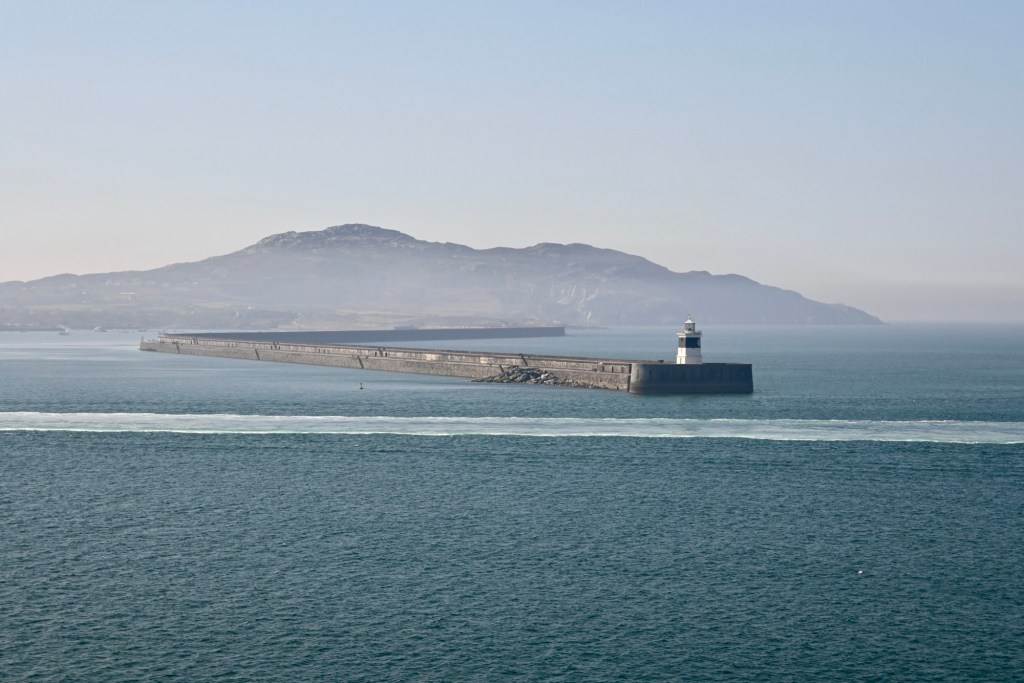
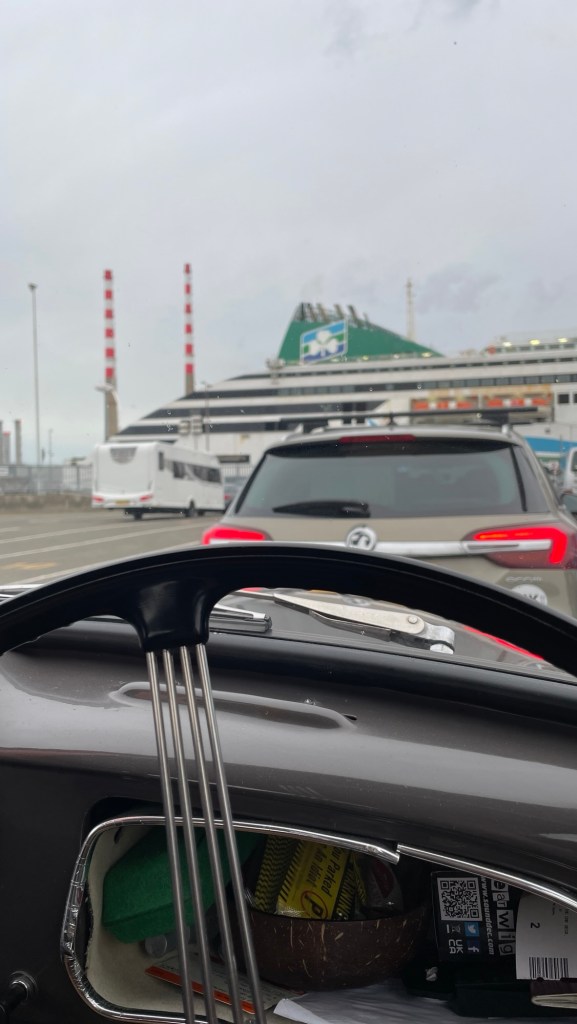
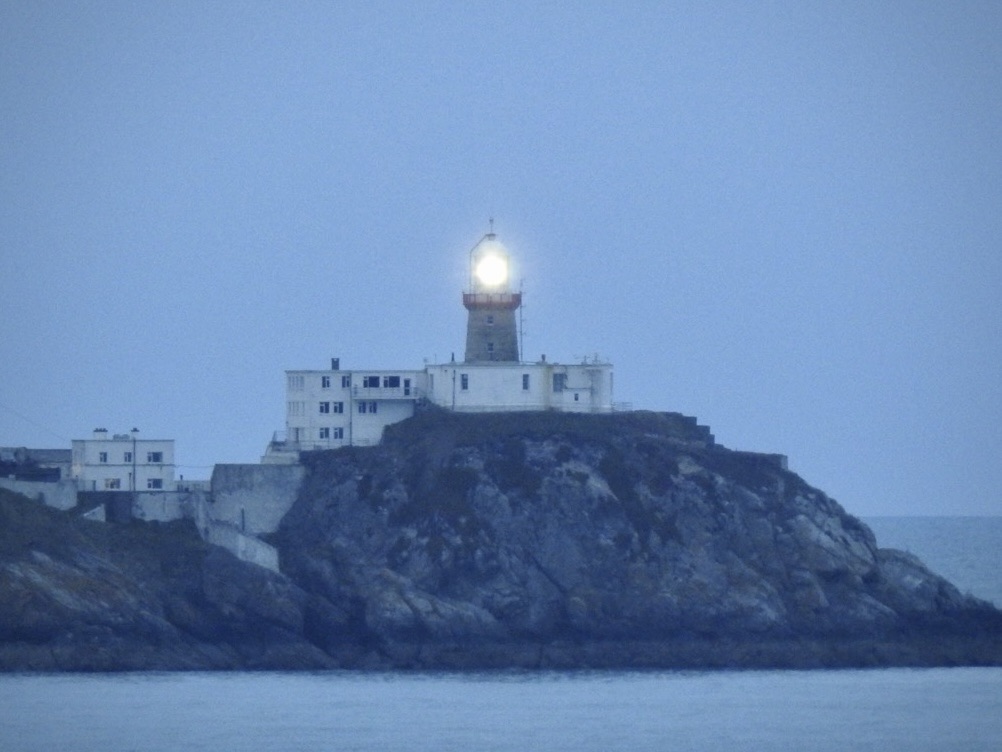
Before long we were away, passing the 1.5 mile Breakwater, which is the longest in Europe

Arriving in Dublin, docking just in the Mouth of the River Liffey opposite the impressive chimneys of Poolbeg power station, we disembarked and made our way North, driving through the 2.8 mile Dublin Port Tunnel, which is the longest road tunnel in the British Isles.

There wasn’t a great deal more to add about this journey, other than that the people of the Republic of Ireland really seemed happy to see the small convoy of Morris Minors, with Becca and Leuan in their respective cars staying ahead of us for most of the journey to Northern Ireland. Dan and I broke away from the group just after crossing the border into NI to find somewhere for dinner, as we had all booked different hotels for the evening. After a while we continued, arriving at our Premier Inn in Bangor at approximately 9:30pm – we’d been travelling for over 12 hours by this point, so we were pretty glad to stop, having clocked up over 404 miles already.

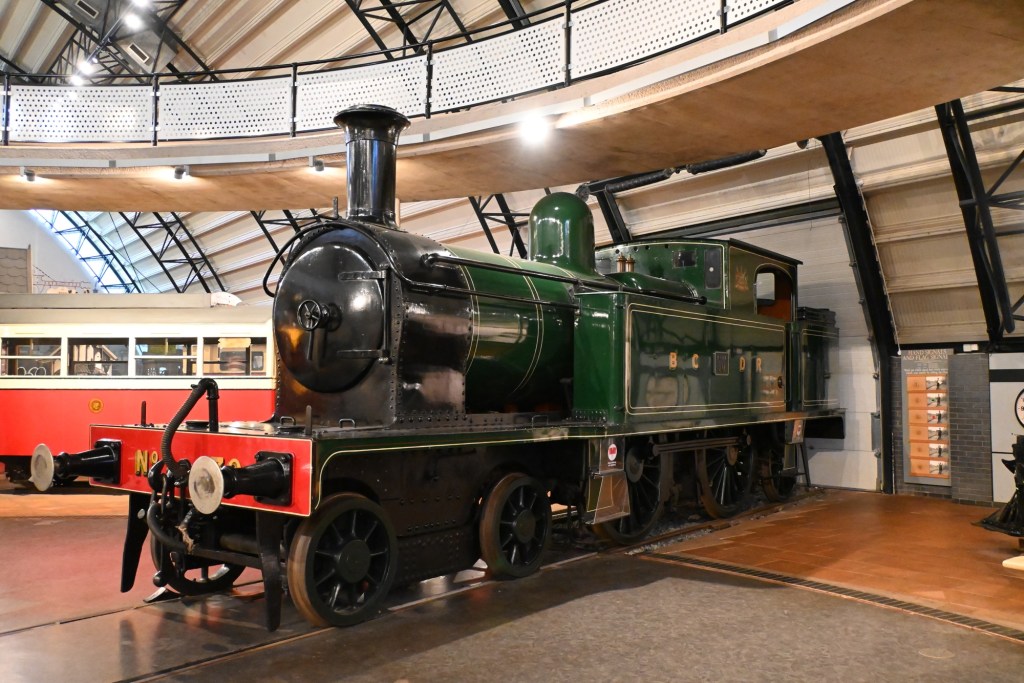
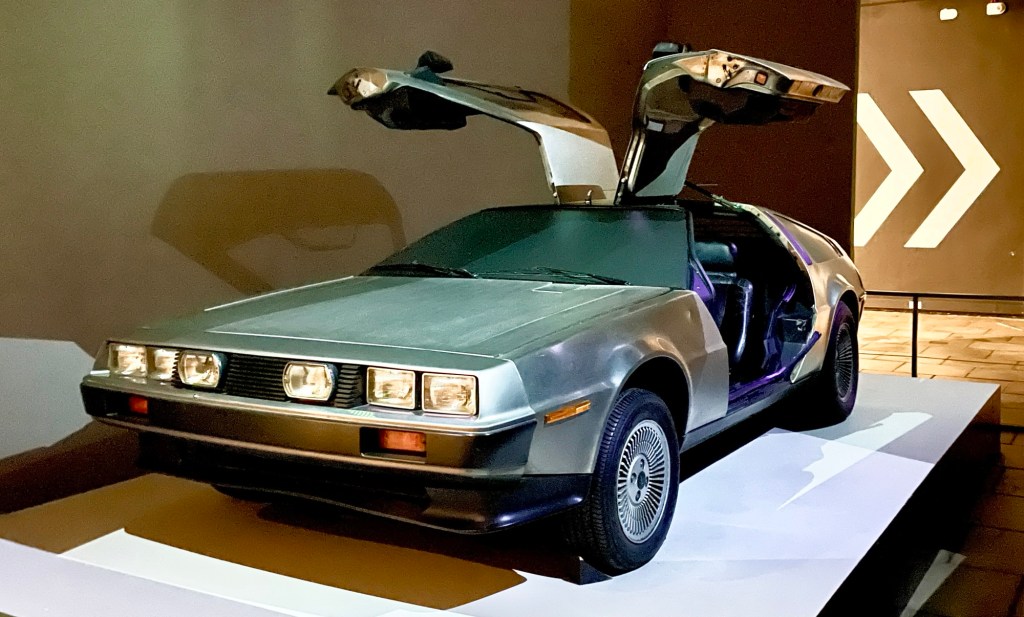
The following morning we met the other members of the MMOCYM group at the Ulster Transport Museum, which is home to a wide range of Trains, Buses, Trams, Cars, and pretty any other form of Transport with links to Ireland, including a gallery on horse-drawn vehicles and the still futuristic DMC DeLorean, which must be among some of Northern Ireland’s most famous exports.

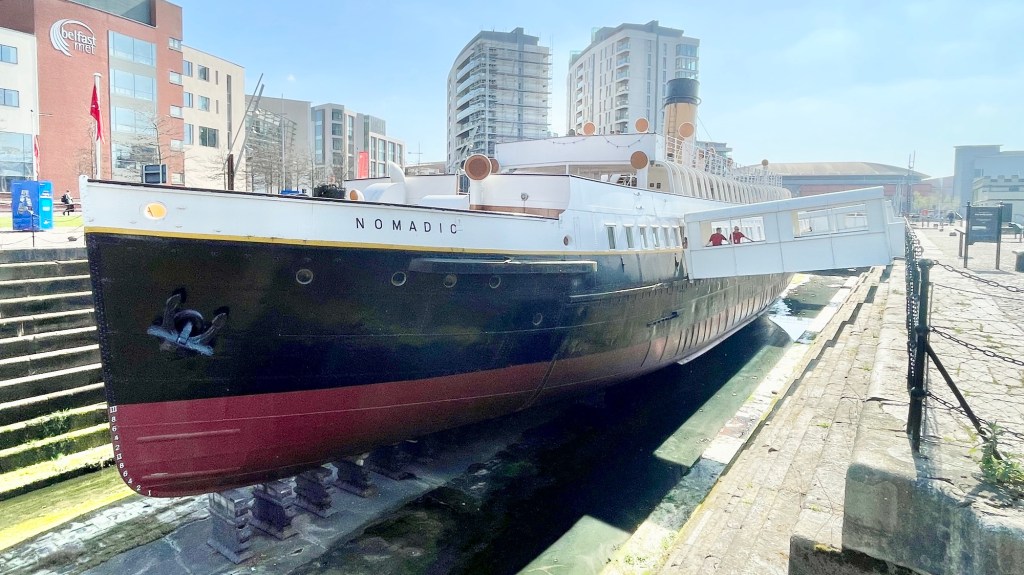
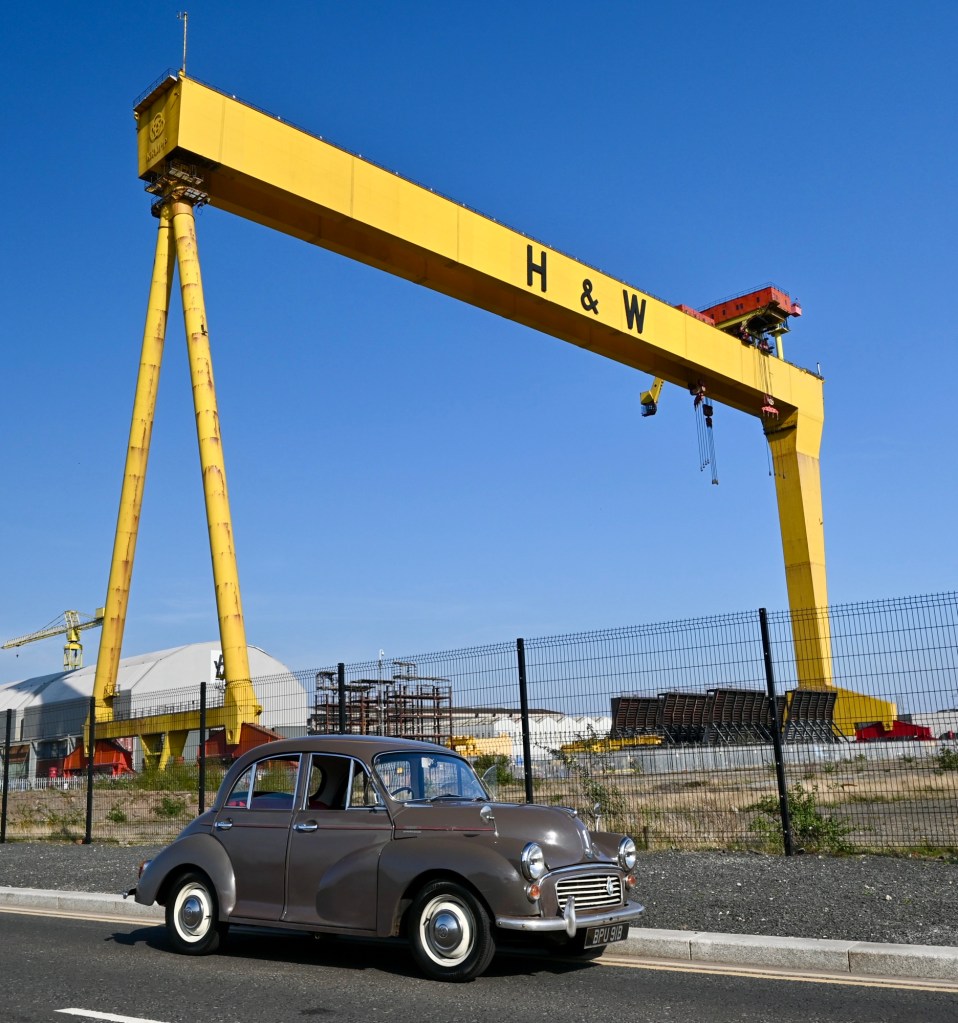
Later on, we headed to the Titanic slipway in Belfast, and were allowed to park up and display our cars in two lines right where the Titanic and numerous other Harland and Wolff ships were constructed. I’d been to the museum here before, and personally felt it was a little artifact-light. It’s a good display, but there are much larger private collections and travelling exhibitions with a lot more in terms of actual artifacts from the famous ship. That said, the museum here does tell the story of the ship very well, and is even home to SS Normadic, a tender ship used alongside RMS Titanic to load passengers and cargo in Cherbourg. Normadic is the sole remaining White Star line vessel in existence, and has been largely restored to how it would have looked in 1912, with restoration ongoing.

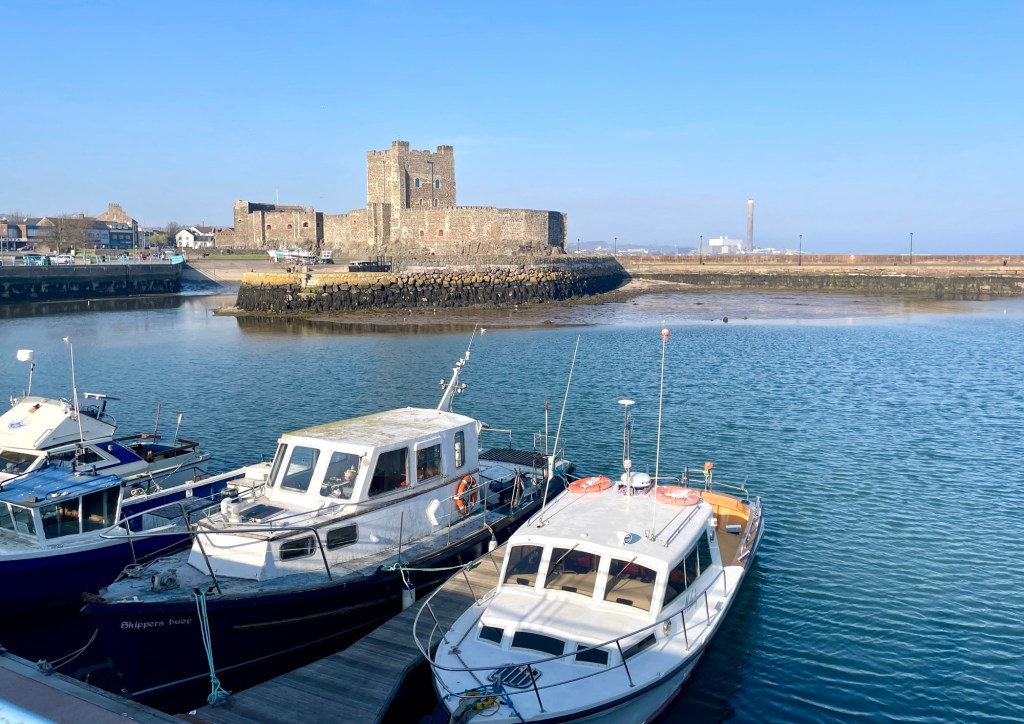
Ever loyal to the hotel chain that made Lenny Henry a household name, that evening we stayed in the Premier Inn in Carrickfergus, which is located just outside the town’s historic castle. Carrickfergus is possibly even more famous for the Brewers Fayre that can be found here.

Goliath, one of the two iconic Harland and Wolff cranes (the other almost identical crane named Samson is out of shot)
Carrickfergus castle

Having had perfect weather and clear skies up until this point, it is typical that on the longest scenic coastal drive day it should be cloudy, but that’s how it started off. On this day we drove up along the coast, gradually heading towards the Giant’s Causeway. A small section of the coastal route was closed after Larne unfortunately, however we rejoined it just south of Glenarm.

The more traveled and better signed Causeway Coastal Route takes you inland for the last leg to the causeway, however we stuck to the true coastal road via Torr Head, which was certainly an interesting experience! The road had many twists and very steep hills. I didn’t see any signs remarking on the steepness of one particularly steep hill which caught us off guard, but some sources claim it is an 18.8% (1 in 5.3) gradient, whilst others even claim it is up to 26% (1 in 3.8)

Torr Head itself was interesting; it was home to an Admiralty lookout post, located on a high mound at the end of the headland. The derelict structure is open to the elements and can be climbed with caution, with an external ladder giving access to the roof. From here we could just about see the coastline of Scotland through the mist, and to the North West we could see Rathlin Island and its East Lighthouse flashing.

The sheer 330ft cliffs at Fair Head can be seen in the distance, with Rathlin Island obscured slightly by the mist
The cars at the bottom of the hill at Torr Head, viewed from atop the lookout station

We arrived at the Giant’s Causeway Hotel at around 1:30pm, where we had our pre-ordered dinner served to us almost immediately, before we headed down to the famous stones.

Afterwards we all headed along the clifftops a few miles to get an ice cream from Cream of the Coast in Magheracross. From here we followed a route to Buncrana, back in the Republic of Ireland, where we would spend two nights. On this section I must have followed the map incorrectly, as I seemed to get separated from the convoy immediately… Still, we found our way and arrived at the Inishowen Gateway Hotel just before it got dark.

Day four covered the Inishowen peninsula, starting at Dunree Head and it’s fort. Whilst here we spotted the rain closing in across Lough Swilly – this was the first of several showers that would continue throughout the day.

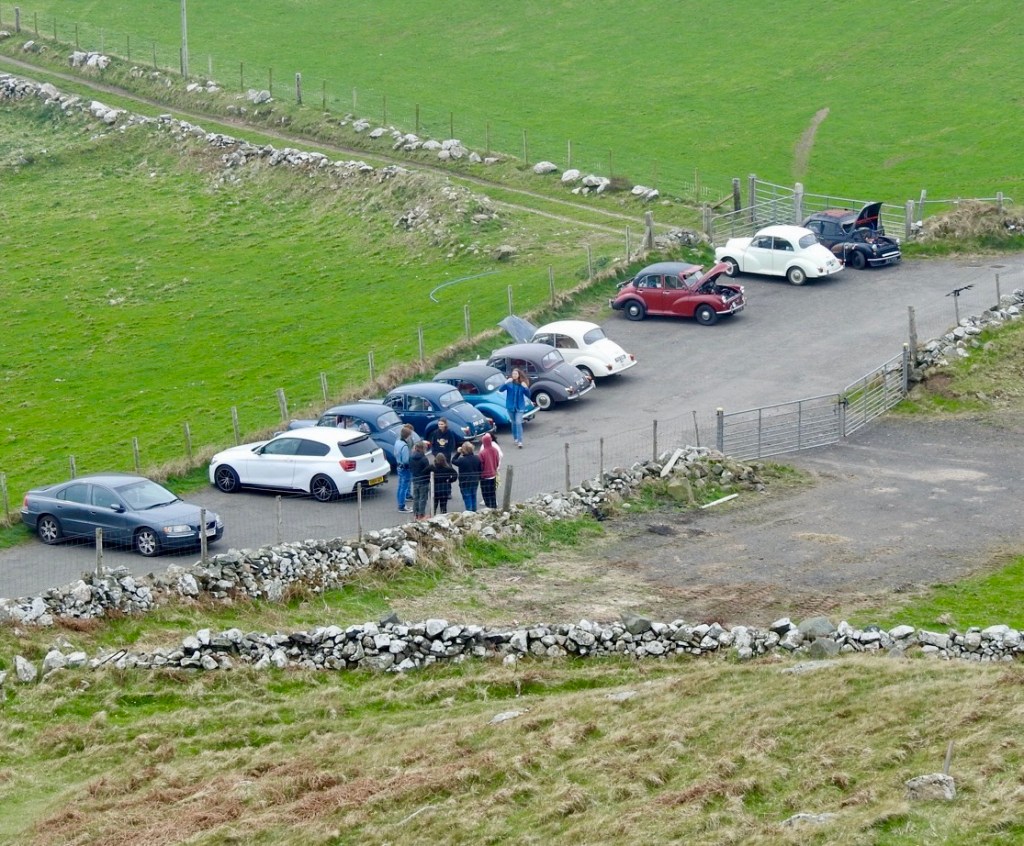
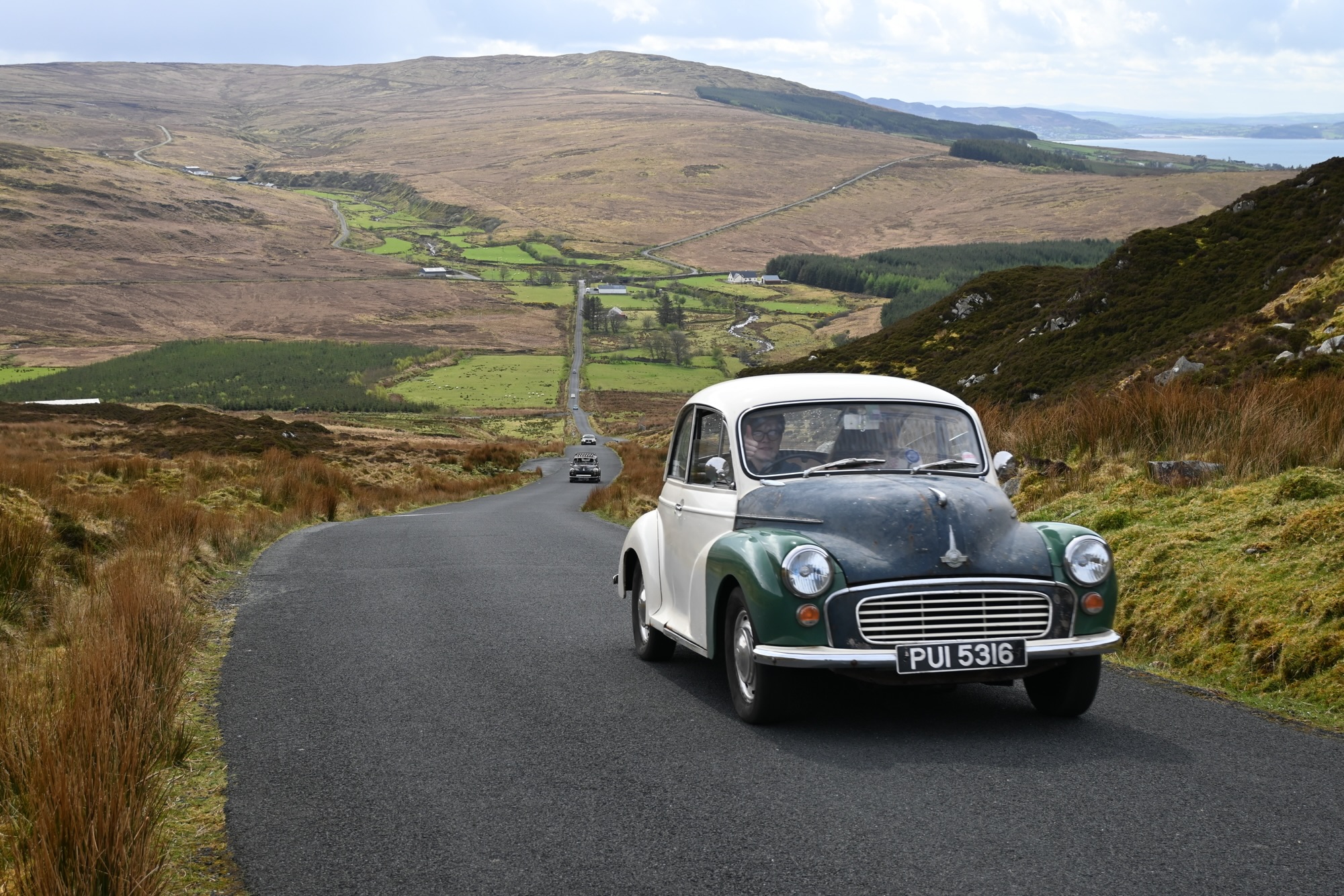
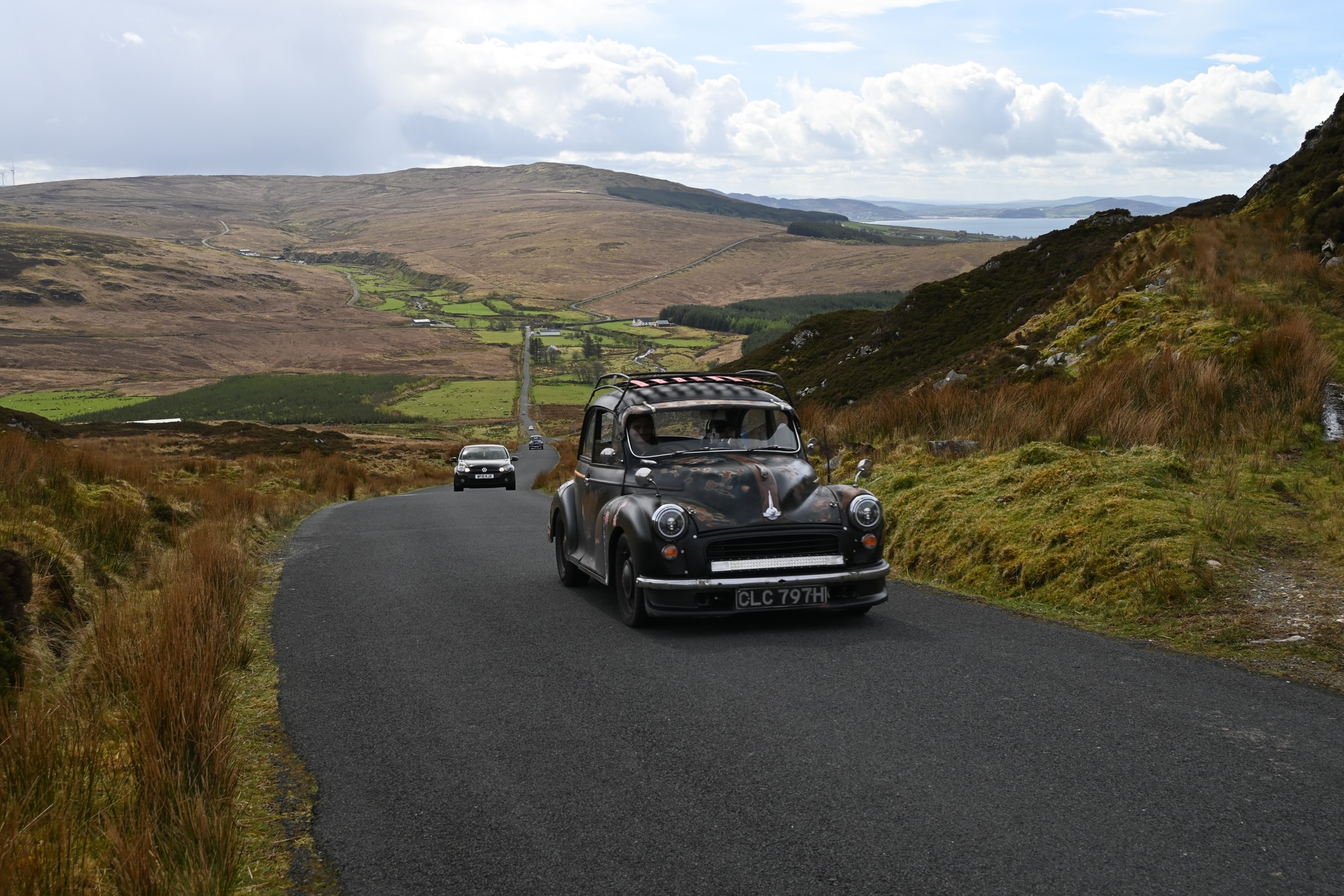
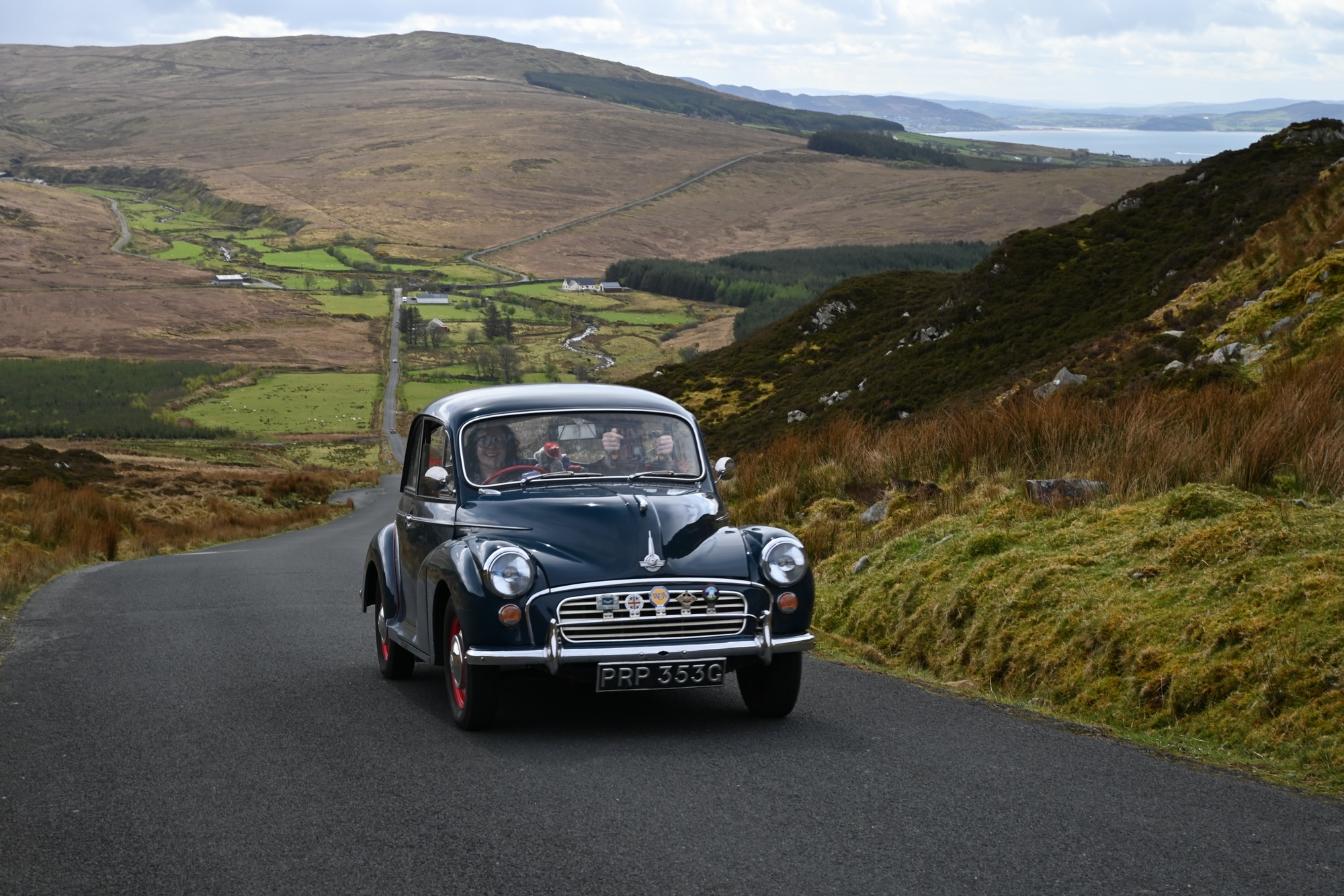
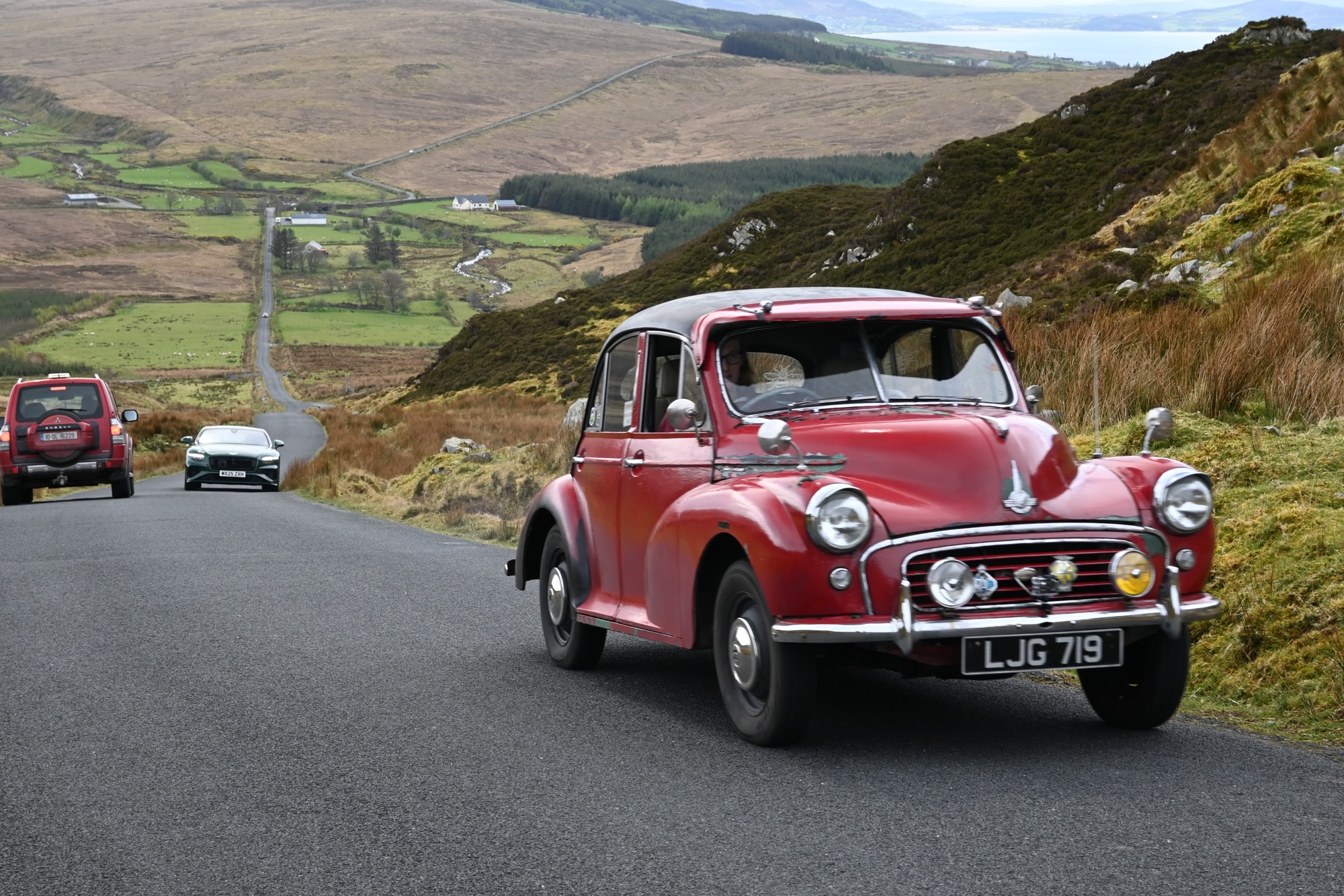
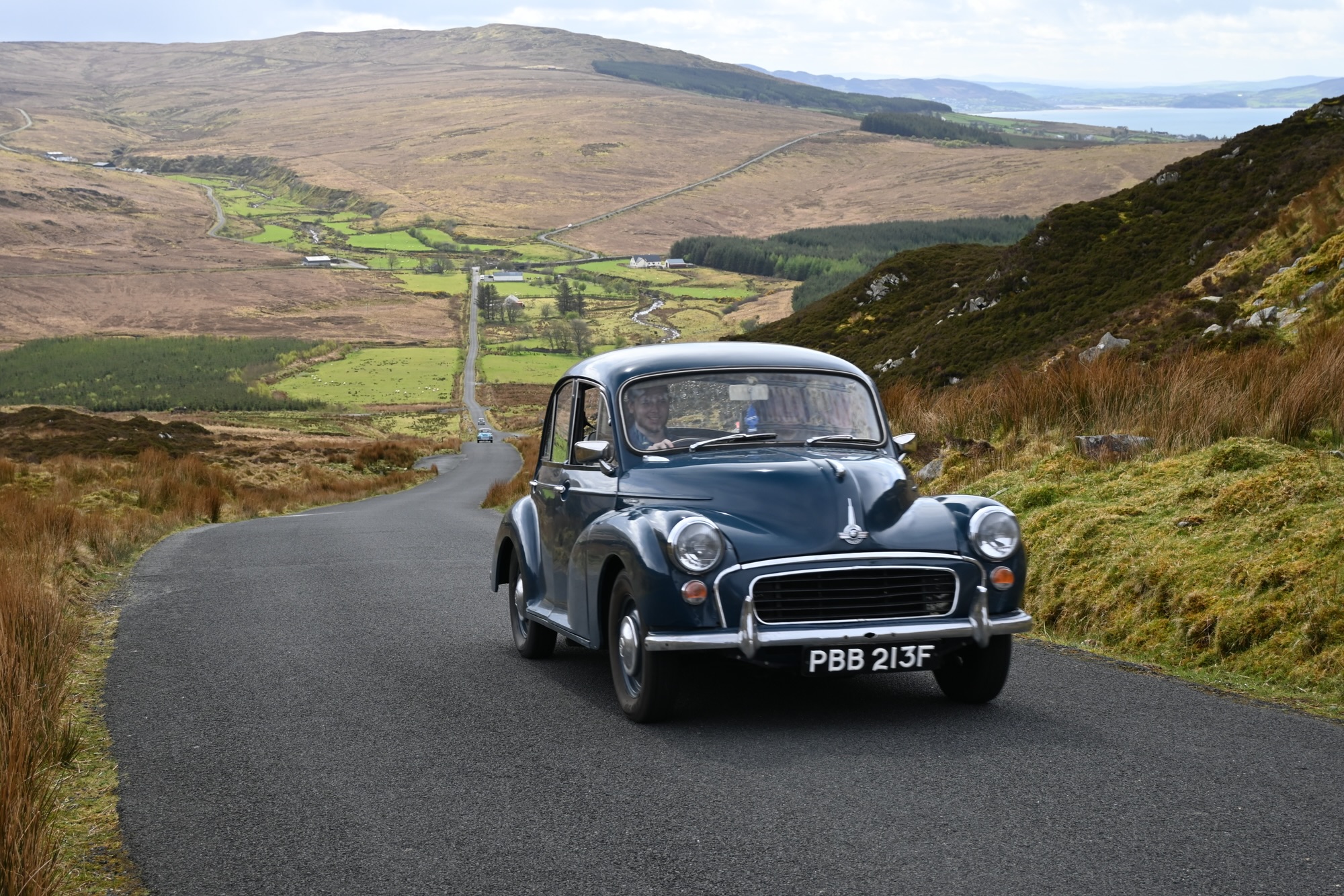
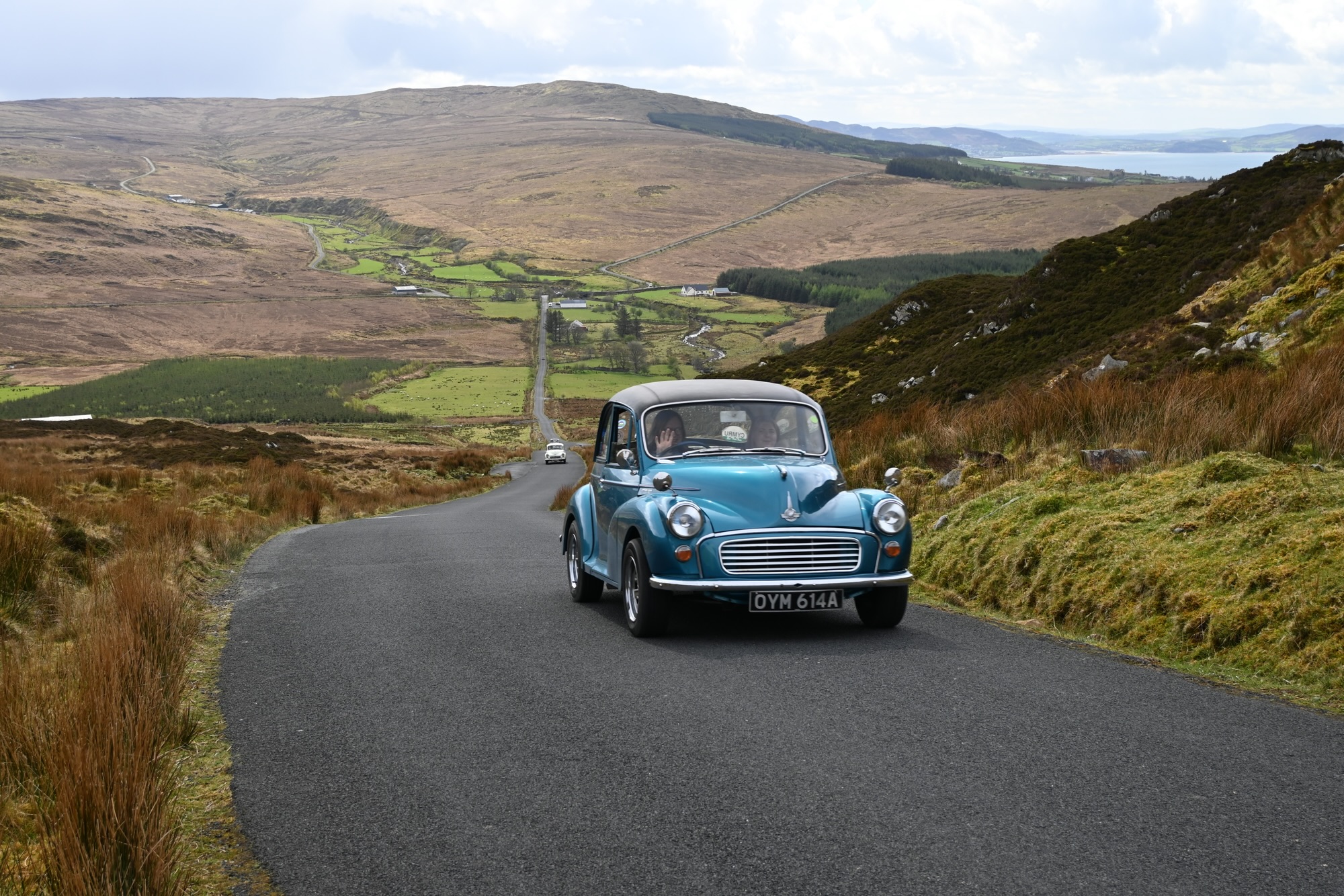
Gradually working our way clockwise around the peninsula which included yet another incredibly steep hill 18.6% at Mamore Gap. I got to the top ahead of everybody else, so got out to photograph the cars making the ascent.

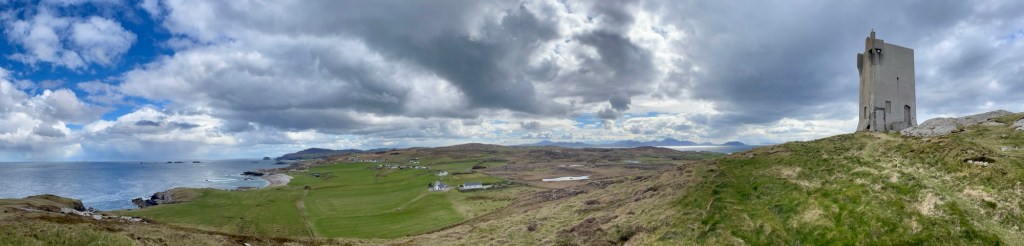
For me, the highlight of this day was reaching Malin Head – We’d made it to the Northernmost mainland point of Ireland, looking out across to Inishtrahull, the Northernmost Island of Ireland. I was surprised to find that Islay in Scotland is visible from here; somewhere I hope to visit in 2026.

The long abandoned Lloyds signal tower at Malin Head
A panorama of Malin Head and its surroundings

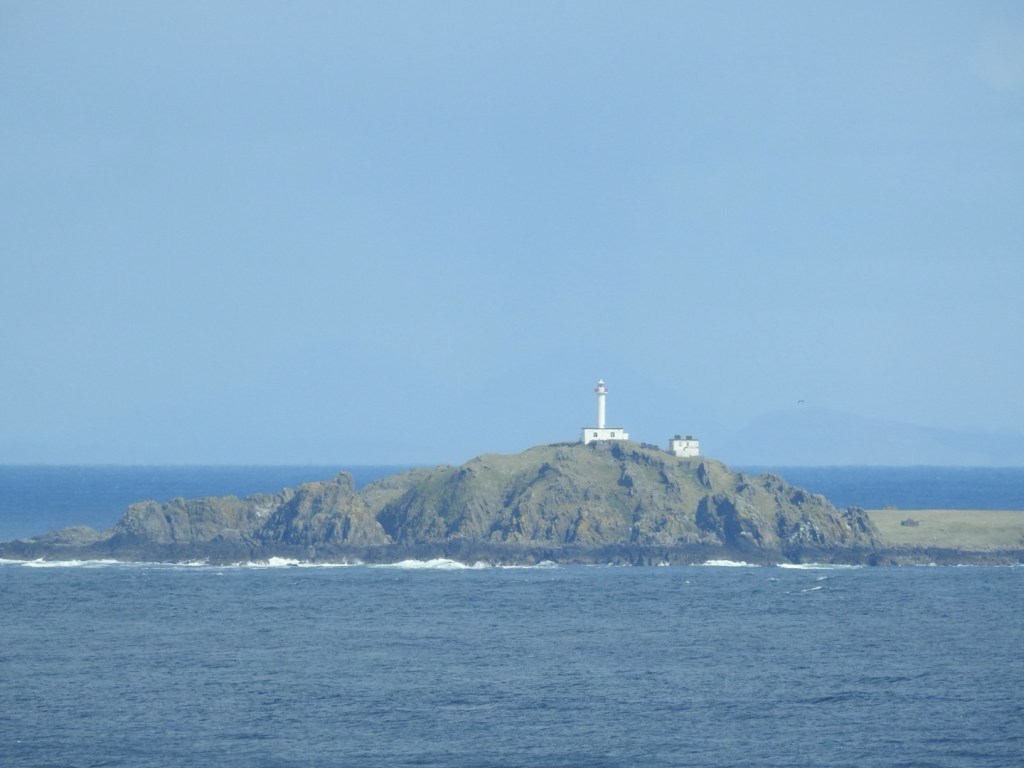
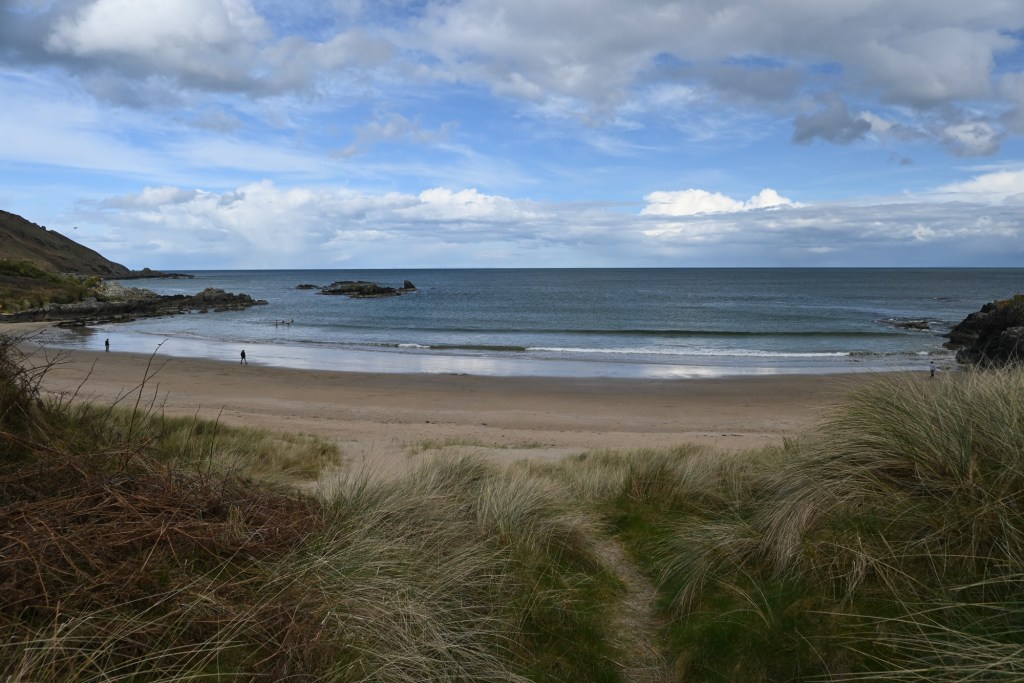
After this point we broke away from the main group for a couple of hours to complete the route around the entire Inishowen peninsula, stopping at Stroove beach in Moville and ticking off a few more lighthouses of Ireland.

In the evening we all regrouped and went to an Indian restaurant in Buncrana.

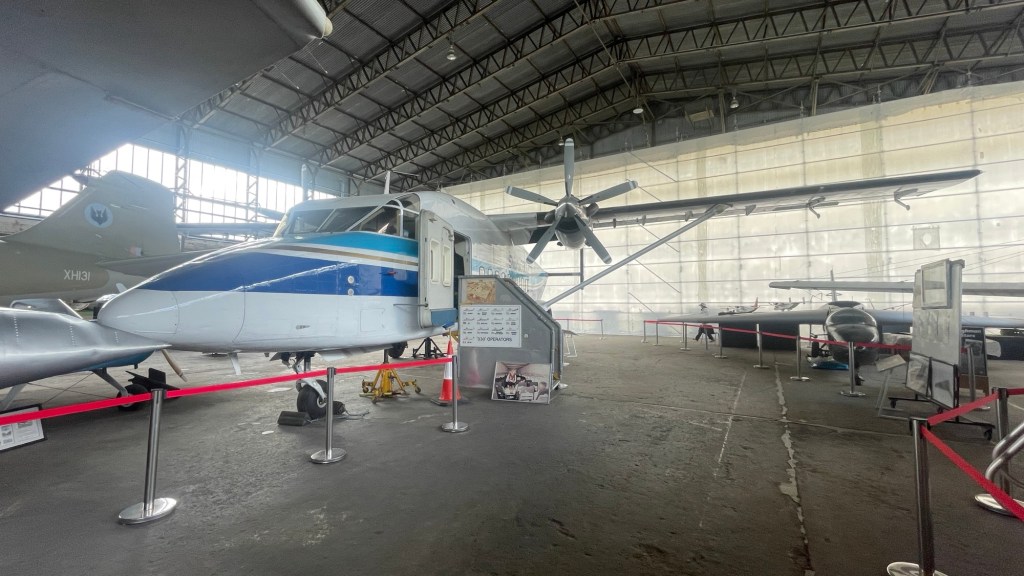
The next day was the start of the long but gradual journey home, stopping off at the Ulster Aviation Society, which is located opposite HMP Long Kesh.

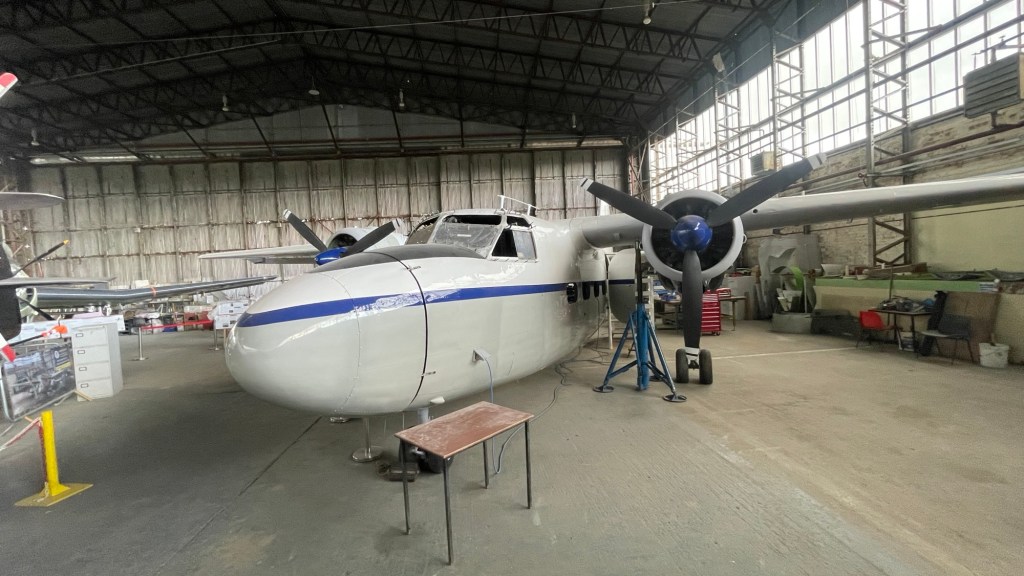
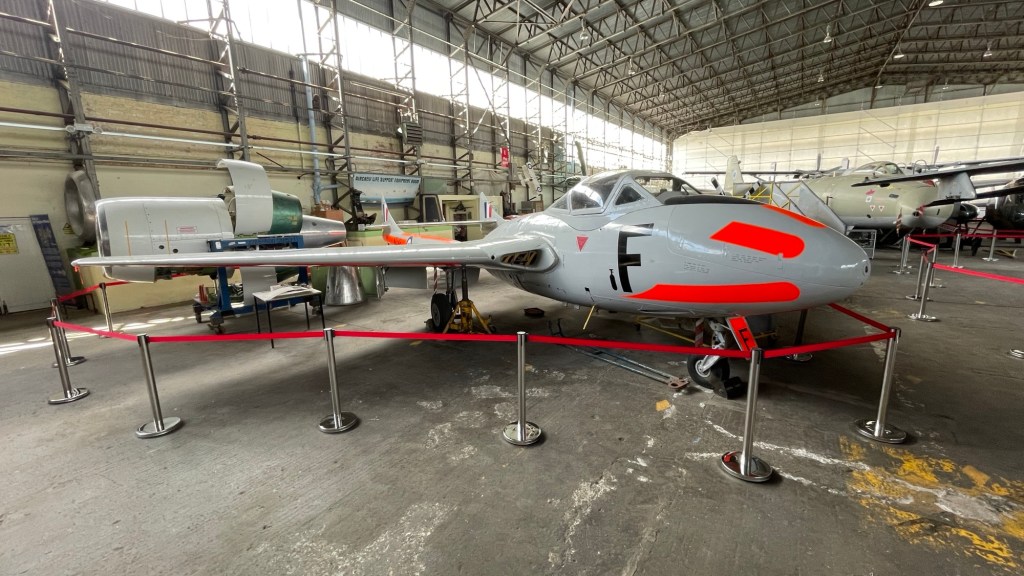
The museum is a large and varied collection of helicopters, planes and other interesting pieces including bombs, models, uniforms and much more stored in two hangars which are being restored. The volunteers here work to preserve and restore all of the aircraft here, and gave us a tour and a talk about the history of RAF Long Kesh and Northerm Ireland’s role in WWII.

The cars lined up outside the newly replaced hangar doors of the Ulster Aviation Society’s base at former RAF Long Kesh

Nando’s was our next stop, from which we all went our seperate ways. That evening we headed down to Dundalk to get the bulk of the remaining Irish leg of the journey home out of the way.

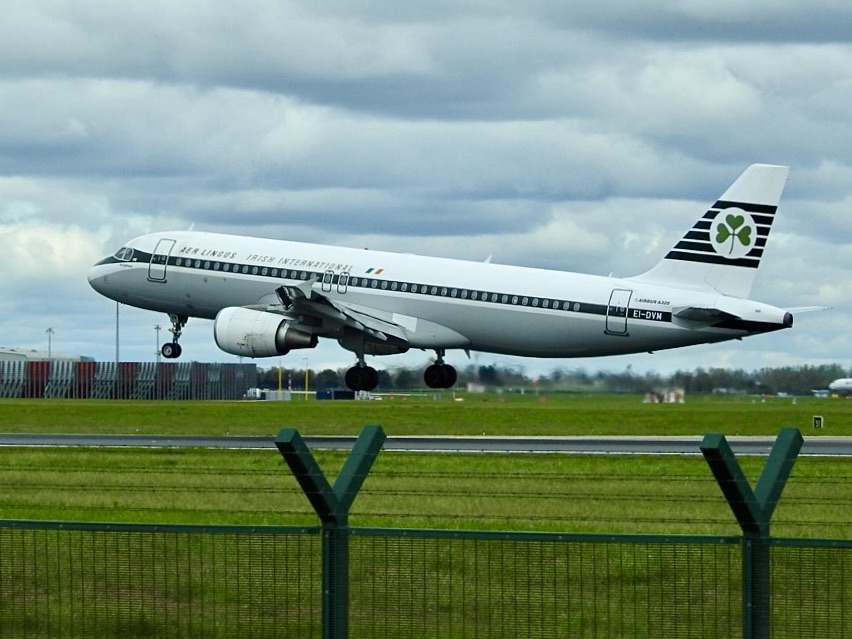
On our last day in Eire we first visited Dublin Airport for a bit of plane watching, where we saw the heritage livery Aer Lingus A320 coming in to land, followed by a newly delivered Ryanair 737 max 8 coming in from Seattle, and even an emergency divert.

EI-DVM painted up to look like an aircraft of the 1970s
EI-IKZ, practically new, arriving from Seattle where it was built by Boeing

Then onto the Guinness storehouse tour, which was okay. It’s worth noting that whilst it isn’t the priciest tour I’ve ever been on, the cost of two tickets was literally more than the rates Guinness pays to the city of Dublin each year for the land their brewery is on.

I kind of expected a tour of a functioning factory building, maybe seeing the production line from behind a glass screen or something – in my opinion as a non drinker the reality was a bit gimmicky, lots of signs to read, which could just as well have been a Wikipedia article. Not as many machines as I’d have wanted to see…

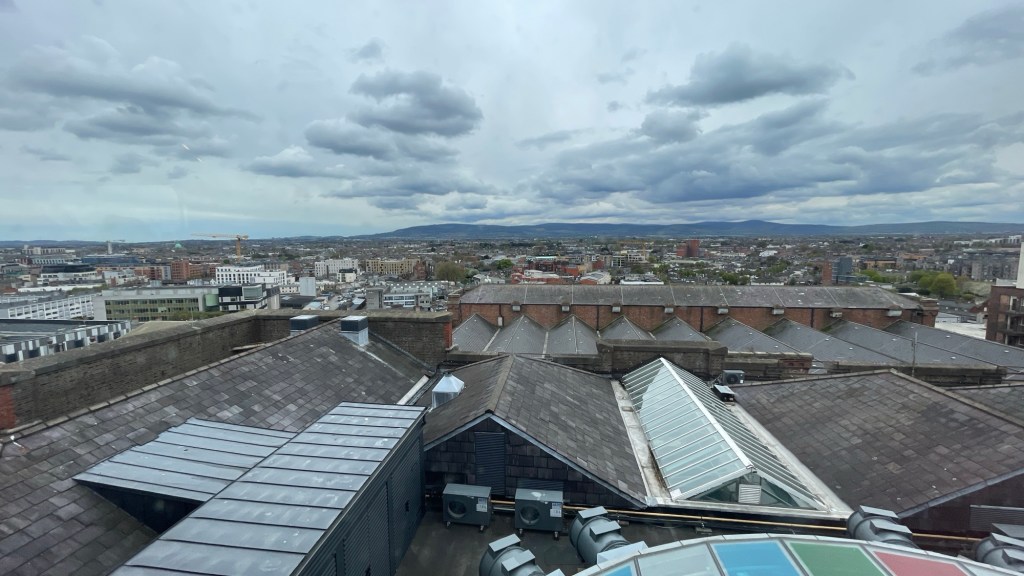
Perhaps I’m being cynical and a bit harsh about one of Dublin’s most visited attractions… but then you see the view from the rooftop bar.

Ah well – it’s ticked off the list of must-visits in Dublin now. Before long it was time to head to the ferry, back onto MV Ulysses and back to Anglesey, where we were staying that night.

Docking late and having to wait over an hour to disembark due to rough seas, we stayed in Holyhead that night, ever loyal to Premier Inn, and returned home the following day. In total, the trip was 1243.2 driving miles in just 7 days, plus the approximately 70 ferry miles in each direction. Despite the long distance and in places challenging terrain, the car performed almost flawlessly, only suffering a fault with the fuel gauge on the last day in Ireland.

The mileage at the end – 13530.2 miles

2023 Christmas trip to Beamish with the MMOCYM group

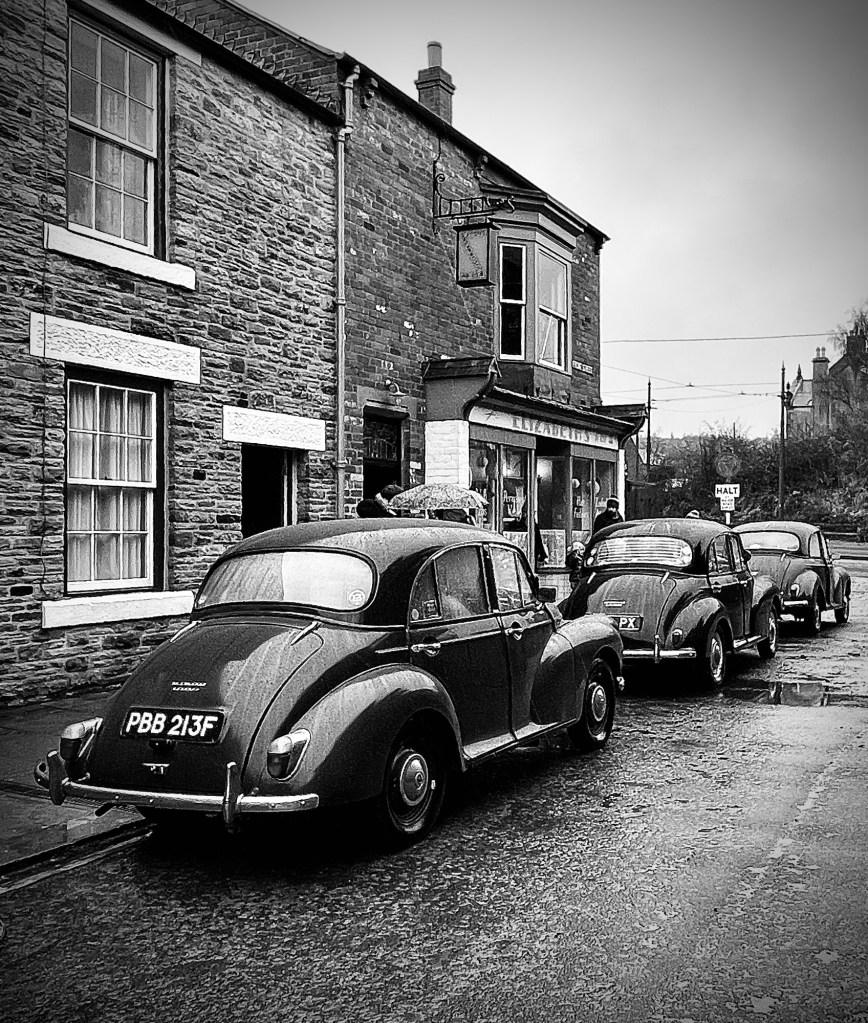
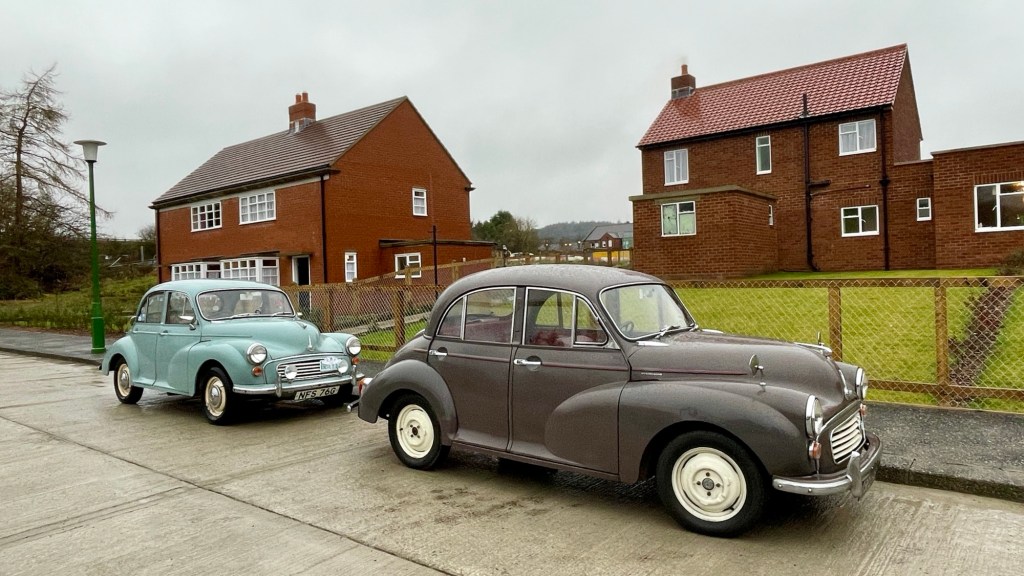
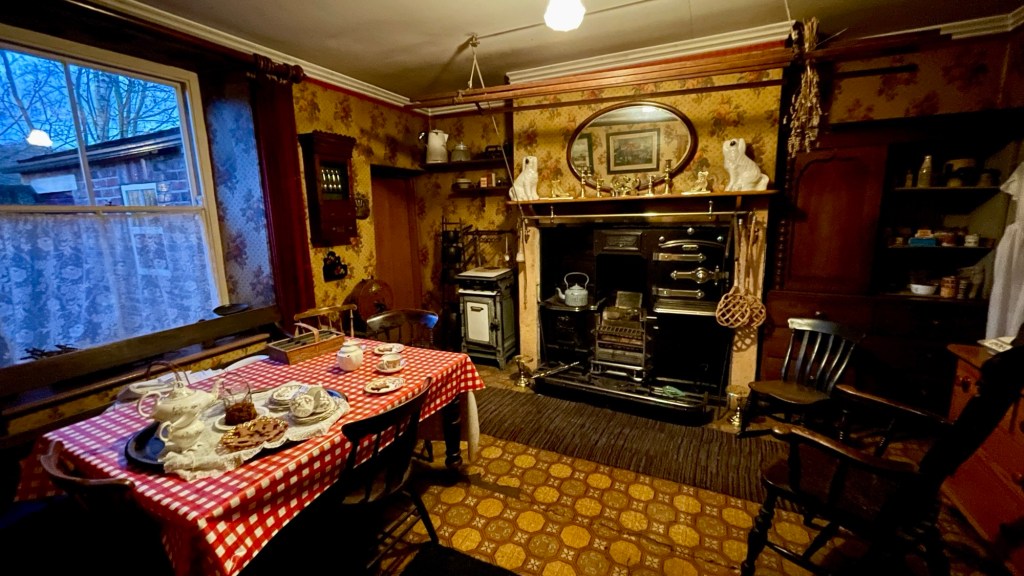
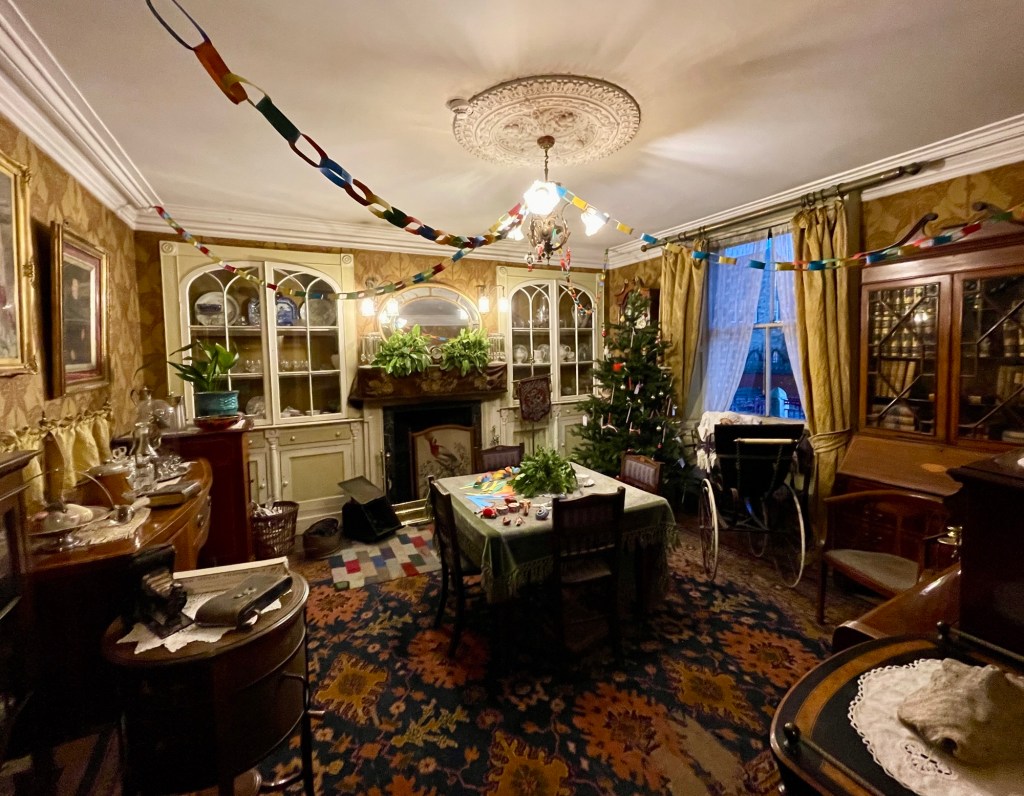
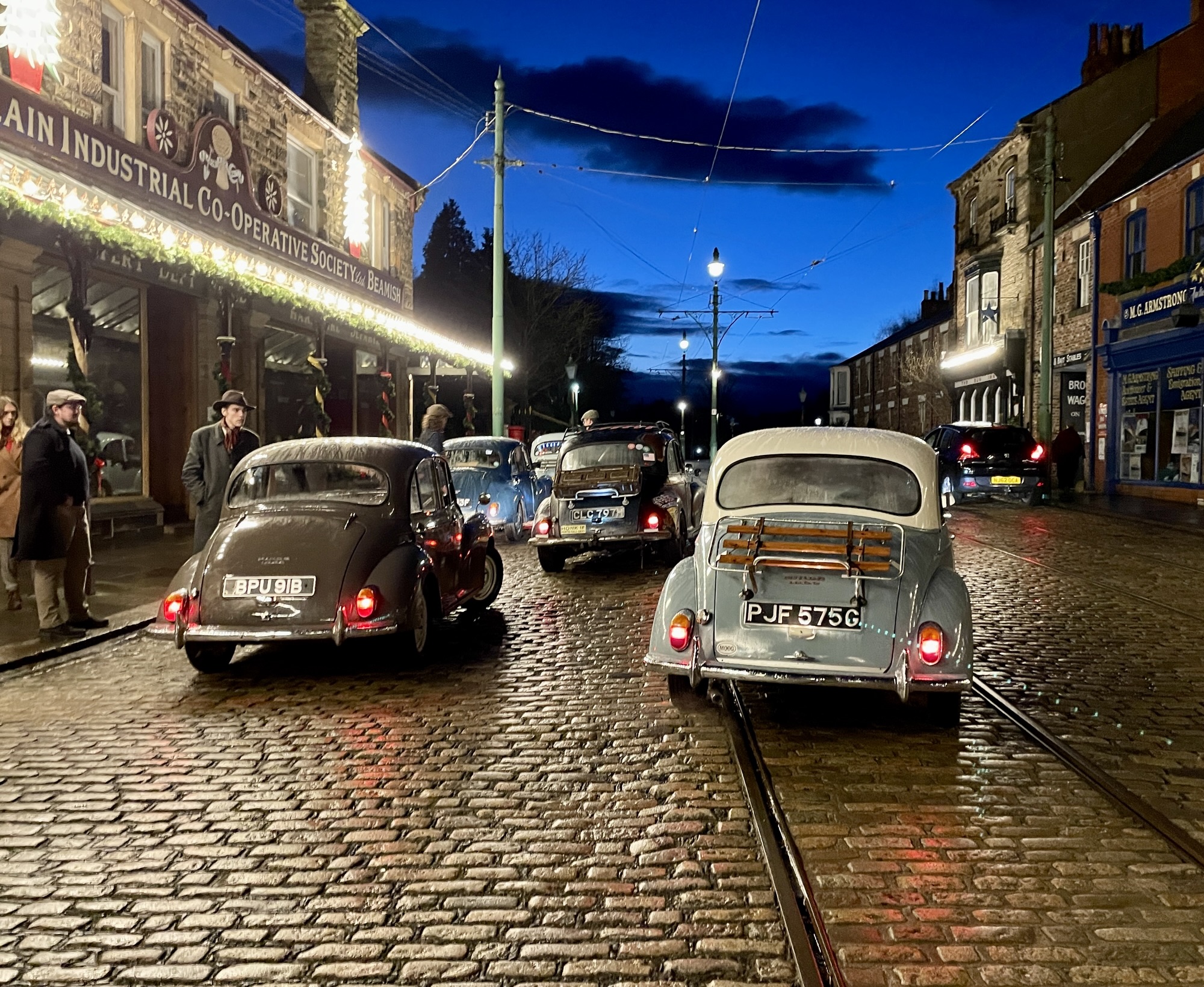
Just before Christmas the Morris Minor Owners Club’s young members division organised a trip to Beamish, a fantastic open air museum in the North of England, where we were allowed to park on the streets of the newly constructed 1950s town. This was also the first time I met other members of this group and was able to put names to faces of those who have helped with advice on various bits and pieces over the last couple of years in the Whatsapp group.

We drove up on Friday and did the journey in only a few hours, with just two quick pit stops for fuel and drinks, arriving just as it got dark.

Several of us had booked in at the Washington Premier Inn (the draw of which was the Toby Carvery located next door), and the following morning we regrouped in the staff car park of Beamish museum, from which we drove in convoy onto the street.

Once the museum opened we split into different smaller groups, and the group I was in spent a couple of hours in The Sun public house, in the main town, whilst it poured with rain outside. After a while it cleared up a little bit, and we went for an explore, taking a ride on a replica LGOC B-Type WWI era double decker bus. We were given a demonstration of the huge winding engine from Beamish Colliery.

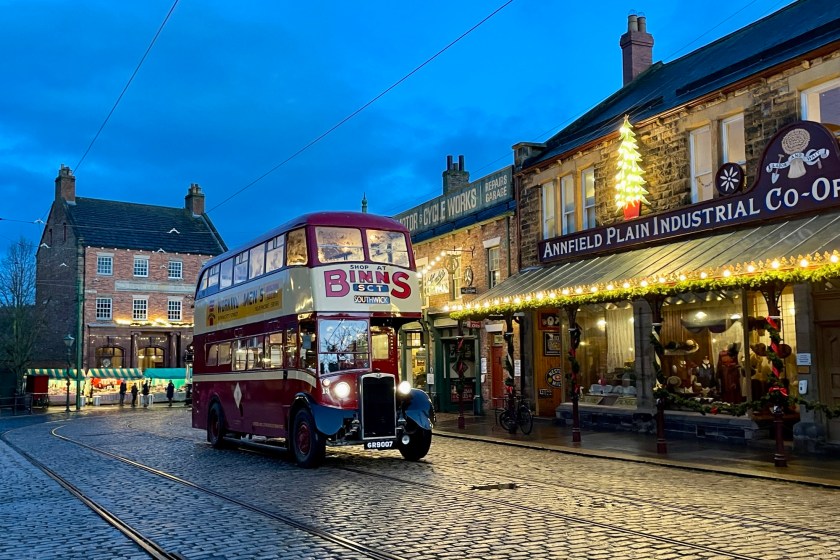
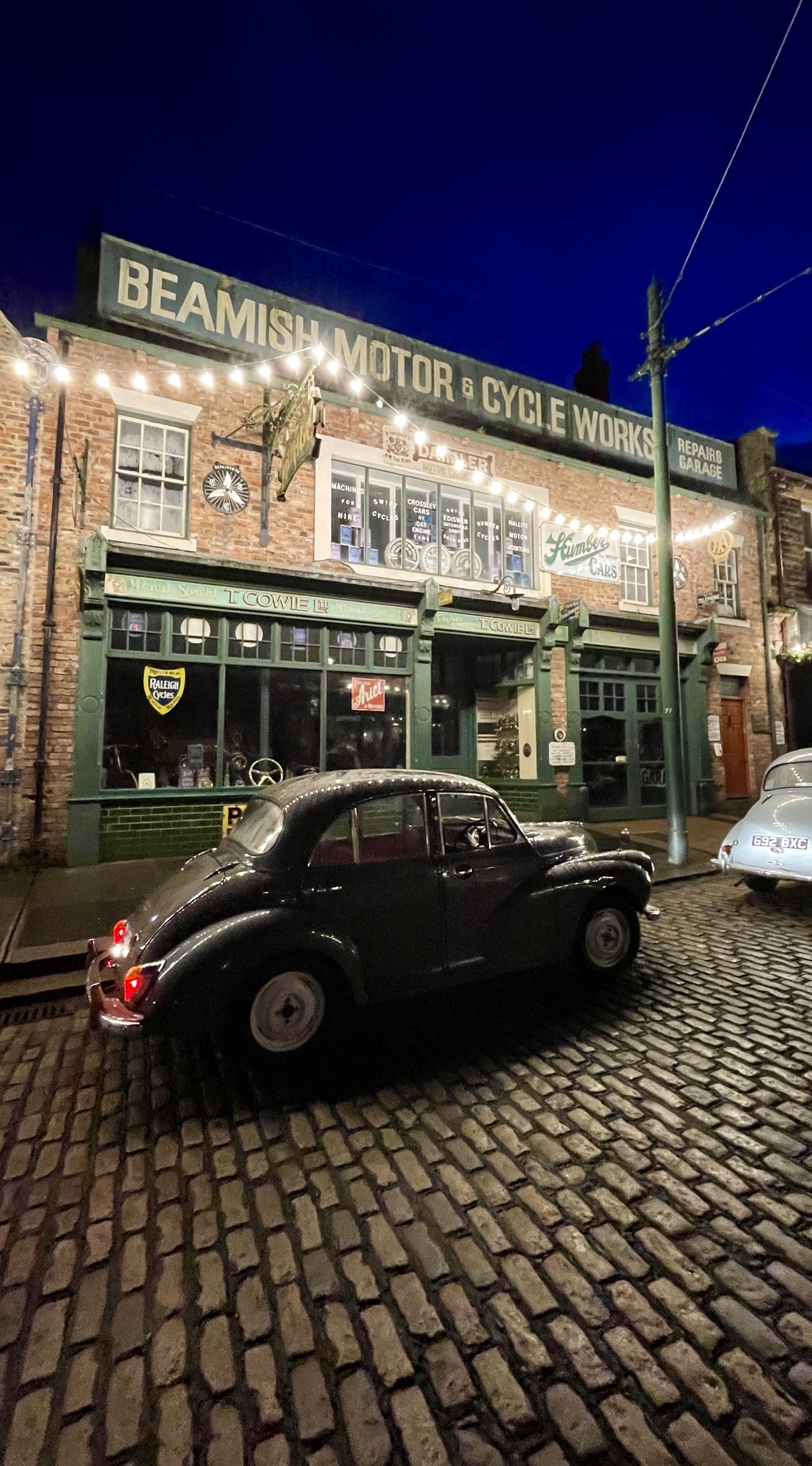
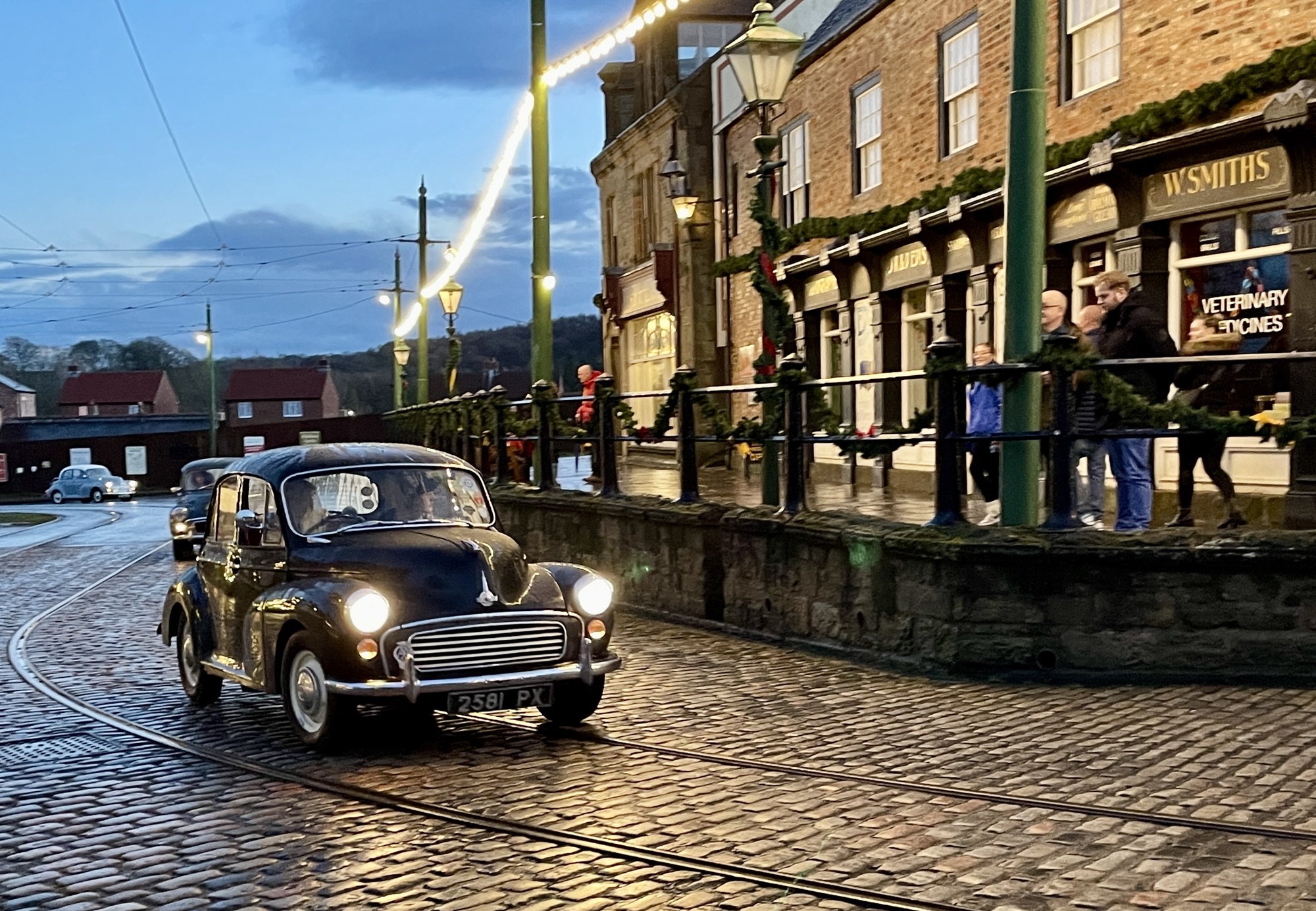
As we left the museum, we were allowed to drive a lap of the main road which encircles the site, passing trams and old buses which were travelling in the opposite direction, before arriving back at the town where we spent about half an hour taking photos in the incredibly atmospheric main street, which was lit by Christmas lights.

September 2022 – July 2023 highlights: More trips & breakdowns

I didn’t keep up-to-date with writing the blog after my Cornwall trip in the summer of 2022, at first because I was busy with a new job and various trips, and then in part due to a lack of enthusiasm following a number of car related disasters happening one after another. This post is a summary of anything noteworthy that has happened with the car since then, including a few fun trips, and a few catastrophes.

Goodwood Revival: September 16th

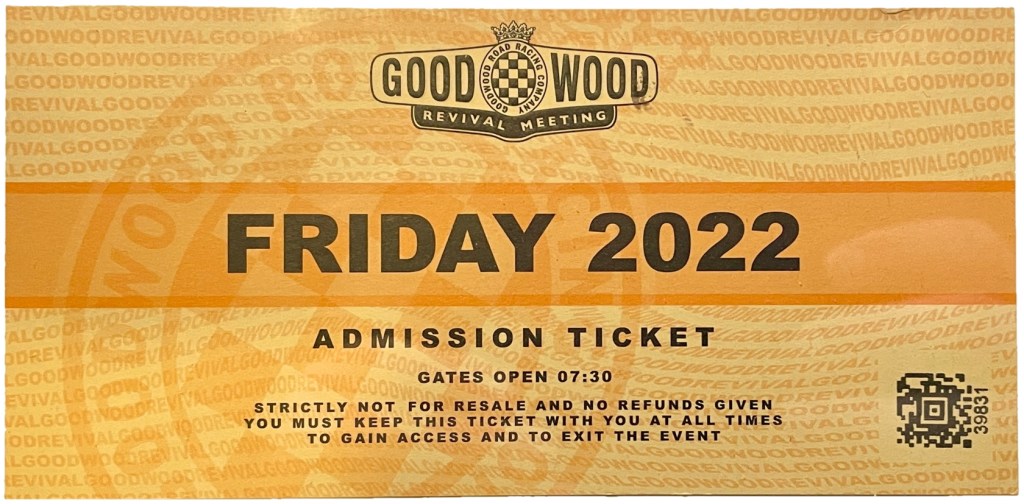
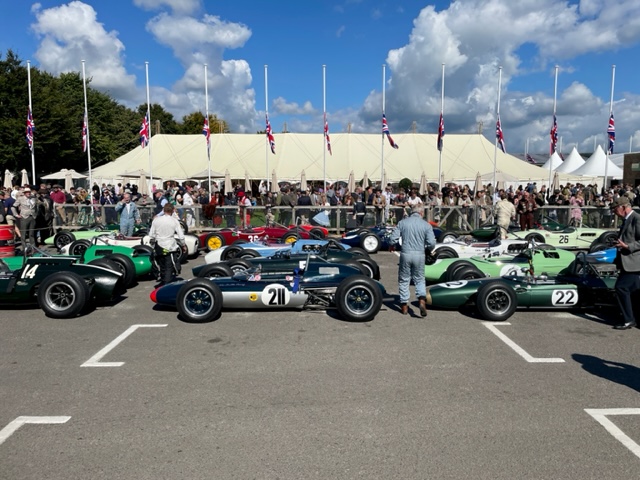
I went to the famous Goodwood Revival with a friend, as part of a birthday present. This is a classic car event on an enormous scale, located at a historic motor racing circuit and aerodrome on the outskirts of Chichester. There were lots of classic vehicles of all sizes and types, from small cars, to buses, old police cars, and even some WWII aircraft. As the owner of a Pre-1966 car I was able to park in the Revival Car Show with hundreds of other classics.

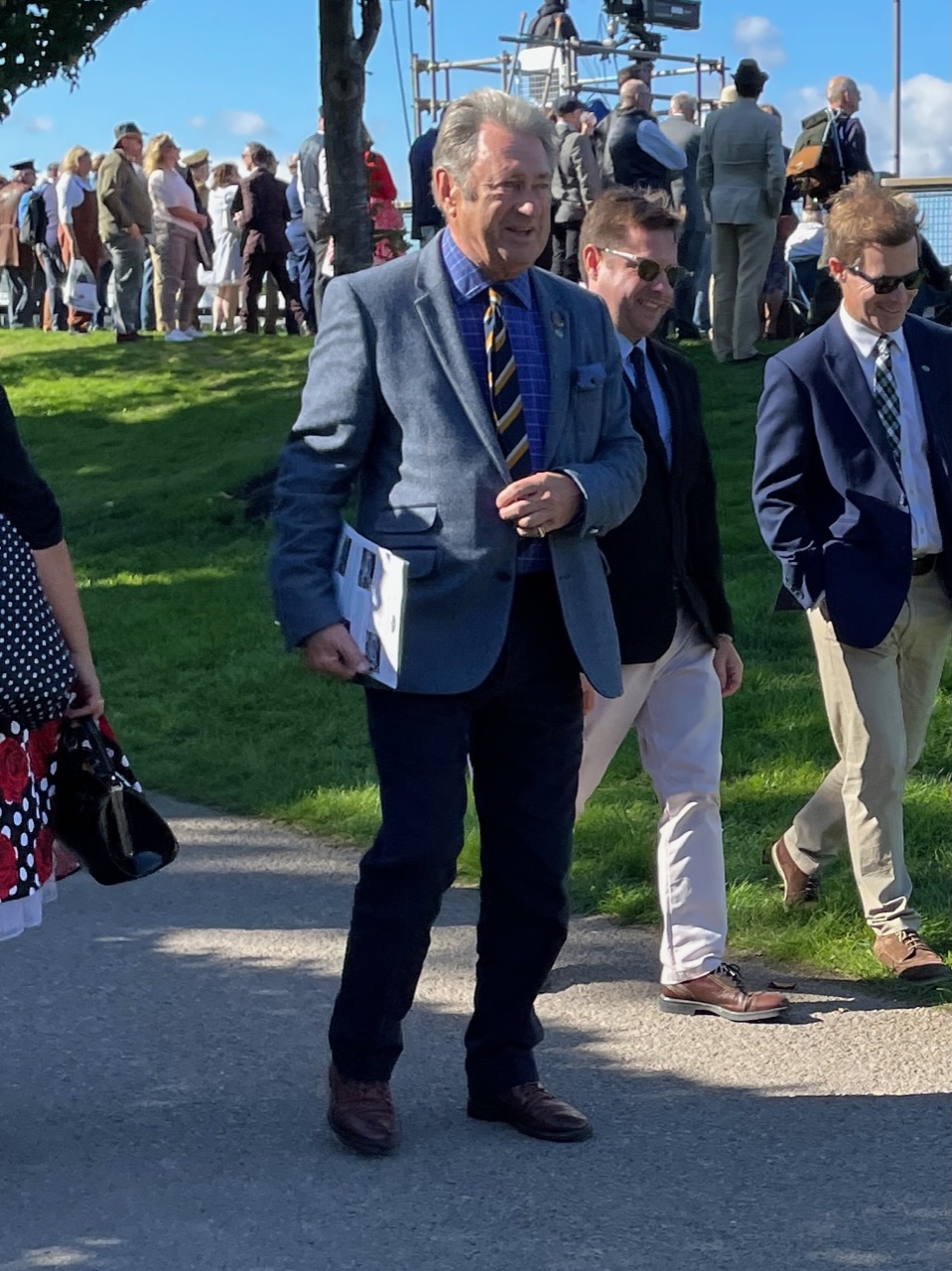
With perfect blue skies almost all day, it was a truly impressive gathering of thousands of vehicles, and almost everybody dressed in keeping with the era of the vehicle they arrived in. If that wasn’t enough, Alan Titchmarsh and Francis Bourgeois were in attendance.

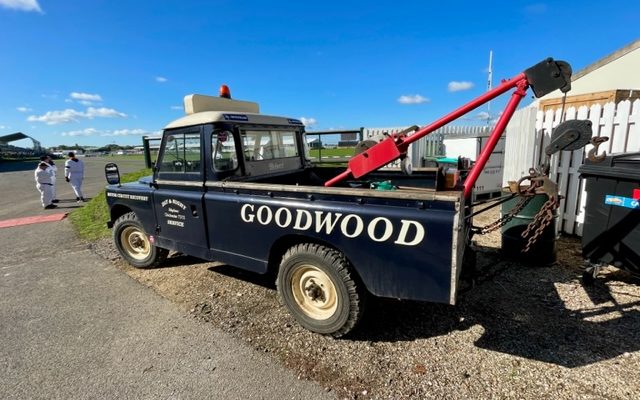
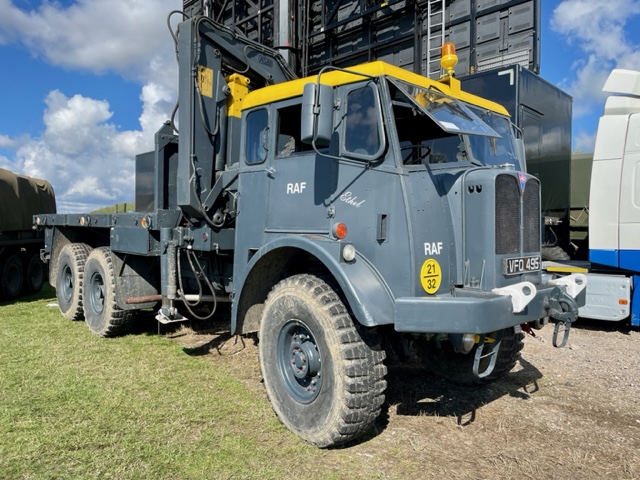
The Goodwood circuit recovery truck

York & more: 14th-16th October

In mid October I drove to York, via Nottingham, Pontefract and Drax, in a three day round trip. Almost immediately after setting off, right on cue, the driver’s side windscreen wiper blade started disintegrating, gradually becoming less effective at clearing the screen as i went. Gladly, it still just about did the job until I got home.

Drax Power Station in the background, which I toured in 2019.

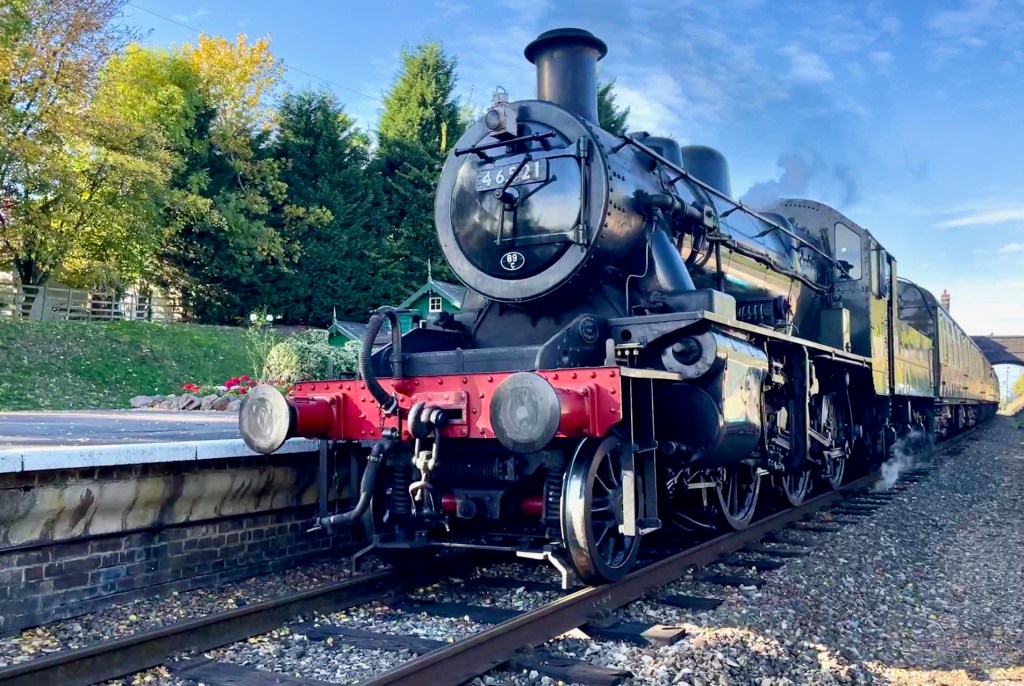
On the way back south I cut across from the A1 to the M1 via the A46, and stopped in at Rothley station on the Great Central Railway in the afternoon, for a cold drink and a break from driving, watching the steam trains go by for a little while before continuing home.

An LMS Class 2 (46521) pulls into Rothley Station

The Great Brent Cross flood of 2022: October 24th

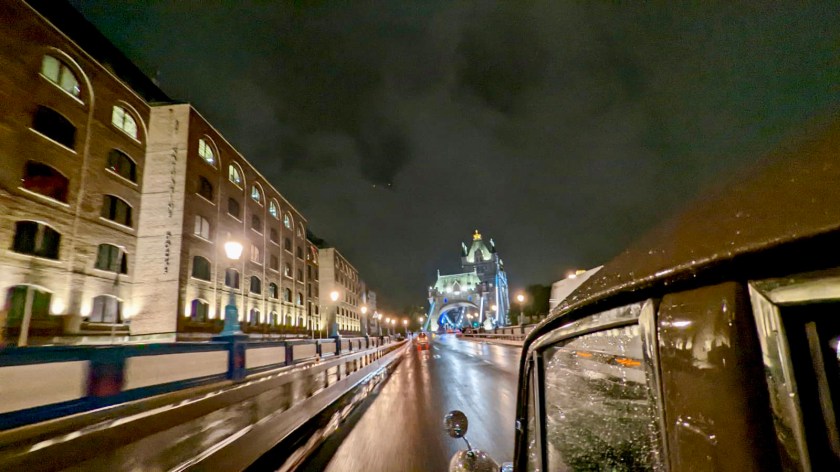
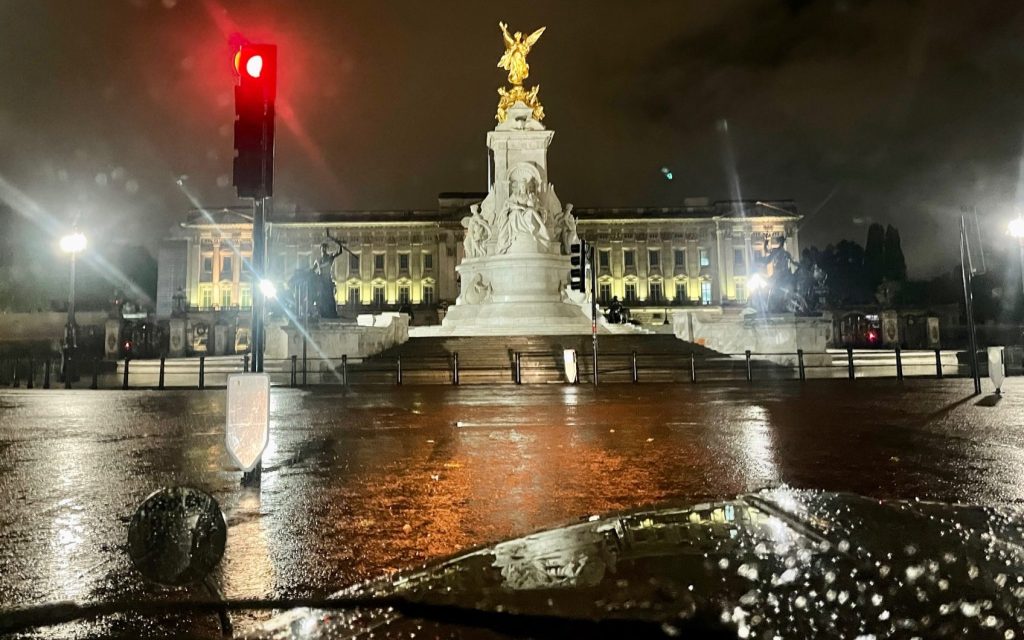
I took some friends down to London, who had asked if we could go for a drive around the city in the Morris – I don’t mind driving in London, so was happy to oblige, and give a sight-seeing tour.

Approaching Tower Bridge
Buckingham Palace

Whilst trying to leave the city late at night, we found ourselves in a traffic jam on the northbound carriageway of the A41, approaching the Brent Cross flyover. As we inched forward it became apparent that we were being herded towards the rising waters of the Brent Cross flood, which was the result of a burst water main. It was difficult to judge how deep it was in the middle, but with a high kerb on the left, a wall of traffic behind, a central reservation complete with barrier to the right, there was little choice but to plough on. All of the vehicles were merging as far right on the carriageway as possible, using the outermost lane to traverse the flood at it’s shallowest point, but as we got about half way through the flood water, I became quite alarmed as a knackered old volvo sped into the flood in the middle lane, hitting the water hard, producing a huge bow wave which almost swamped us. The engine spluttered, and for a moment I though the car was going to give up, but it made it through… unscathed? Well, not quite.

Manchester & the gearbox disaster: October 28th-30th

It can’t be said that I don’t put the Moggy to the test. This time I drove to Manchester to see friends. An ambitious trip, supposed to be some 400 miles in total, it wasn’t the furthest I’d taken the Morris to-date, but it was the furthest I’d been with passengers. The journey north was unremarkable, mostly on motorways, and was without issue. Manchester was interesting, and certainly somewhere I’d like to see more of.

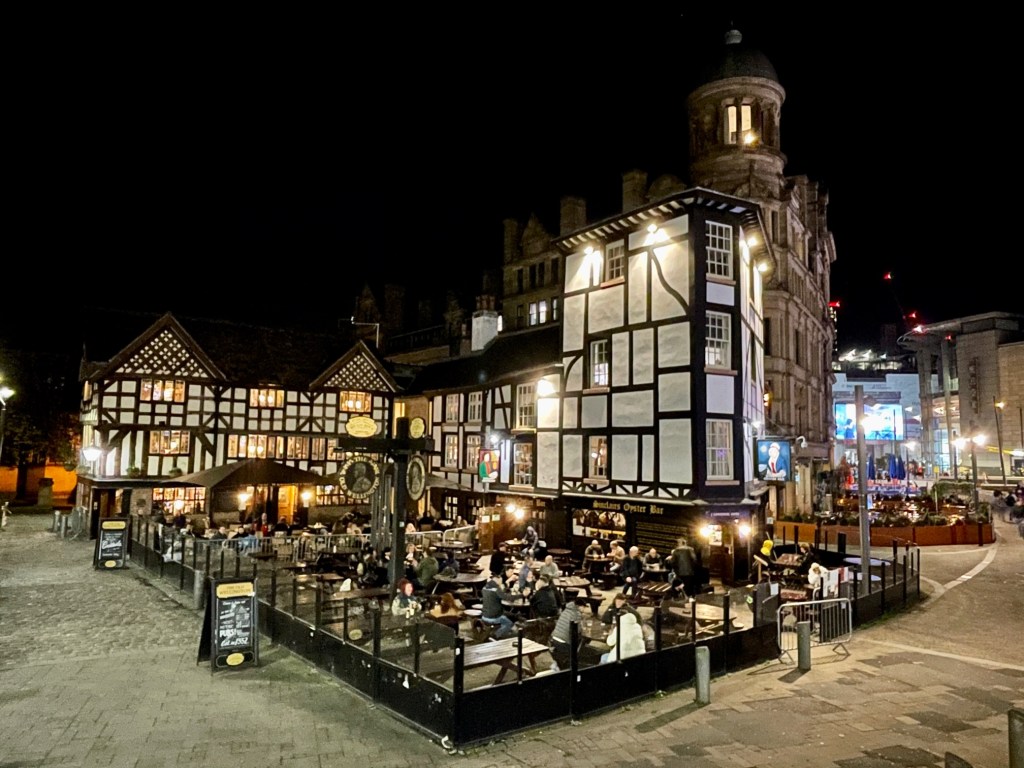
Shambles Square, Manchester.
The Old Wellington pub (on the left) was built in 1552. The buildings were moved whole in 1974, and were then dismantled in the late 1990s and rebuilt near Manchester cathedral to form Shambles Square.

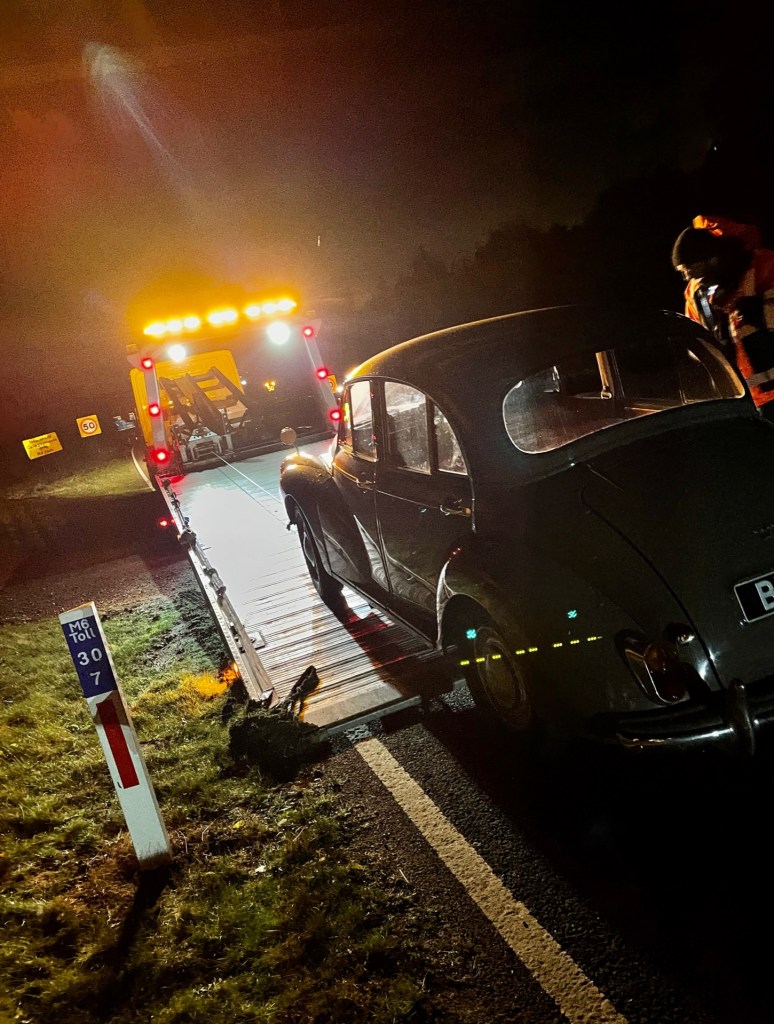
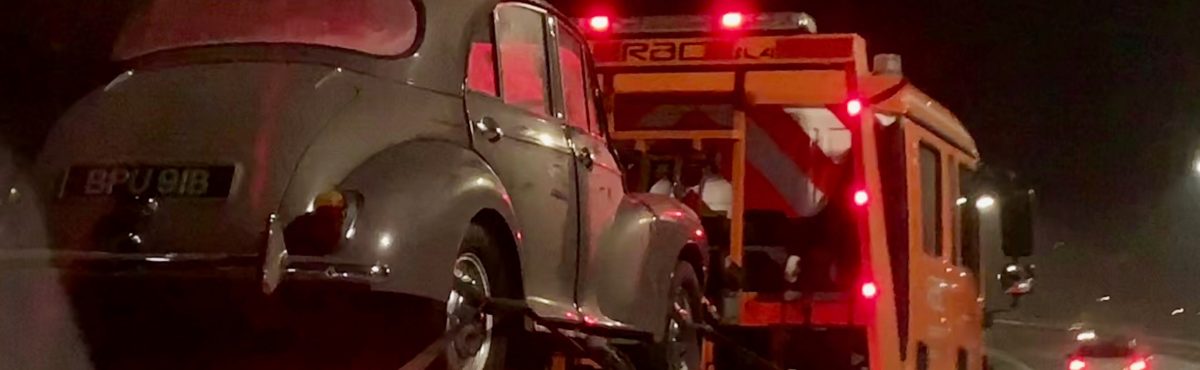
On the way back a few days later, however, approximately 95 miles into the return journey the gearbox suffered a sudden catastrophic failure. With a loud bang the cabin filled with smoke, and I had to coast the car into the hard shoulder just before the toll plaza on the M6. It took approximately two and a half hours for the RAC to get a recovery truck to us, and upon it’s arrival we were informed it would only take us to the services down the road, where we would have to await a relay – the estimated time for which was over 8 hours.

In actual fact, after some complaining, we were provided an Uber to complete our journey, and the car wasn’t recovered to the garage for another 3 days.

The silver lining of course being that we did not have to pay the £7.10 toll.

Luckily the gearbox was under warranty from repairs made earlier in the year, so I had it recovered to Sussex. The issue was apparently the result of a seized bearing.

The windscreen, and a long wait for recovery: November 28th

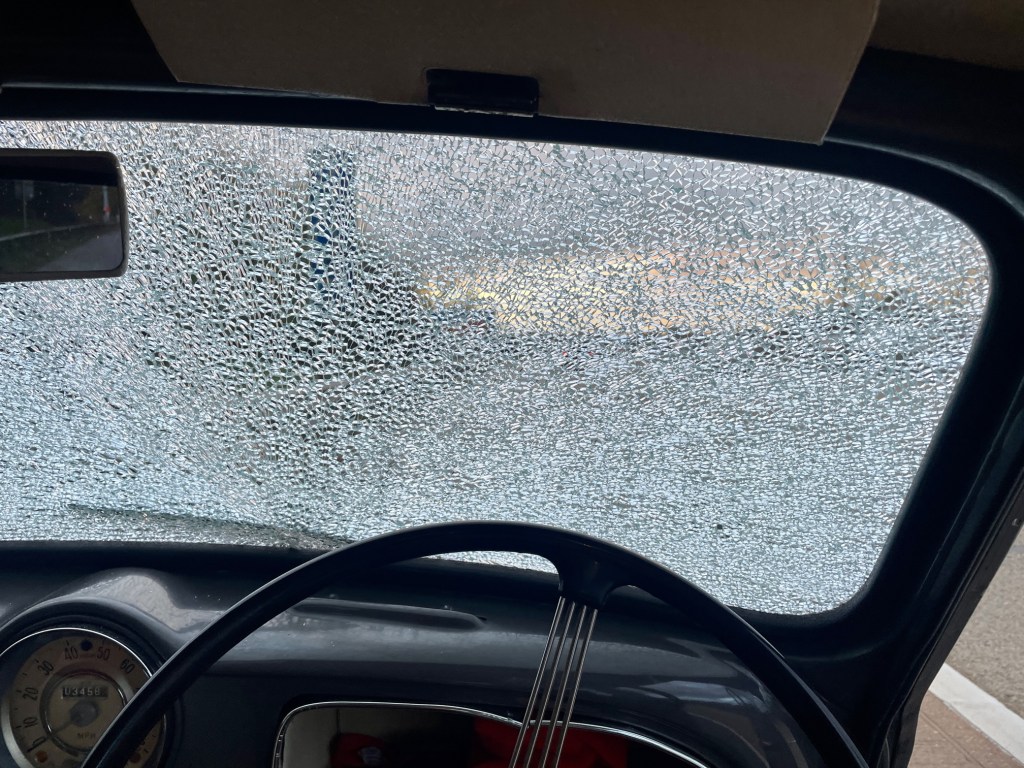
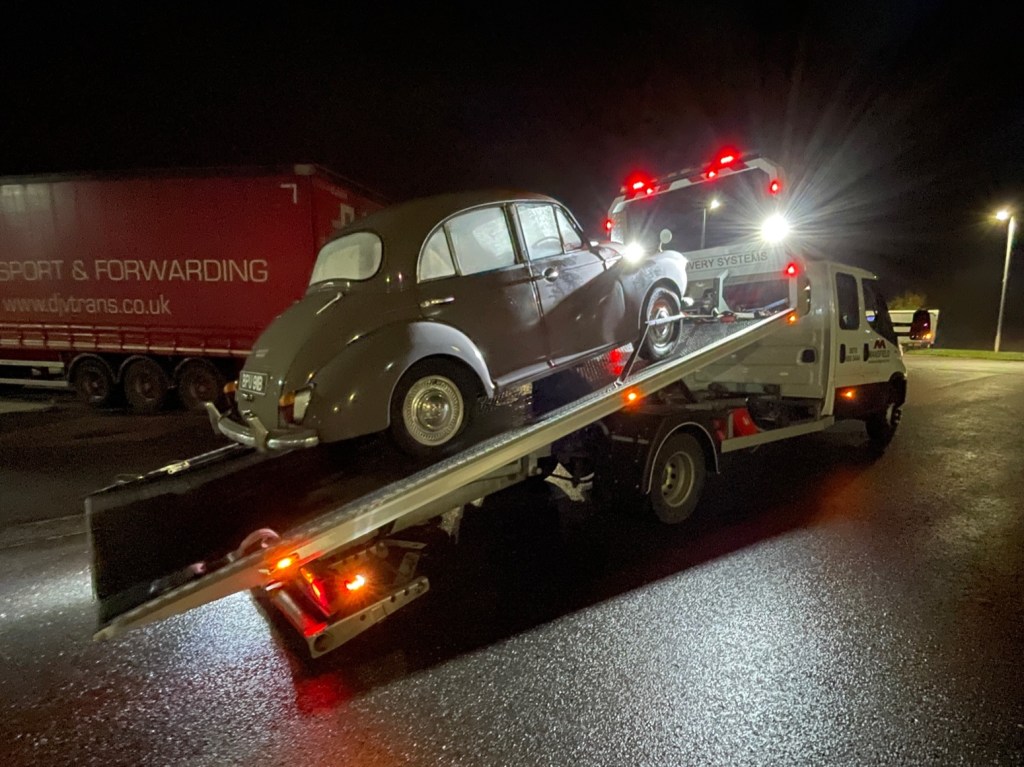
In November the car was ready to be collected following the gearbox work. On the 28th a friend dropped me at the garage where work was undertaken, and I headed back home with them following, only for the windscreen to shatter 1 mile before I passed Cobham Services. I was in the middle lane, and the original non-laminated windscreen shattered so badly that I lost all forward vision. Luckily an observant truck driver that I was overtaking somehow saw what happened, and slowed to allow me into the hard shoulder. Frustratingly the hard shoulder disappears for approximately 200ft before the slip to Cobham services, but I didn’t feel it was safe to rejoin the fast flow of traffic without forward vision, so after a call to the highways agency on a roadside telephone I was escorted from the motorway, whilst hanging out of the side window to see.

I’d been looking forward to getting my car back, so this was already an annoying setback, but being only an hour or so from home, I was more annoyed that recovery took approximately 8 hours to commence, with me arriving home gone midnight.

Often the problem with the recovery process which causes it to be so long-winded is that there is a lot of disorganization and confusion caused by so many people being involved, each telling you something different, all of whom seem eager to get you off the phone. One can quickly find themselves talking to several operators from multiple companies, being passed back-and-forth between the breakdown cover provider and the insurer. Both will tell you it’s the other side’s problem. Eventually you might get through to a manager or someone who sounds like they’re taking charge, who will tell you they understand your frustration, and who will set out a game-plan, only for none of it to come to fruition.

In my case my insurer told me that I could have the windscreen replaced by a garage of my choice, but the recovery truck driver that turned up was from a third-party operator, and as they couldn’t arrange storage, told me they’d only take my car to my home address. A taxi had been called to return me home, so that my car could be taken elsewhere, so clearly there was some crossed wires somewhere. The manager I had spoken to at RAC insisted that after all of the unnecessary frustration they’d caused he’d call me back to make sure I was safely on my way home, but I never heard from him again.

The windscreen: January-July, and why you should avoid Autoglass at all costs.

Autoglass repair to a very low standard, Autoglass replace eventually.

I had the windscreen replaced by Autoglass and they did not do a good job. The chromework around the new windscreen was scuffed, and water seeped in. They showed little interest in rectifying it, and fobbed me off repeatedly until I threatened legal action.

As dull as this is, the incompetence of Autoglass is something to be marveled, which could only be achieved with a level of effort. The following timeline of events was interspersed by literally hundreds of phone calls, dozens of emails, and every time a promise to come back to me with an answer – which only one employee ever followed up on,:

  • 28th November 2022 – The initial windscreen shatter on the M25.
  • 2nd December 2022 – New windscreen installed, but the technician damaged chrome windscreen trim.
  • 18th January 2023– My first complaint to Autoglass. It took me a while to realize the pool of water on the floor was caused by the window not being properly sealed, and poor weather meant that I was driving the Morris less at the time.
  • Feburary 23rd 2023 – A seemingly fictional person called Craig Molloy calls me, apparently eager to talk about the concerns I raised, but then never responds to any email or phone call I make, and nobody at Autoglass knows who he is or how to reach him. I am still not convinced he’s real.
  • March 1st 2023 – A second technician is sent out to seal the windscreen. He agrees with me that damage is present on the car, and that no sealant was used. He seals the windscreen by smearing silicone messily around the rubber, and then leaves, only to send me an email with a forged signature to represent me, which claimed there was no damage to the window aperture, and no rust.
  • April 17th 2023 – Finally after months of trying, somebody listens, and actually follows up, and gets the ball rolling towards a solution. There is one single good employee at Autoglass, who sees the repair through to the end, frequently checking in, and assisting with aranging transport for the car.
  • June 16th 2023 – Repairs are completed, the windscreen bevel has been repainted, the windscreen and rubber replaced, and the interior almost completely refurbished. 200 days after the initial windscreen break, the interior is now as watertight as a Morris Minor can be.
  • June 19th 2023 – Autoglass pay the Morris Minor Workshop £1779.04 directly for the repairs, including new carpet, underlay, headlining and kick-panels. We got there eventually!
  • July 18th 2023 – Autoglass email me to tell me that they would not sanction any remedial work as they did not believe there was any damage to the car, seemingly not realizing they’ve already admitted liability for causing the damage, transported my car twice, and paid the full amount.
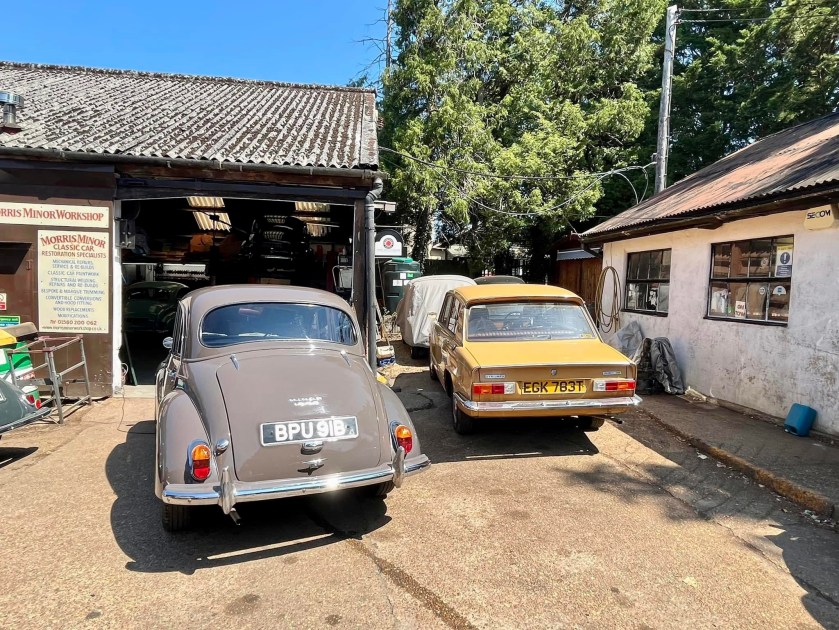
In the end, the Morris Minor Workshop in East Sussex put-right the awful standard of work undertaken by Autoglass.

Morris Minor national rally 2023

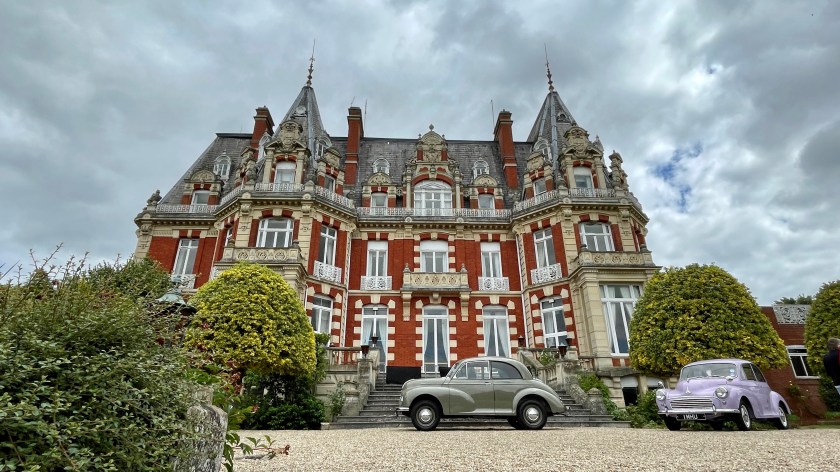
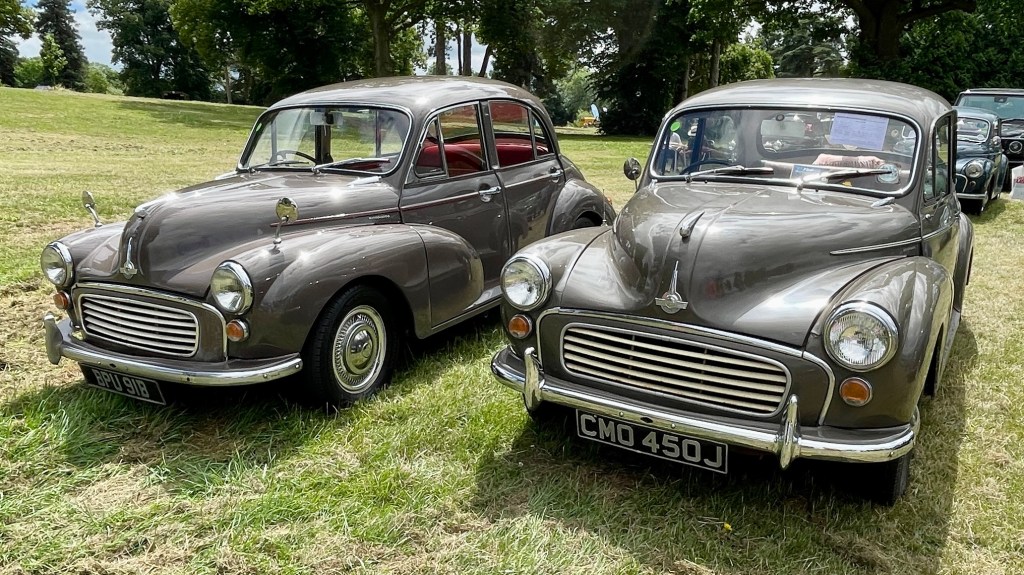
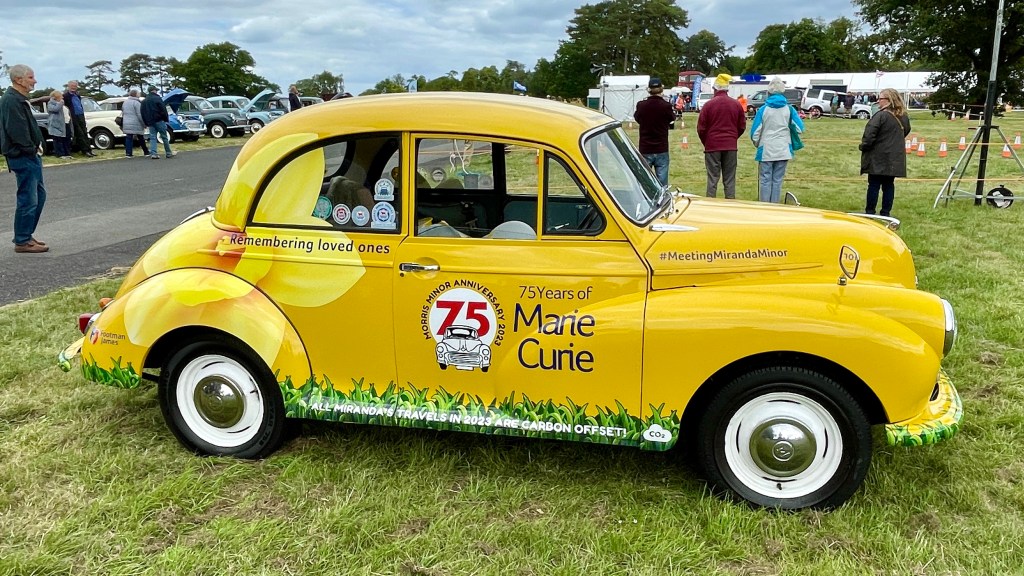
The Morris Minor national rally of 2023 was hosted at Chateau Impney, in the grounds of the french chateau style house, near Droitwich Spa. We visited the event on both days of the weekend and saw most of the cars on display, and I even took part in driving the MMOC’s charity car Miranda around an obstacle course of traffic cones whilst blindfolded, with my brother navigating. After this we also took the opportunity to visit the nearby Severn Valley Railway.

Chateau Impney, Droitwich Spa
Driving Miranda (the MMOC’s charity car) whilst blindfolded and only with instructions from my brother proved to be a challenge.

Cornwall 2022 (Part two)

Originally the intention of the whole trip was to visit some friends that lived in St Austell, although due to unfortunate events this wasn’t to be, which meant Day four of the Cornwall trip was another opportunity to bag a couple of lighthouses I had previously not visited. The southern coast of Cornwall between Falmouth and Rame Head is one of the few bits of coastline in England that I’m not so familiar with, so I decided that I would start the day at St Anthony Head and work my way East, stopping at Mevagissey and Fowey.

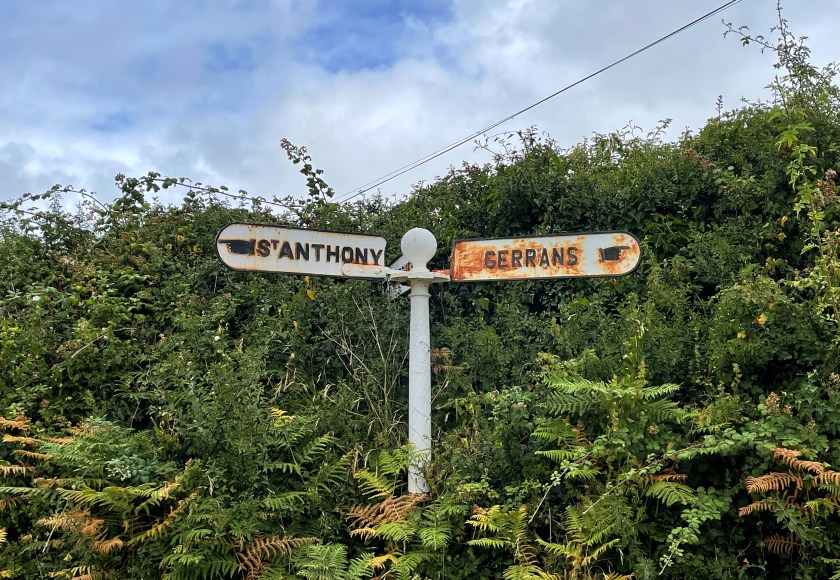
Driving through Gerrans to St Anthony Head: Another Morris!

The Road to St Anthony Point was narrow, bendy, and in some places pretty steep – at least for a Morris Minor! Going down some of the inclines on the way there made me wonder if the car would struggle in the other direction, but it coped just fine.

An antiquated cast iron Fingerpost among the ferns points the way to St Anthony Head.

After a good 45 minutes of driving I finally arrived, and a short walk further down the steep path at the end of the headland bought me to the entrance gate of the lighthouse.

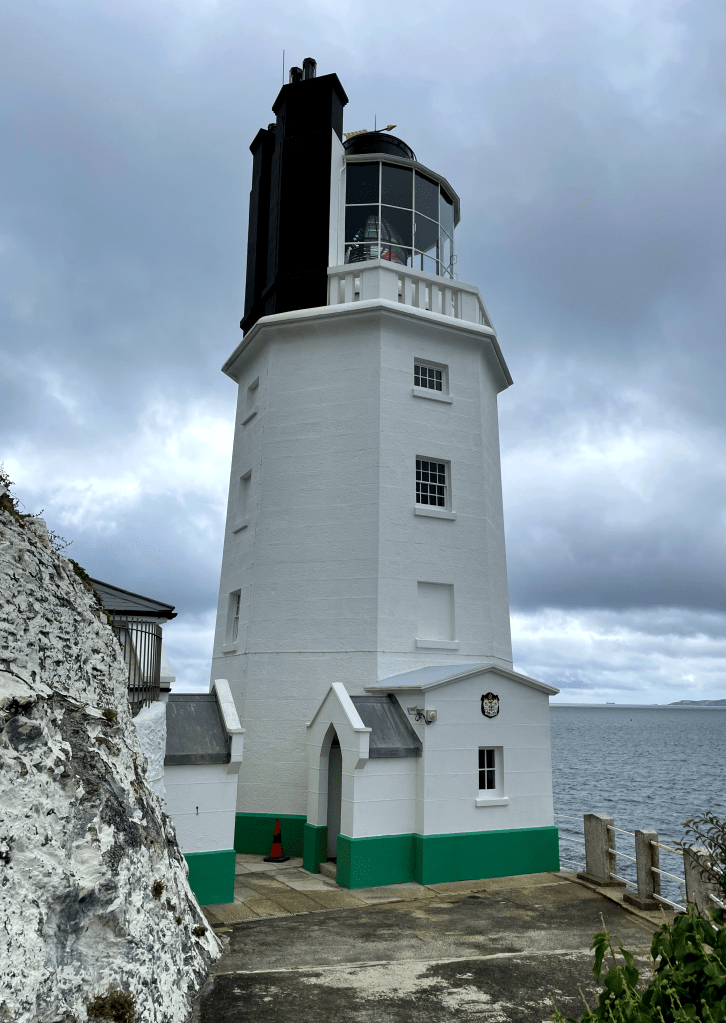
Whilst not the oldest, not many surpass it in: St. Anthony Lighthouse is one of the older Trinity House lights still in active service.

No time to hang about though. My next port of call was Mevagissey, which is nearer to St Austell, so most of the drive there was backtracking the route I’d already taken, although Waze did find me some 20% (1 in 2.75) inclines to have fun with on the way.

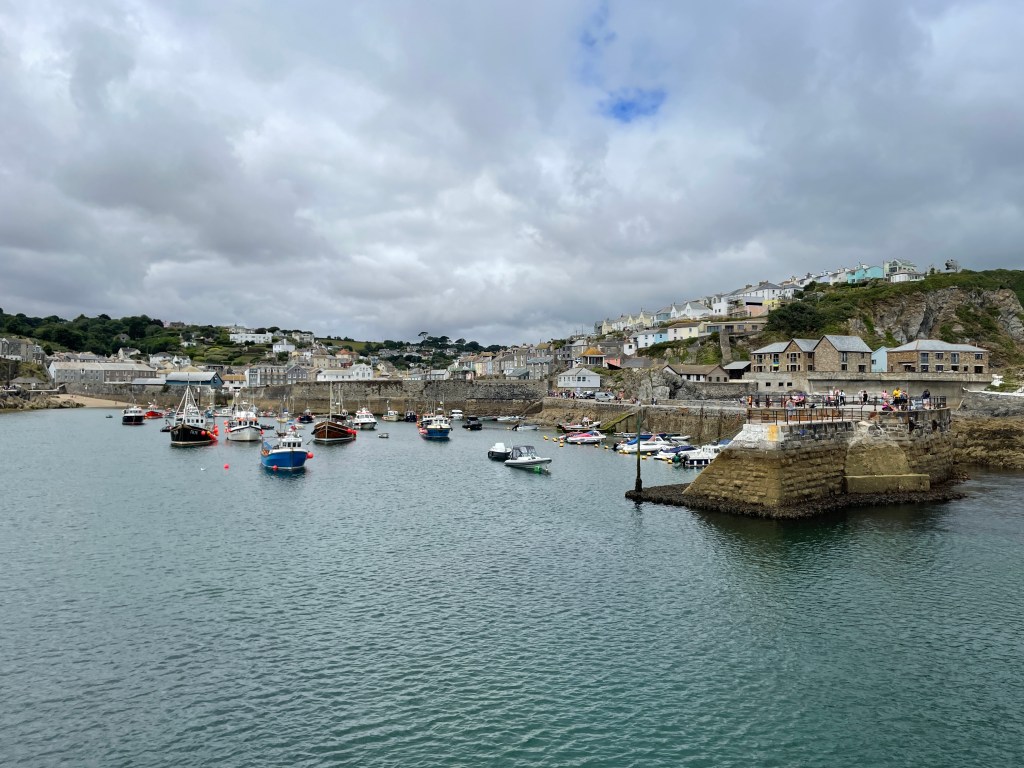
Mevagissey was very nice, and If I hadn’t had so much I wanted to tick off in this trip I would’ve stayed for longer and explored more. I suspect it’s even nicer on a sunny day! The streets are very narrow, and most don’t even have pavements. The blind bends and narrow lanes felt tight even in a Morris Minor.

This short clip shows just how narrow some of the streets in Mevagissey are. Despite taking one corner wide I still struggled to get around it in one go… although that might just be a reflection of my driving skill.
Mevagissey Harbour and it’s colourful fishing boats.
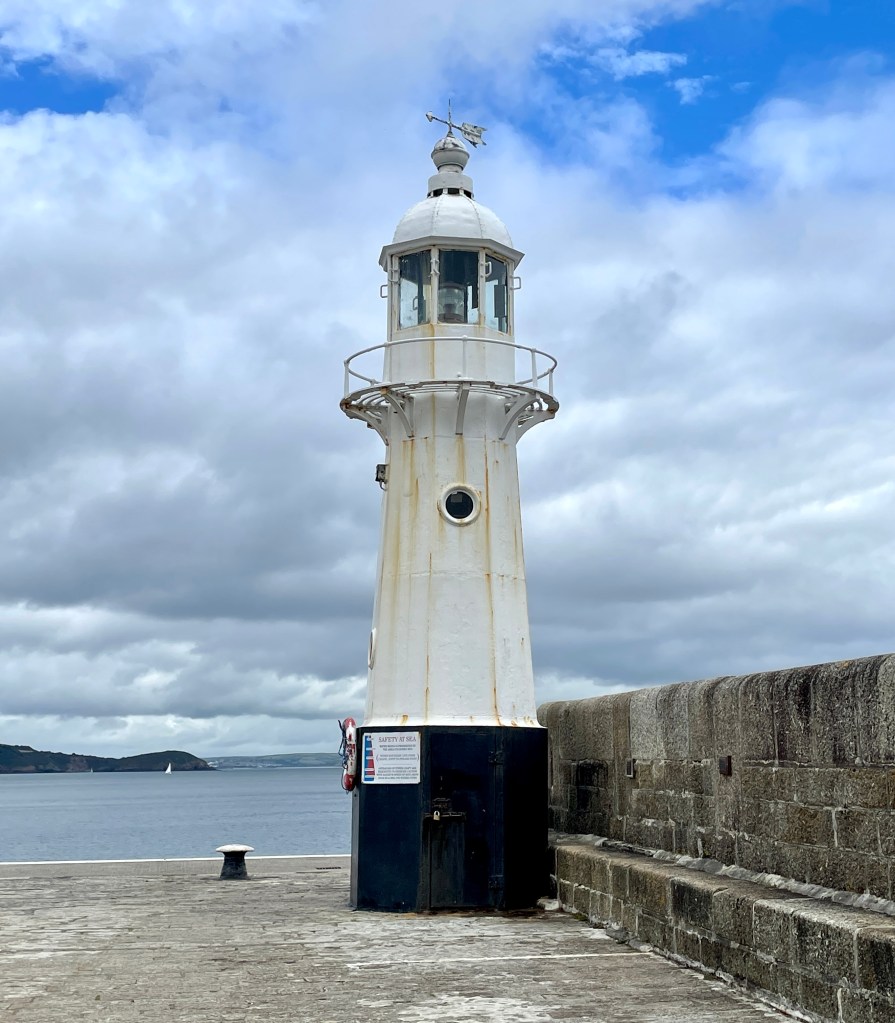
Mevagissey Lighthouse, at the end of the village’s outermost pier.

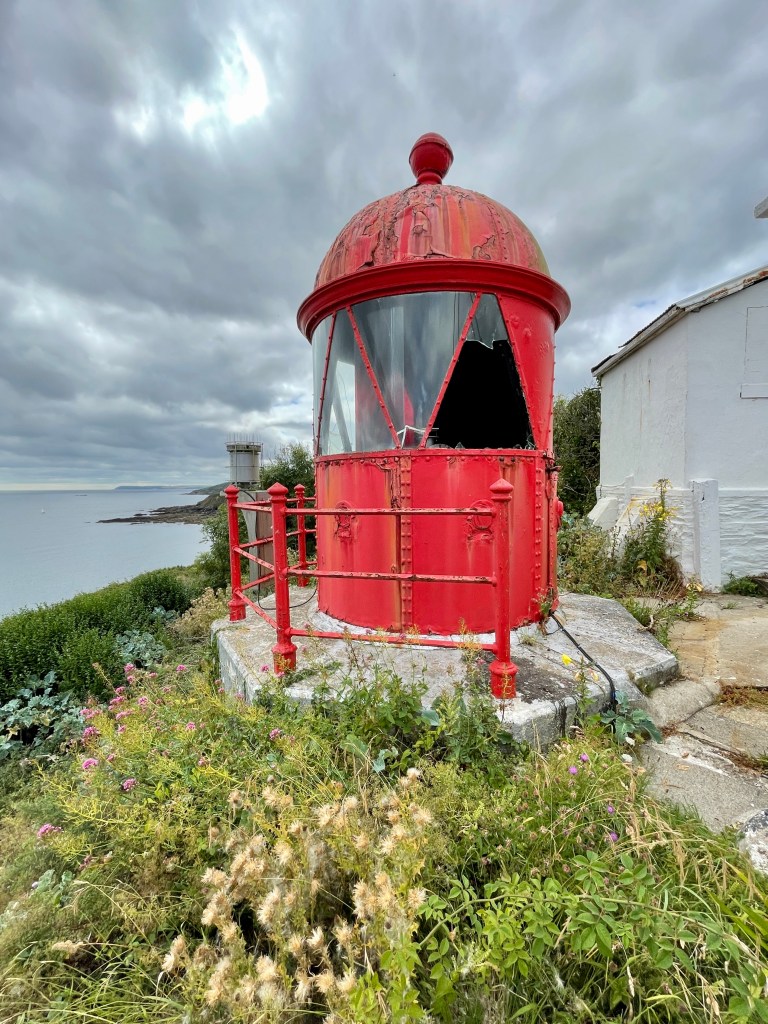
The last place for me to tick off on the part of the trip was Fowey. A passenger ferry service to Fowey and back operates from Mevagissey, and this probably would’ve been a better option, but I opted to drive there as I wasn’t sure how long I’d need. I didn’t see much of Fowey itself, as it was getting late in the day and I wanted to get to St. Catherine’s Point, but in visiting it I did manage to get covered in Anti-Climb paint. The lighthouse at St. Catherine’s Point has unfortunately been vandalized, and has suffered badly from the salt air, with parts of the roof and door corroding away.

The derelict St. Catherine’s Point Lighthouse, with Dodman Point in the distance.

Cornwall 2022 (Part one)

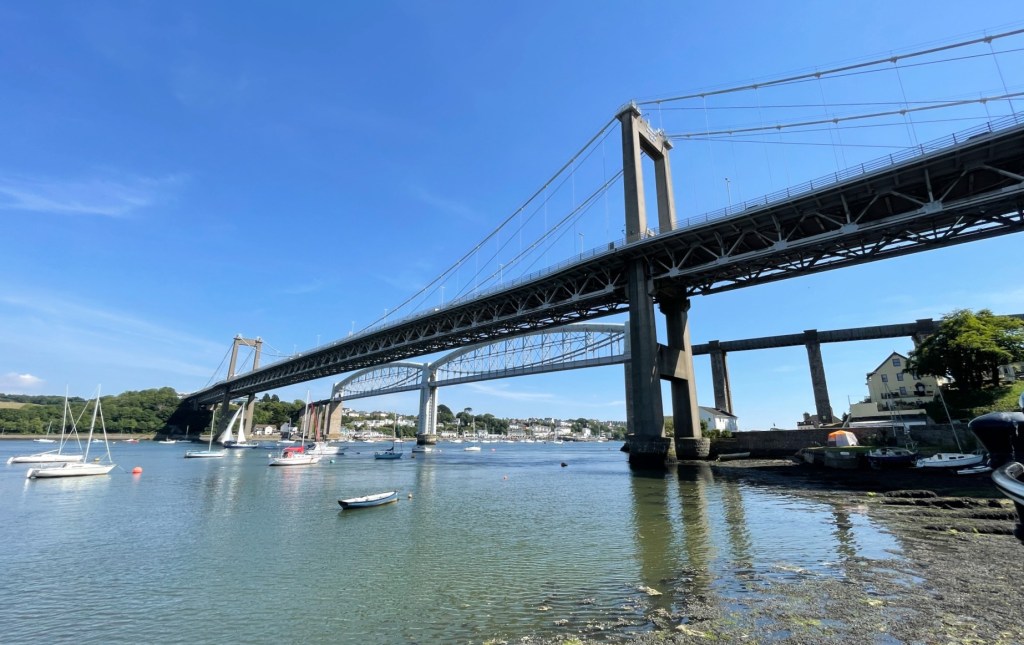
Following on from my last post, still on the second day of the Land’s End mission, I crossed the Tamar suspension bridge, and in doing so, the border into Cornwall.

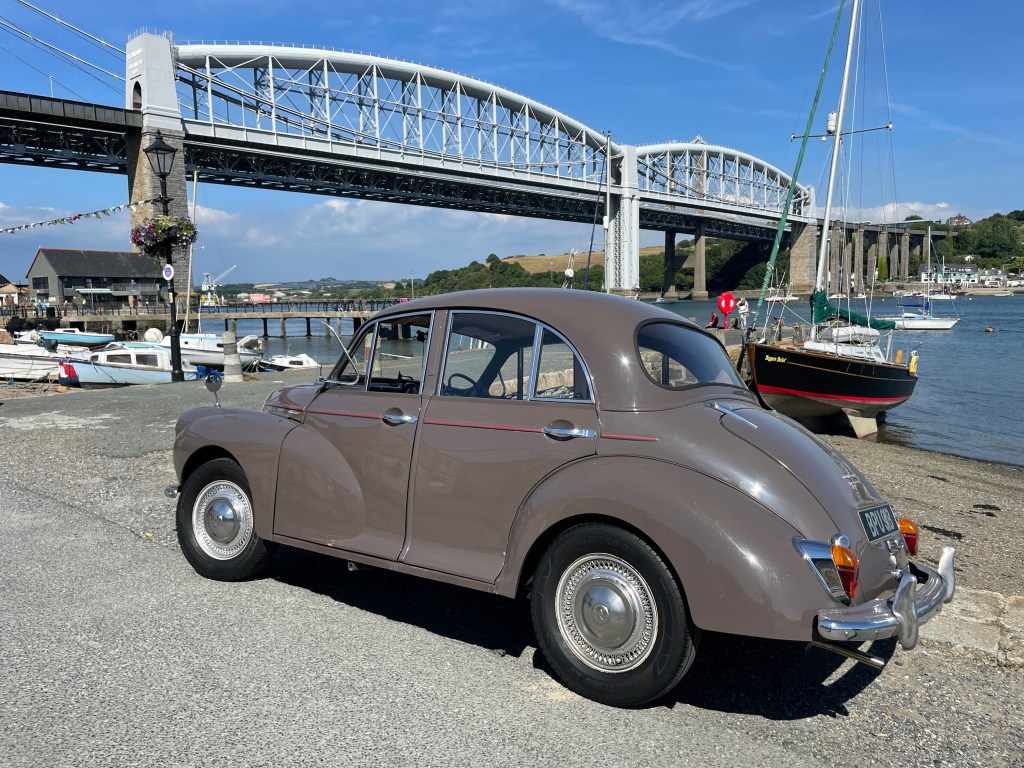
I crossed into Cornwall just after 3pm and immediately went down to Saltash, as I had wanted to see Isambard Kingdom Brunel’s Royal Albert Bridge up close. It is definitely the more impressive of the two crossings, and despite being opened in 1859, it could easily pass for a much more modern and almost futuristic design even today.

It is a credit to Brunel that even 163 years after his death so much of his Great Western Railway still survives, virtually unaltered in large sections.

The road bridge opened in 1962, replacing the Saltash Ferry which had first operated around the time of the Norman conquest (~1066). It is one of the oldest large suspension bridges in the UK, beating the Forth Road Bridge (opened 1964), the Severn Bridge (1966), and the Humber Bridge (1981).

I had hoped to share the dash-cam footage of driving across the bridge, but it unfortunately got recorded over in the following days.

Other than the earlier meandering through Devon, and my quick visit to Saltash, Day two of the trip was mostly driving, with me arriving in St Austell in the late afternoon.

Day three bought gloomier skies with it, and the morning started off with a heavy mist and lots of rain. I had wondered whether it was even worth heading to Land’s End, as it was still another 57 miles, but I pushed-on, as it didn’t look likely that the weather would improve much in the coming days. It cleared up slightly as I neared Penzance, but after this the skies remained grey for pretty much the rest of my time in Cornwall.

Finally there, as far as I could take the car: The entrance to the visitor attraction at Land’s End

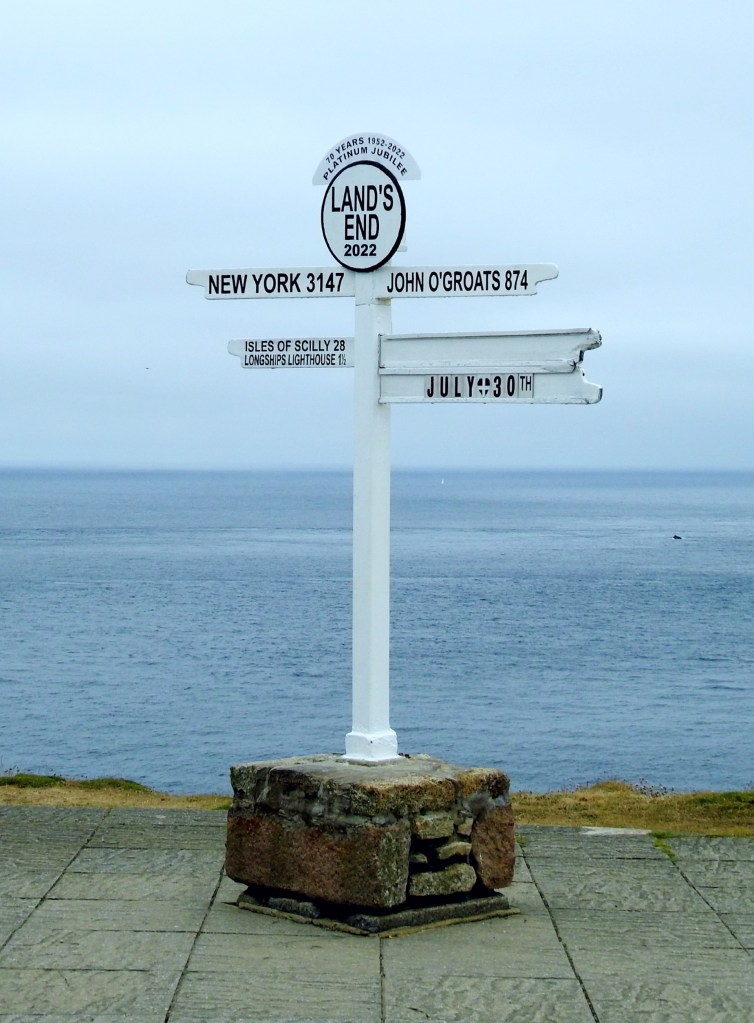
As much of an achievement as it may have felt to get a 58+ year old car hundreds of miles across the country to the very end of the land, Land’s End is in my opinion a fairly crappy tourist trap, with attractions and shops that are hardly relevant to the location’s significance. It costs £7.50 to park, and you’re not allowed to take your own photos at the sign, you instead have to enlist the on-site photographer.

The scenery at land’s end is great, and if I had time I would’ve walked around more, and taken more photos, and perhaps visited nearby Cape Cornwall or Pendeen watch, but I wanted to make it to Lizard so I could tick-off another of England’s cardinal points, and it was already gone 1pm. Onwards.

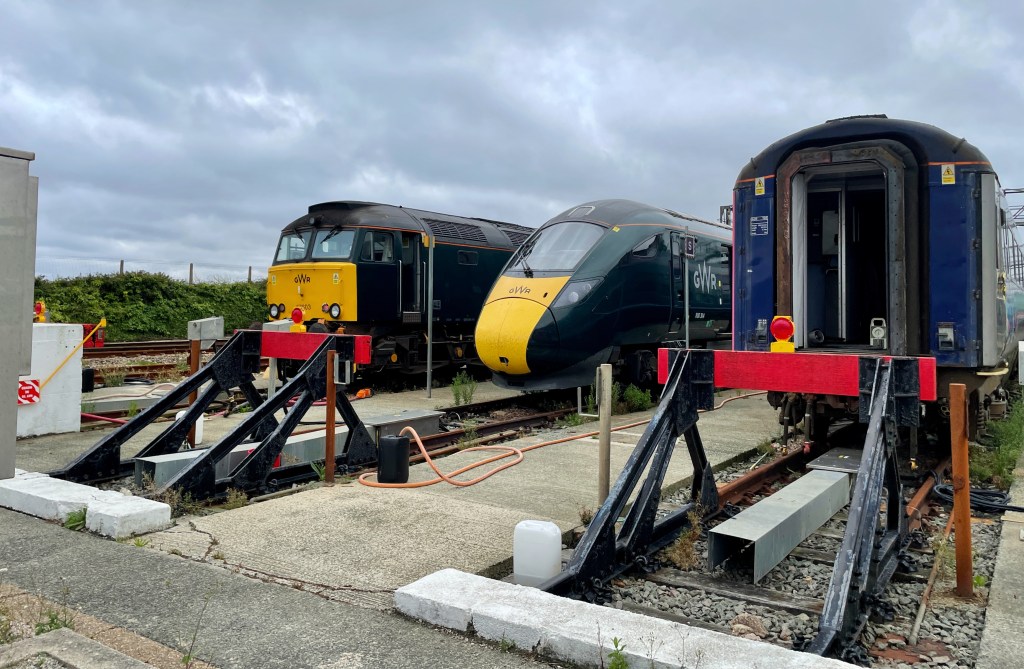
Continuing on, I briefly stopped at Longrock, near the train maintenance depot to get a view of Saint Michael’s Mount before continuing to Lizard.

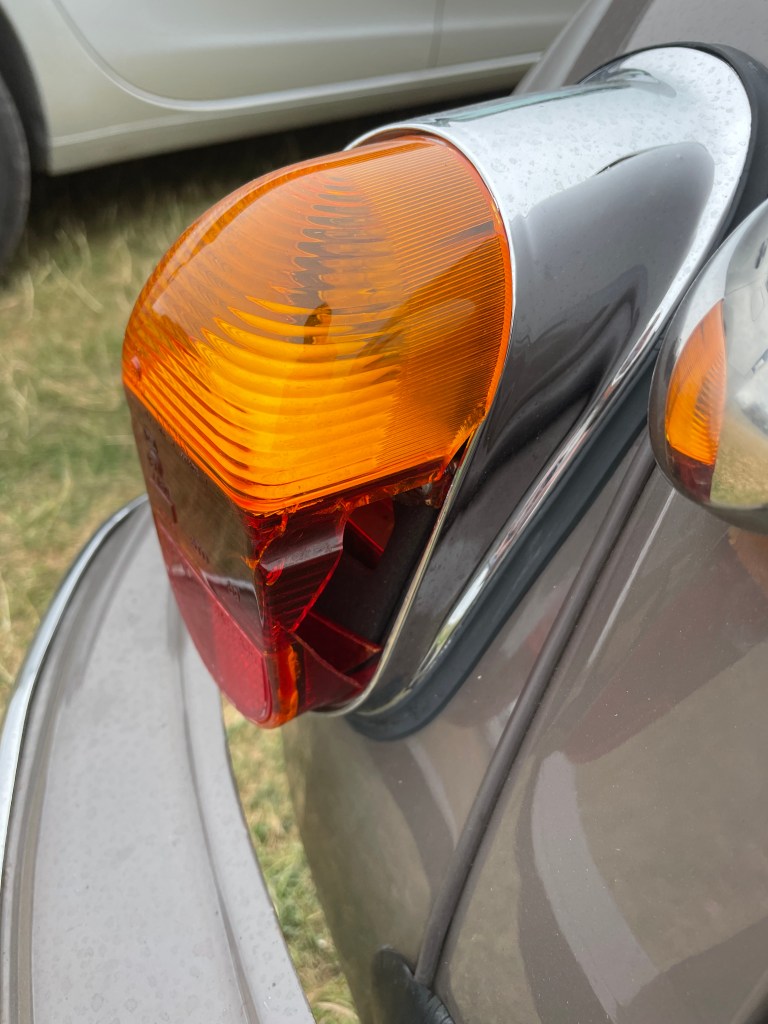
I arrived at Lizard point just after 3pm. When I parked up I noticed that somewhere on the trip one of the rear light lenes had shattered. There wasn’t much I could do about this until I was back home, so I ordered a replacement and went for a walk.

Lizard Lighthouse marks the southernmost point on UK mainland
Unfortunately at Lizard I discovered that the left side light lens had shattered!

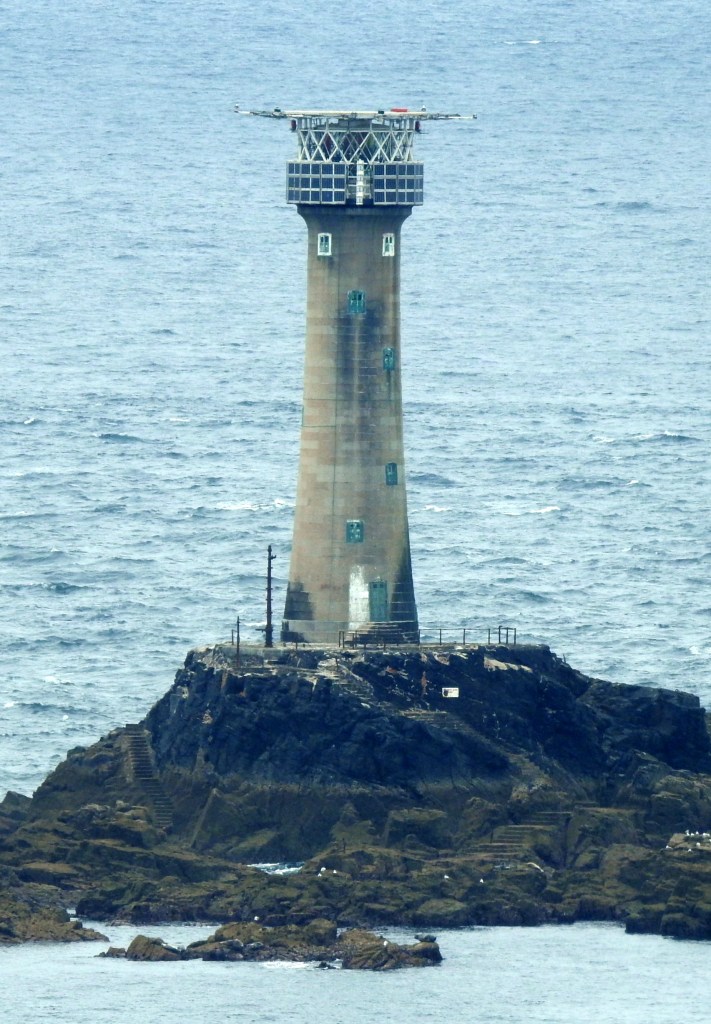
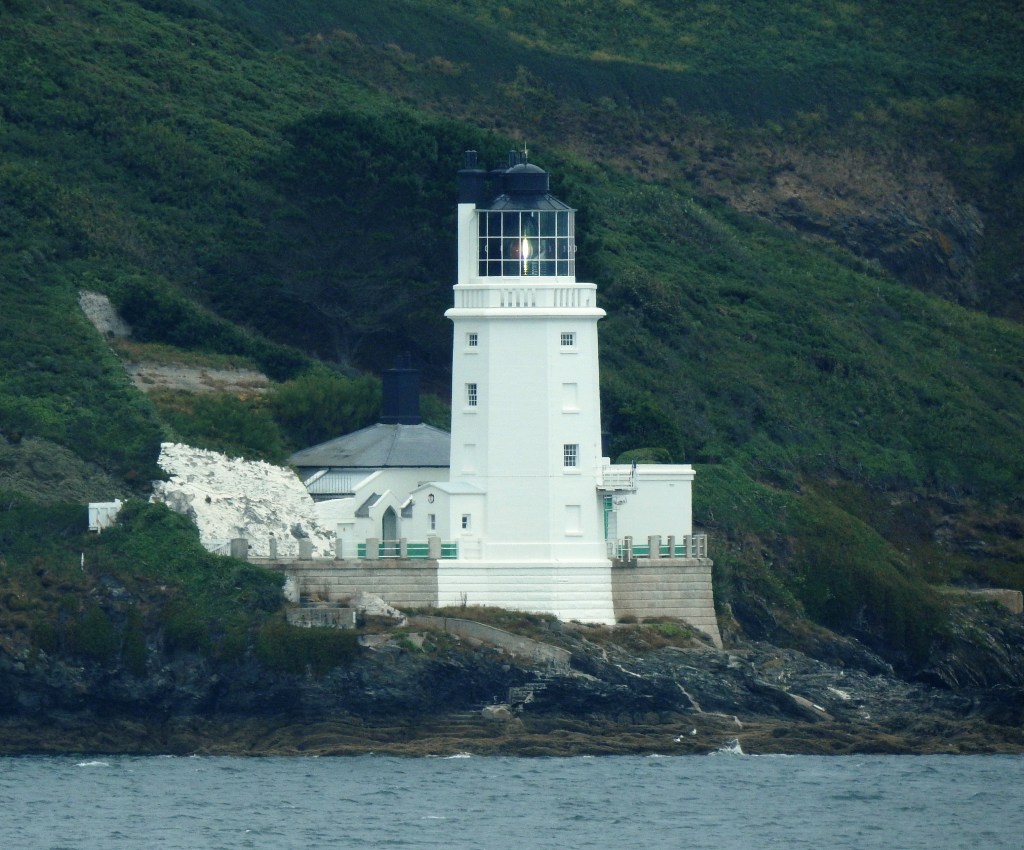
After this, my final destination for the day was Pendennis Point, from where I would be able to view St. Anthony Lighthouse, which is one of the few in the UK that until now I hadn’t managed to photograph clearly. The week of my visit had seen the lighthouse undergo conversion from a halogen lamp to a LED light source.

The lighthouse is over a mile across from Pendennis Point, but with a zoom lens I was able to get this shot.

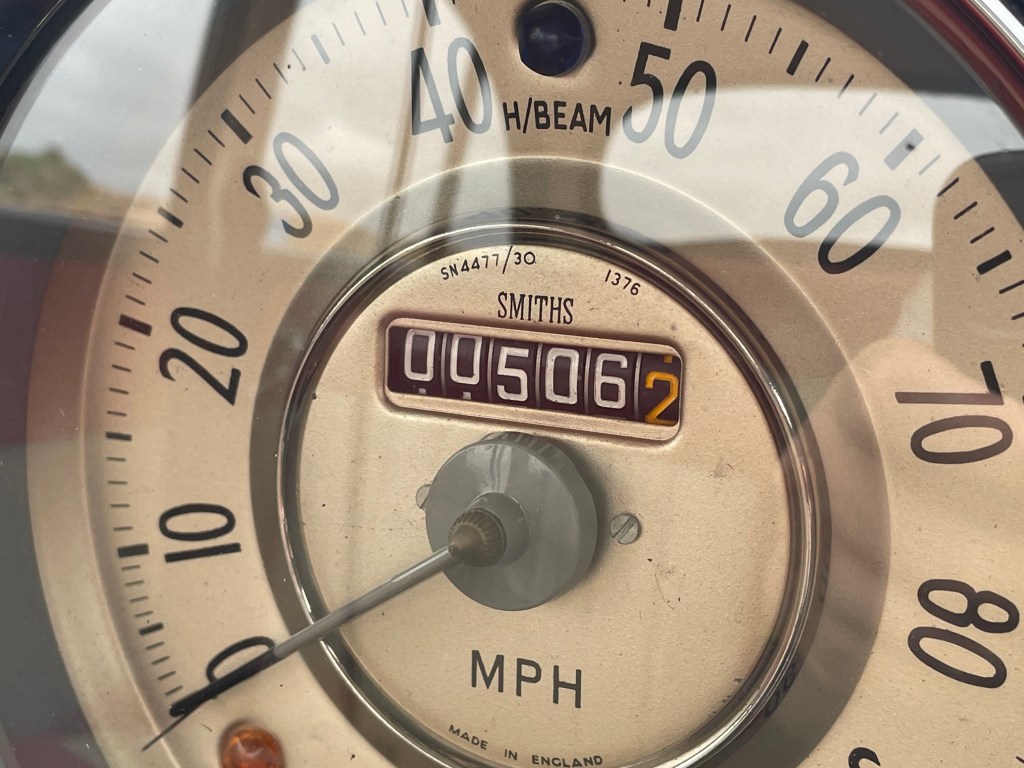
By the time I had arrived at Pendennis Point, gradually heading back to the hotel in St Austell, I had done over 420 miles since setting off a few days ago.

506 miles on the clock.

Day three, although slightly rushed, and despite the damage to the rear light, was a success, and I managed to see everything I had wanted to.

Devon 2022

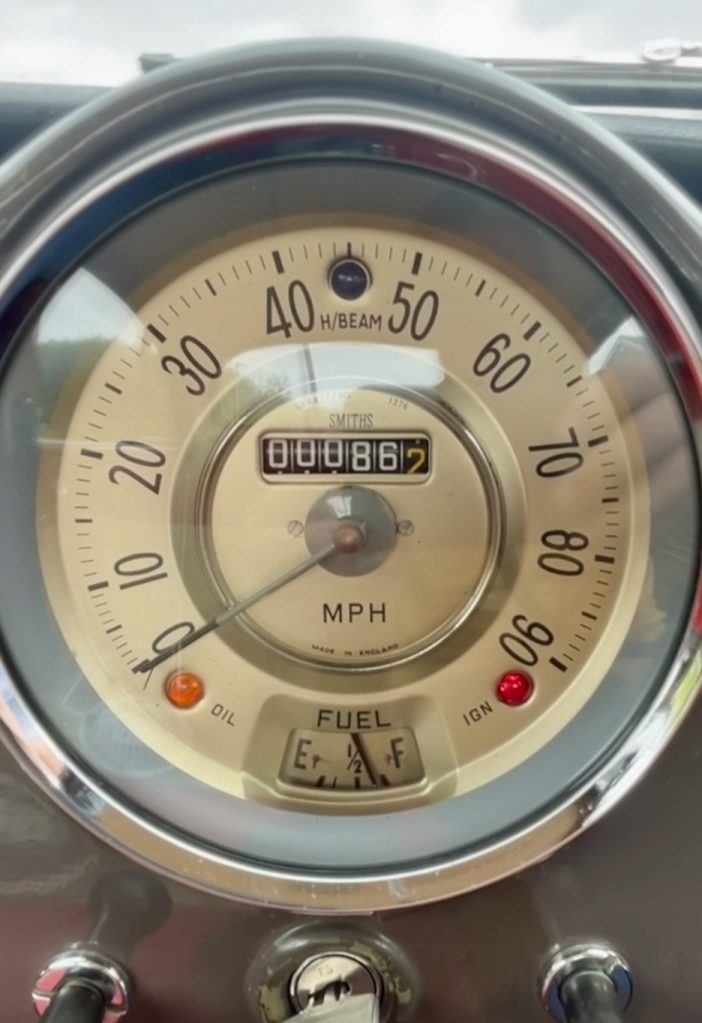
Last month for my birthday I decided to go on a little road trip, with the ultimate goal of driving the car to Lands End, the English mainland’s westernmost point. With the speedometer having recently been replaced and now displaying the correct speeds, and counting miles correctly, I set off, starting with only 86.2 miles on the clock.

Starting off with an almost new speedometer.

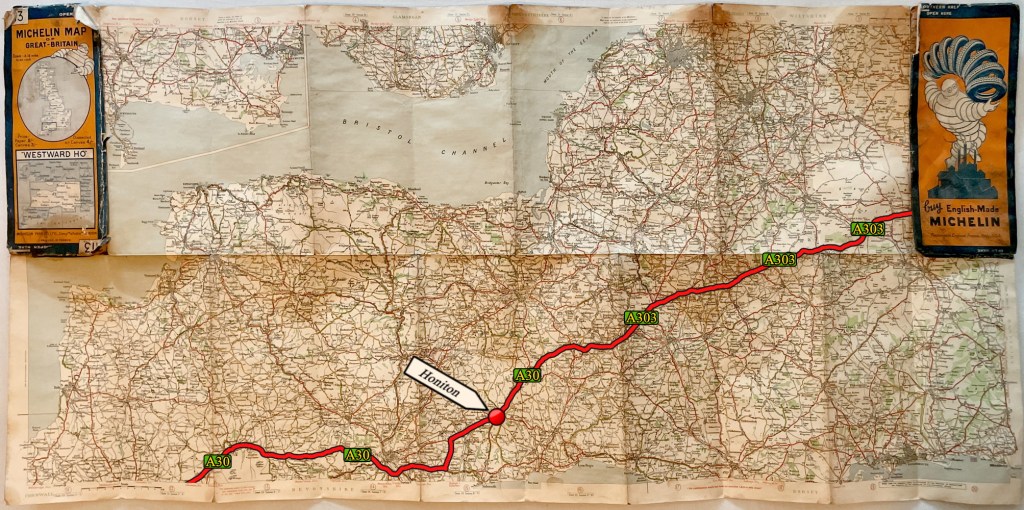
The journey started around 1:30pm on July 28th, with the aim of reaching Honiton by the evening. The route I took was via the M25, joining the M3, turning off onto the A303, and eventually A30 for the rest of the drive.

This Michelin Map entitled “Westward Ho” dates from 1929, so predates the earliest parts of the M5 by more than 30 years, but I drove along the A303 and A30 for most of the trip, which has remained much the same. I have highlighted my route in red.

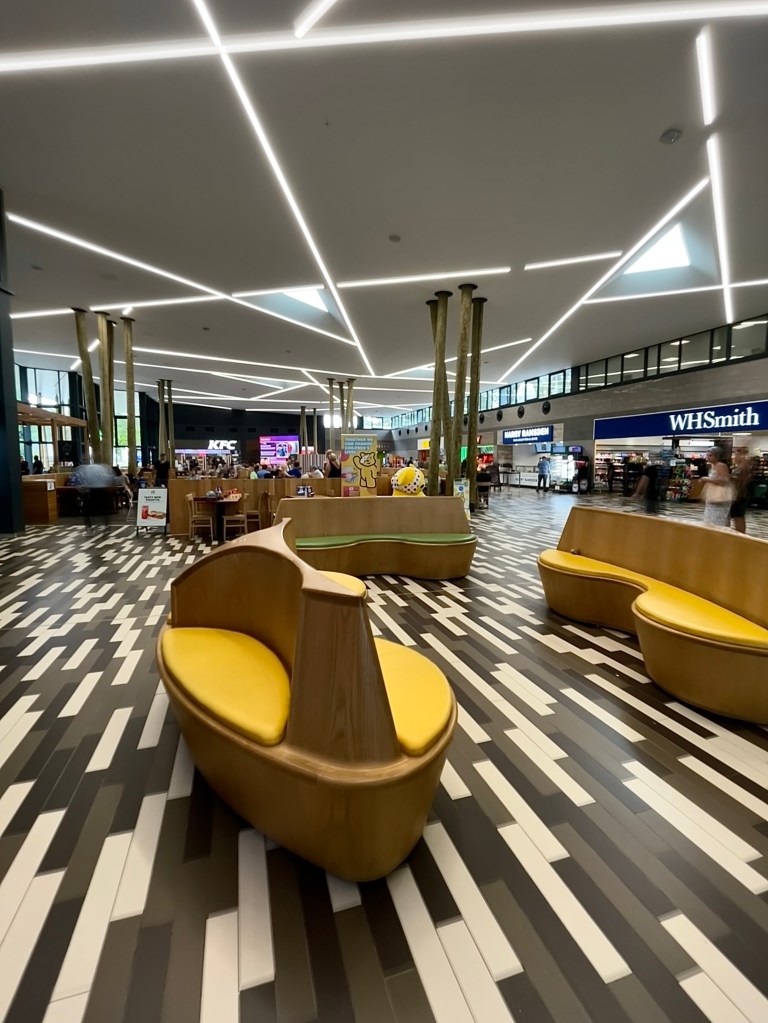
The motorway sections at the start of this journey were fairly boring, and I didn’t see much of note other than an Emirates A380 passing overhead on it’s final approach for runway 09L at Heathrow. As I continued down I stopped at Fleet Services, the westbound building of which has been rebuilt to very modern standards after the old was destroyed by a large fire in 2016. It’s not quite Cobham, but it’s a huge improvement on what was there, especially when compared to the eastbound side.

The open food hall space of Fleet Services, drastically different from the opposite carriageway.

About another hour further down the route I approached Stonehenge. Here the A303 narrows to one lane in each direction, making it a well known bottleneck on this, one of the most popular routes to reach the Southwest of England.

A distant pile of rocks.

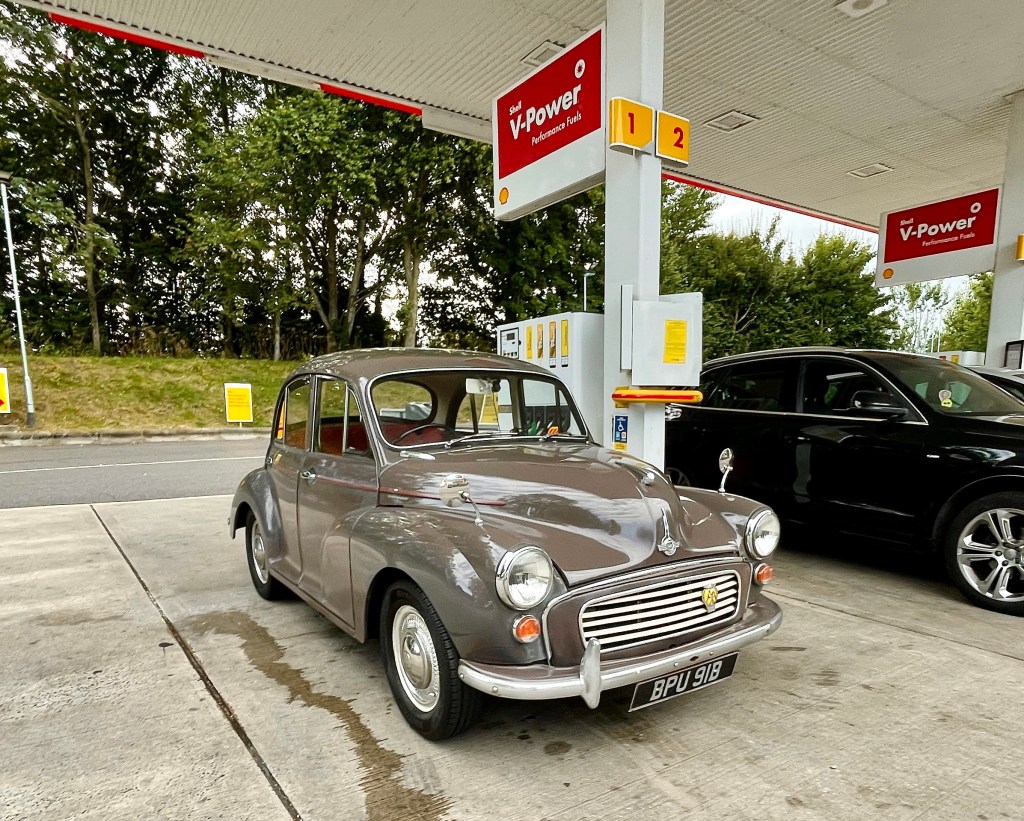
Even though I could’ve probably made it to Honiton on a single tank, I stopped at Ilminster services for fuel just to be on the safe side, eventually arriving at my Premier Inn just before 7pm.

Stopping for a splash of fuel at Ilminster services.

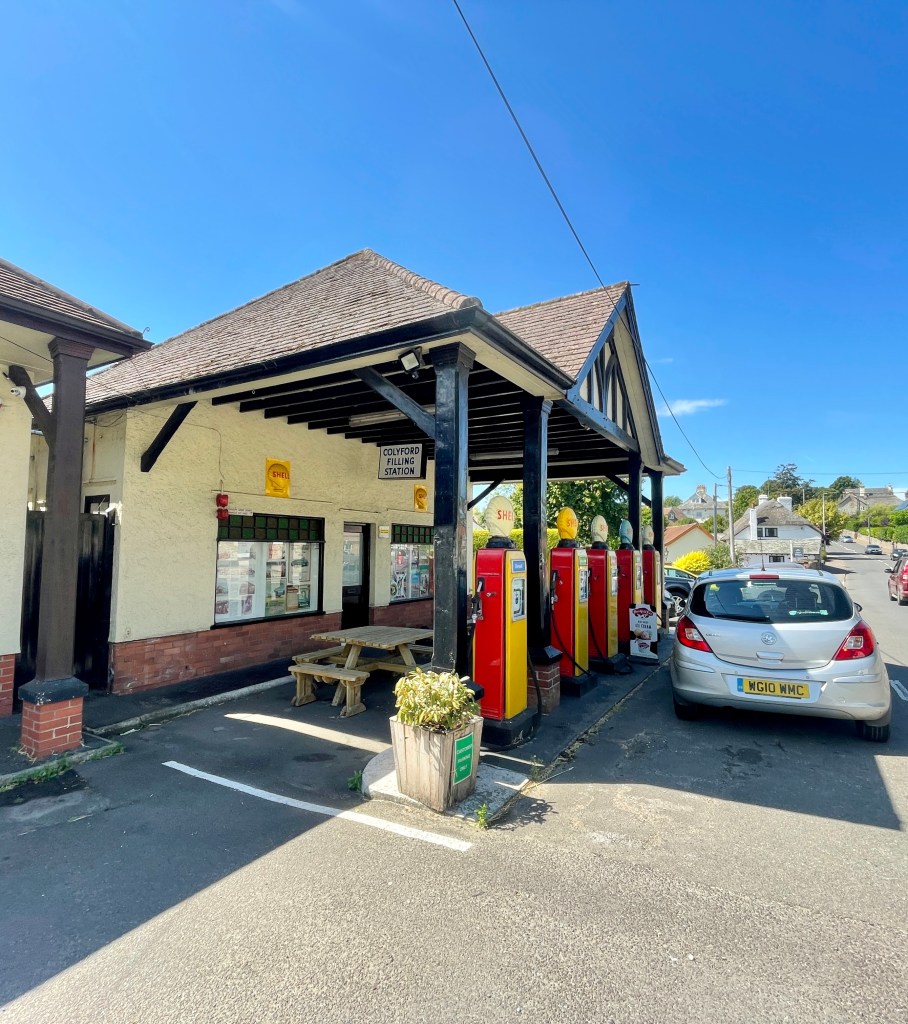
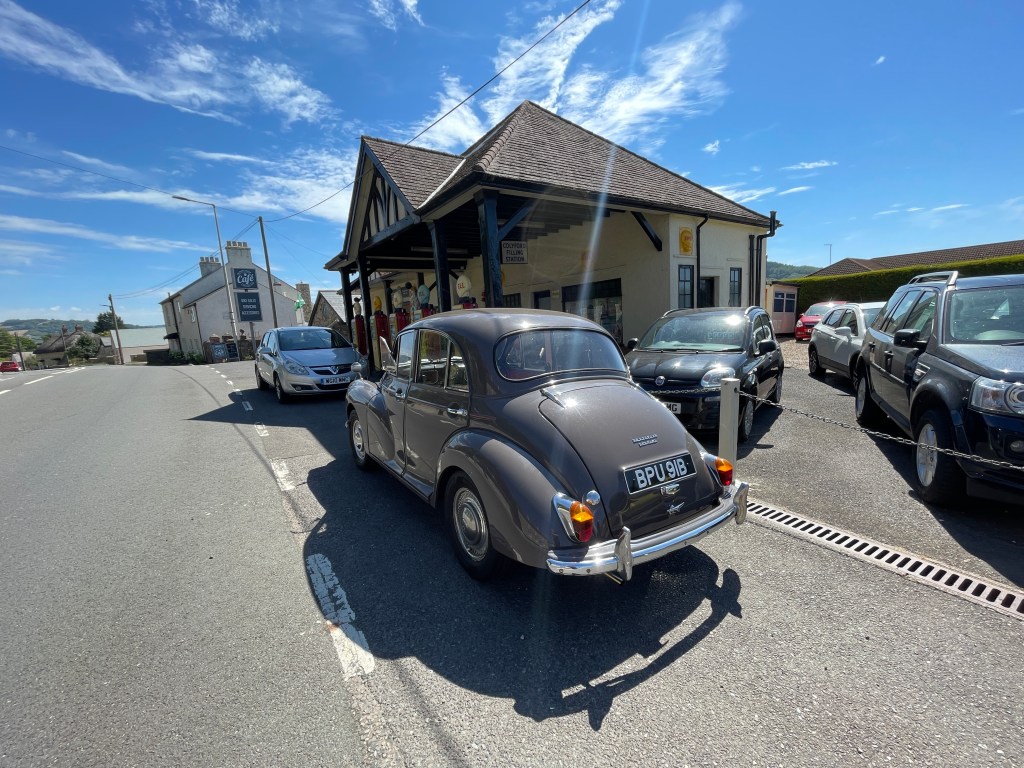
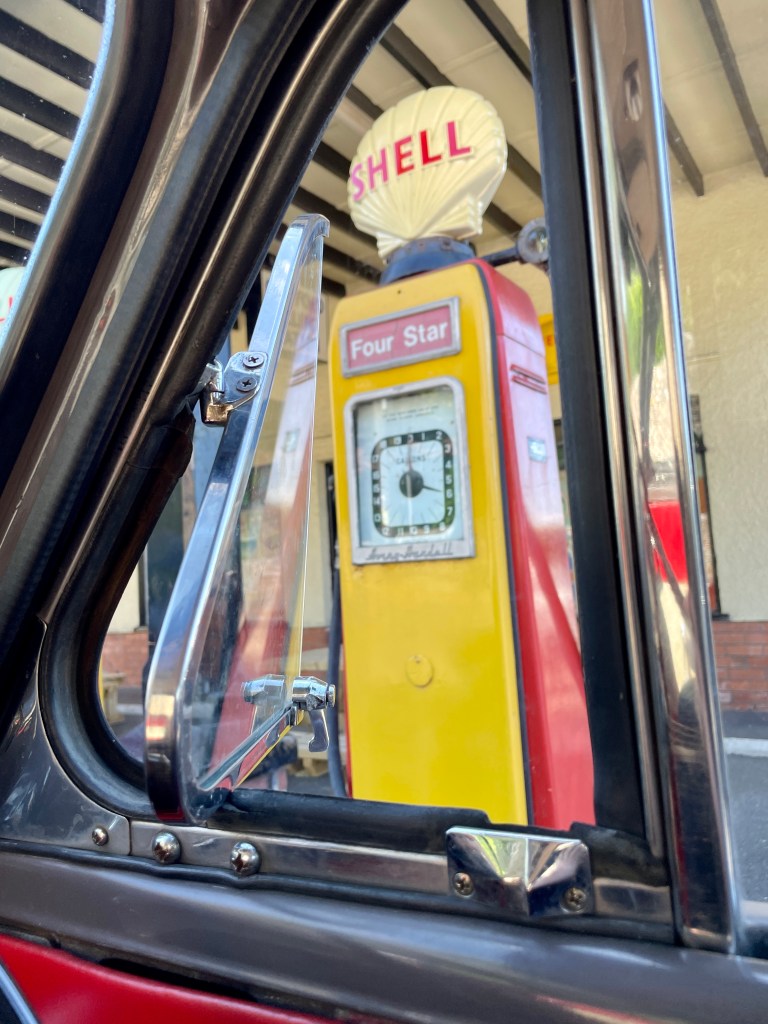
The following morning I made a slight backtrack, heading south-east, down to Colyford, to see it’s famous filling station. Unfortunately a modern car was parked in-front of the row of five 1950s Avery Hardoll fuel pumps, ruining the all-important shot, but it was good to see a relic of British motoring history having been restored and maintained so nicely, and outside of a museum, where it was intended.
Built in 1927 or 1928 to the designs of Fredrick Kett, Historic England note it “as a rare surviving example of an 1920s architect-designed filling station, intended to be sympathetic to its rural location, reflecting concerns about the spoliation of the countryside in the early days of the motor industry“. To me it is reminiscent of the sort of roadside scene you might better expect to see along Route 66.

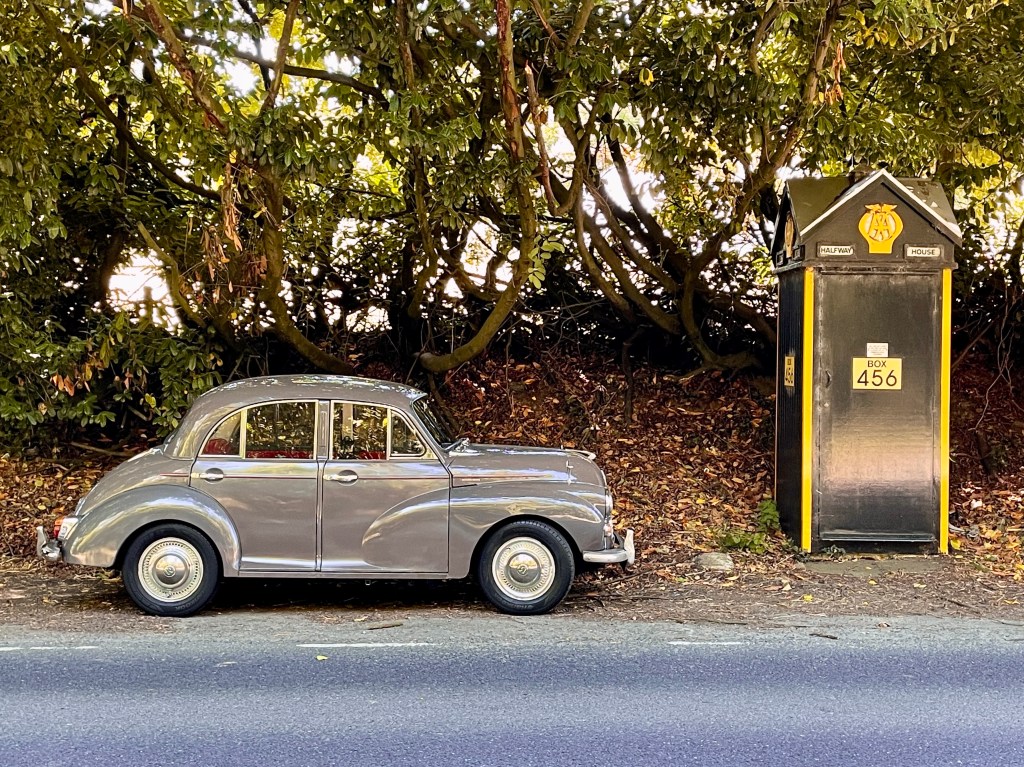
Moving on, making another slight detour, about 14 miles west of Colyford is another staple of UK motoring history. Once a common sight on the UK road network, with at least 862 installed by 1962, the iconic black and yellow AA box, sometimes called ‘the lighthouse of the road’ would’ve been a welcome sight for many travelers.

Today, this one at Halfway House on the A3052 is one of only 19 or so that survive in situ, with many of those being in the remote highlands of Scotland, away from where they may otherwise be disturbed, or where simply it was more cost-effective and easier to leave them in place.

Box 456, at Halfway House

Founded in 1905 to help motorists avoid police speed traps, The Automobile Association started installing their first primitive sentry boxes on the UK’s roads in 1911, at a time when motoring was still purely a hobby. Halfway House box (Box 456) is of a later and more refined design, dating to around 1930.

The square timber structure would once have been the operating base for a local AA patrol, and was accessible around the clock to any motorist who held an AA or RAC membership, with which came a universal key for all of their pooled kiosks. Inside were lamps, fire extinguishers, local maps, fuel, and a telephone which motorists could use to place local calls free of charge, or of course to call for assistance.

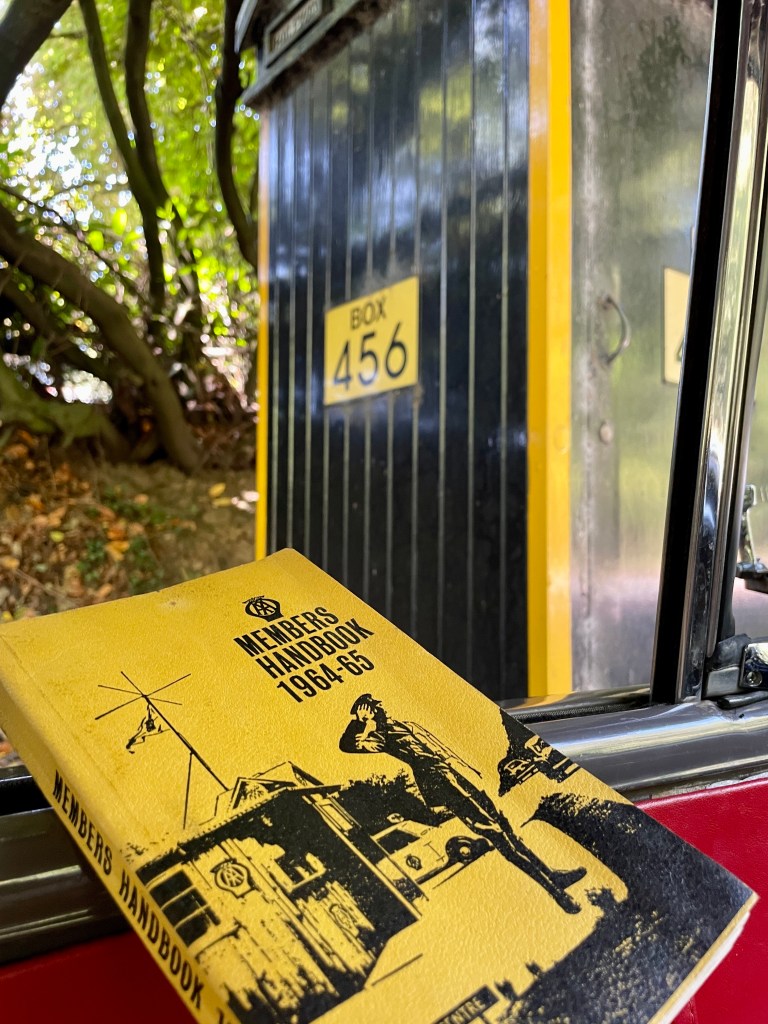
My 1964 AA members handbook. Long gone are the days when you’d be saluted for being a member of the club.

The last sentry boxes were installed in the 1960s, with more modern pedestal phones becoming more common. With mobile phones becoming more popular in the early 2000s, the AA pulled the plug on the roadside phone network in 2002. Box 456 is now a listed structure, and has been restored to it’s original condition.
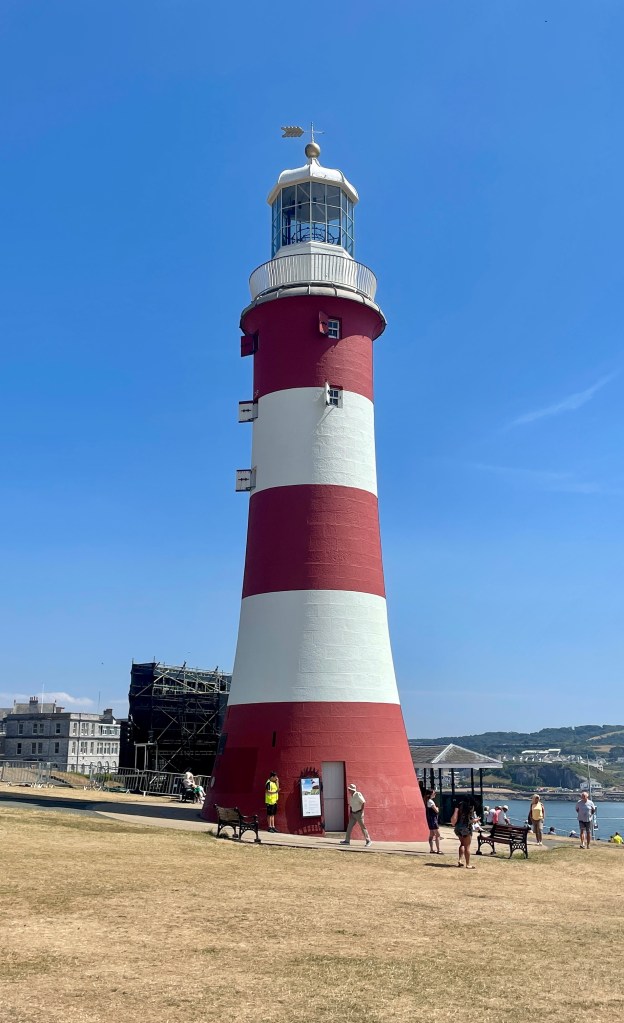
After this, I skirted around Exter on the M5 for about 3.5 miles before getting back on the A30, where save for a quick trip down to Plymouth to see Smeaton’s Eddystone lighthouse, and to get very sunburnt whilst watching the SailGP sailing race, I concluded my Devon trip. Next stop: Cornwall.
John Smeaton’s Eddystone tower, the first successful wave washed lighthouse, and a symbol of Plymouth’s maritime heritage.
The final leg of the journey from Exeter to St. Austell, as detailed in the 1964-65 RAC Guide & Handbook.

Mountnessing and Southend

I’ve spent most of this week in Essex undertaking training to get a PCV class D license, which meant the car got a good run of about 150 miles give-or-take. On my way home on Tuesday I passed Mountnessing, home to a picturesque post mill that has stood here since 1807.

Tuesday

The next town south-west of Mountnessing along the A12 is Shenfield, where my car had it’s first (or earliest documented) MOT in 1970, with only 5002 miles on the clock. At this time the test only focused on brakes, lights, steering and tyres. Unfortunately I have been unable to locate the site of Shenfield Park Garage.

The MOT test was originally introduced on a voluntary basis on 12th September 1960.

Returning to Essex the following day I stayed in Southend-on-Sea, and on Thursday morning I went down to the seafront, home to the longest pleasure pier in the world. Of course, the only real reason to go into Southend is to get a Southend donut, which is a local delicacy with a cult following of at least myself.

Palm trees on Western Esplanade, with the pier stretching out ahead into the Thames estuary.