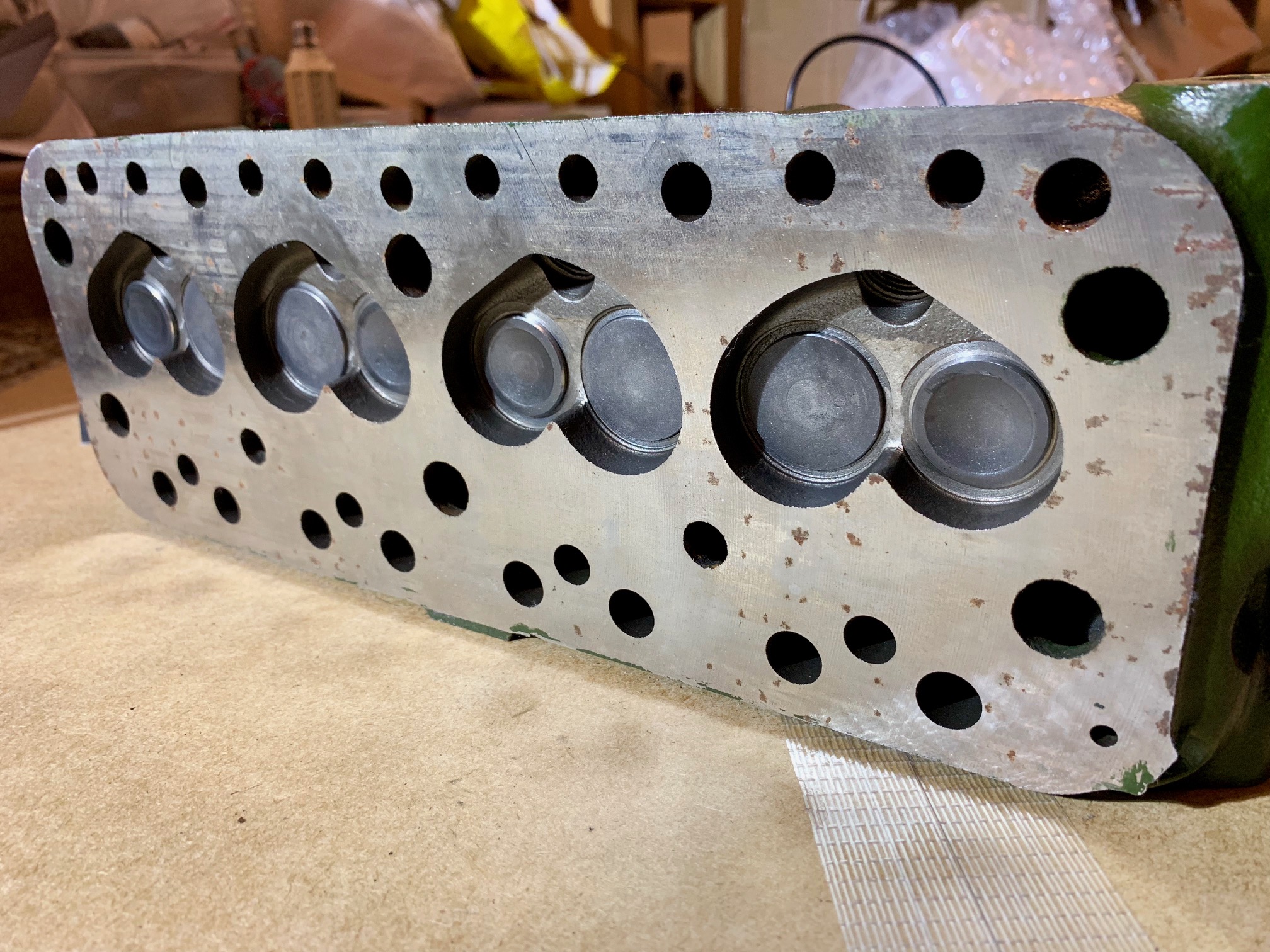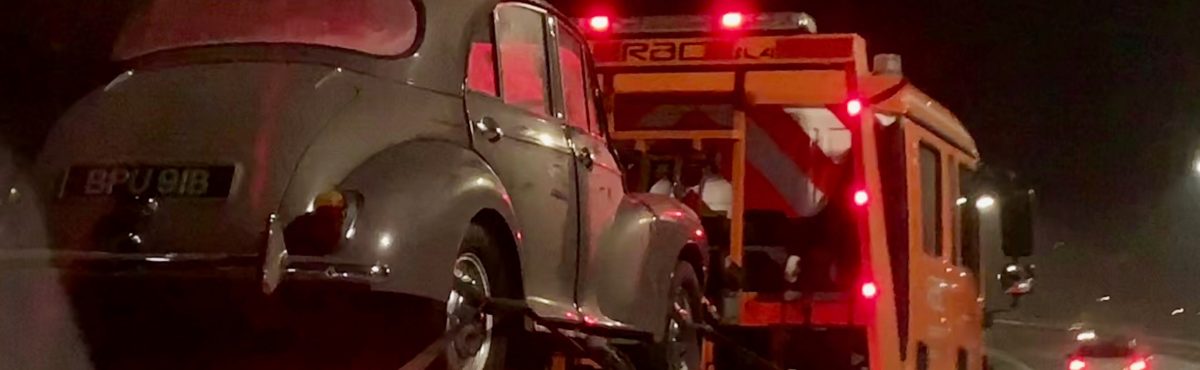
Would you believe it? Another breakdown!

On the way to work on 21st November 2018, about 2 miles from where I park, the car started spluttering badly and the lip of the exhaust sheered completely at the manifold clamp, giving me the characteristic sound you get when your exhaust falls off – a sound I have come to know.

Not long afterwards, on an A-road with no real hardshoulder, there was a bit of a bang and the engine completely cut out. I could start the engine again, but if I so much as touched the accelerator pedal the engine would abruptly splutter and die.

I was so close to work, and I knew what the RAC would say without even ringing them. By this point I’m a regular, so I knew I’d get the usual “We have unusually high demand at the moment, can we book you in for recovery at another time?”, so I dumped the car at the side of the road in as best a place as I could and used some nearby traffic cones with lights to try and make it stand-out in the dark.

During my shift I called the recovery service and explained where I was and what the issue was, and then booked recovery for around the time I finishing – Of course, being the RAC they have to follow their own procedures – I knew the car wouldn’t be drivable, but they wasted a bit of time by sending a mechanic to come and have a look before booking me the recovery truck I had initially requested. eventually I got the car home, where it remained for the rest of the year until I could find the time to work on it.
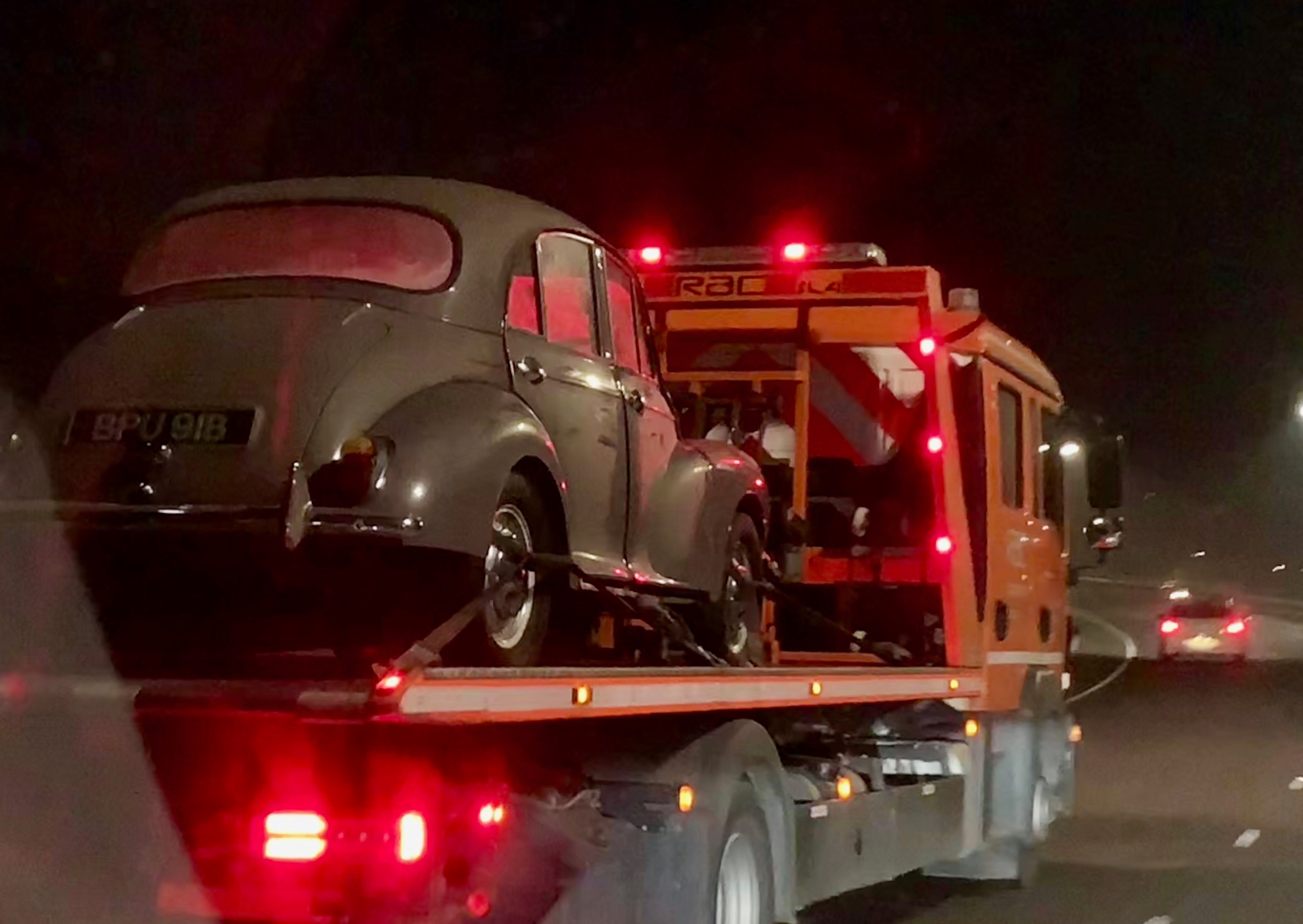
On the road again!

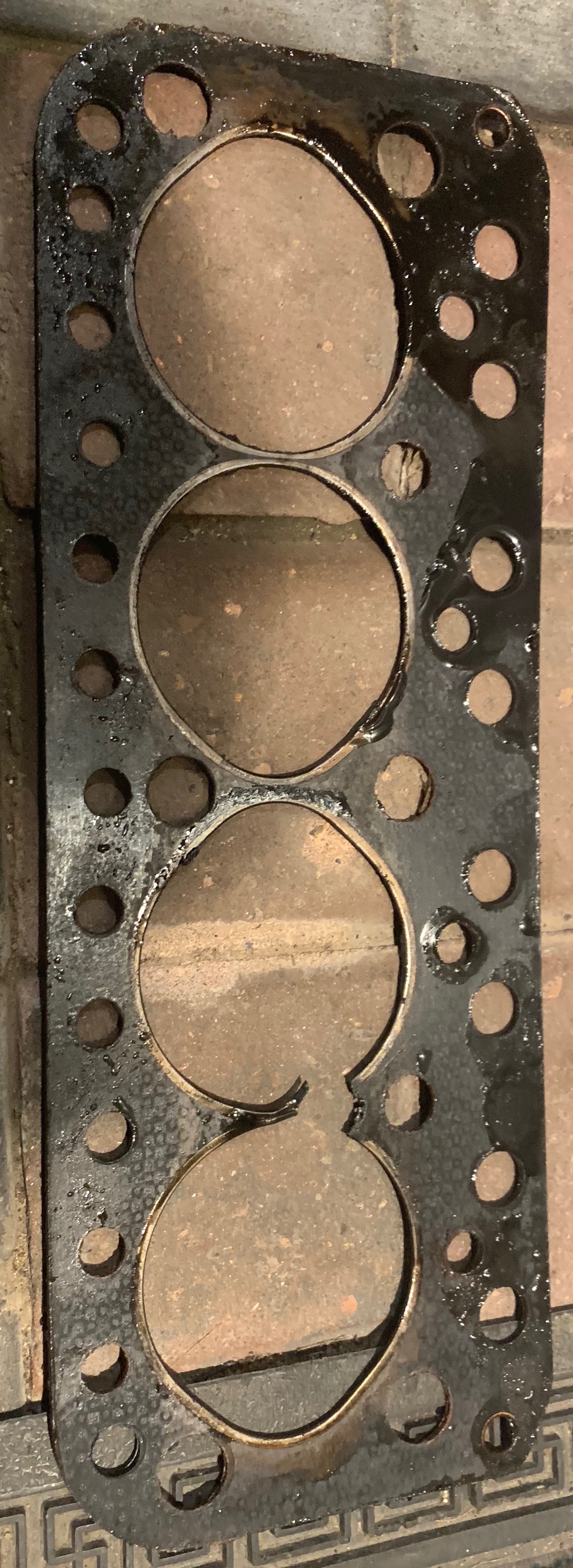
Eventually I got around to it, and upon further inspection I found that the head gasket had blown between cylinders 1 and 2.

Up until this point in Morris ownership, I’d never attempted to do much with the engine, and I’d certainly not considered removing the head myself – usually I’d ship it off to a garage for something like this, but I was feeling like a bit of a cheapskate at the time so and figured It’d be good to try and learn how to do this job, as It probably won’t be the only time it needs doing in the long-term.

This is probably the most technical I’ve got so far, aside from replacing the wiring loom a while back, so replacing the head felt like quite an achievement for me!

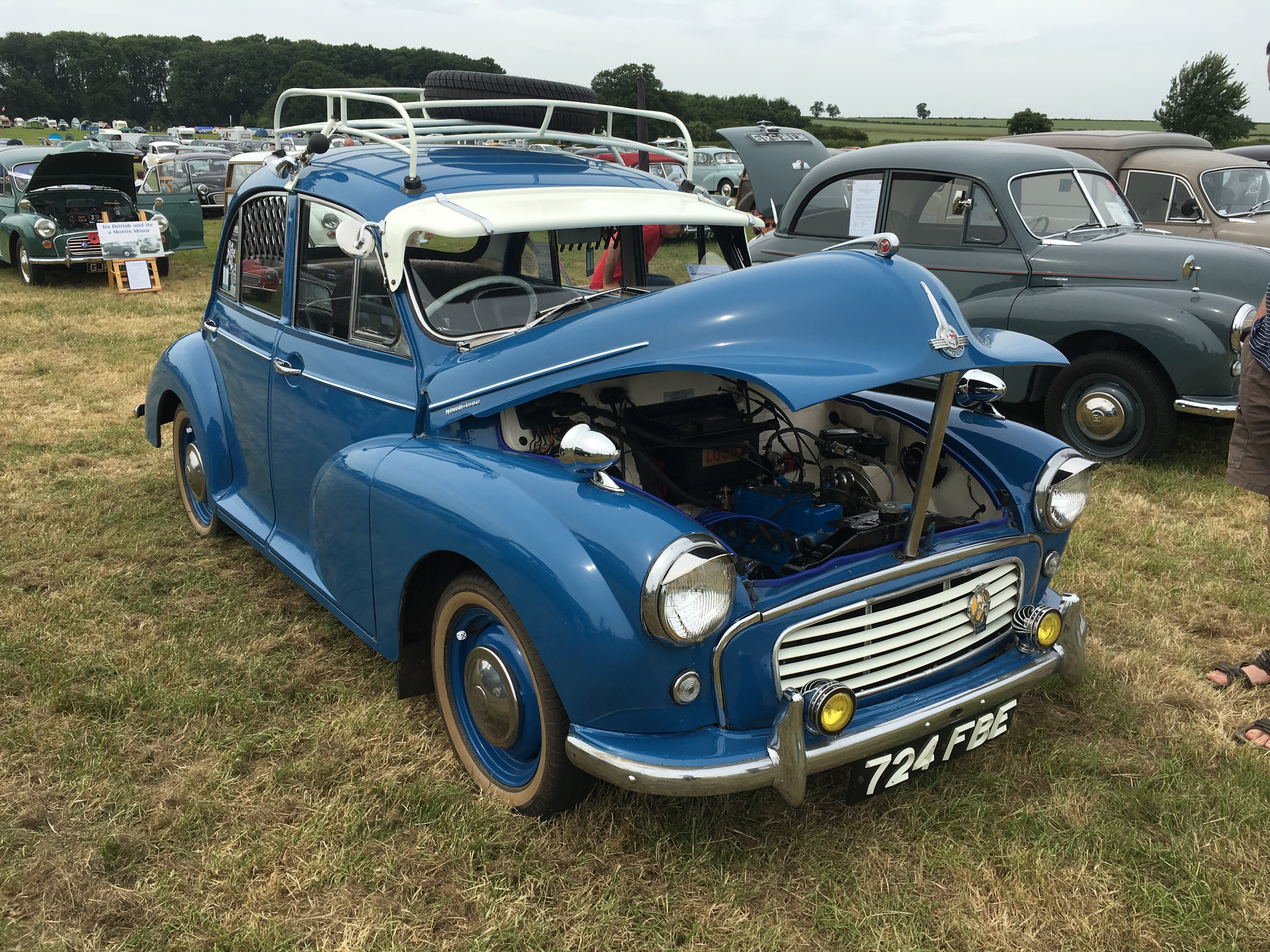
Seeing as the head needed to come off anyway, I saw the opportunity to upgrade the engine slightly, by swapping the existing head for a refurbished head with hardened valve seats, which makes it more suitable for running the car on unleaded fuels, which were not developed at the time the car was built.
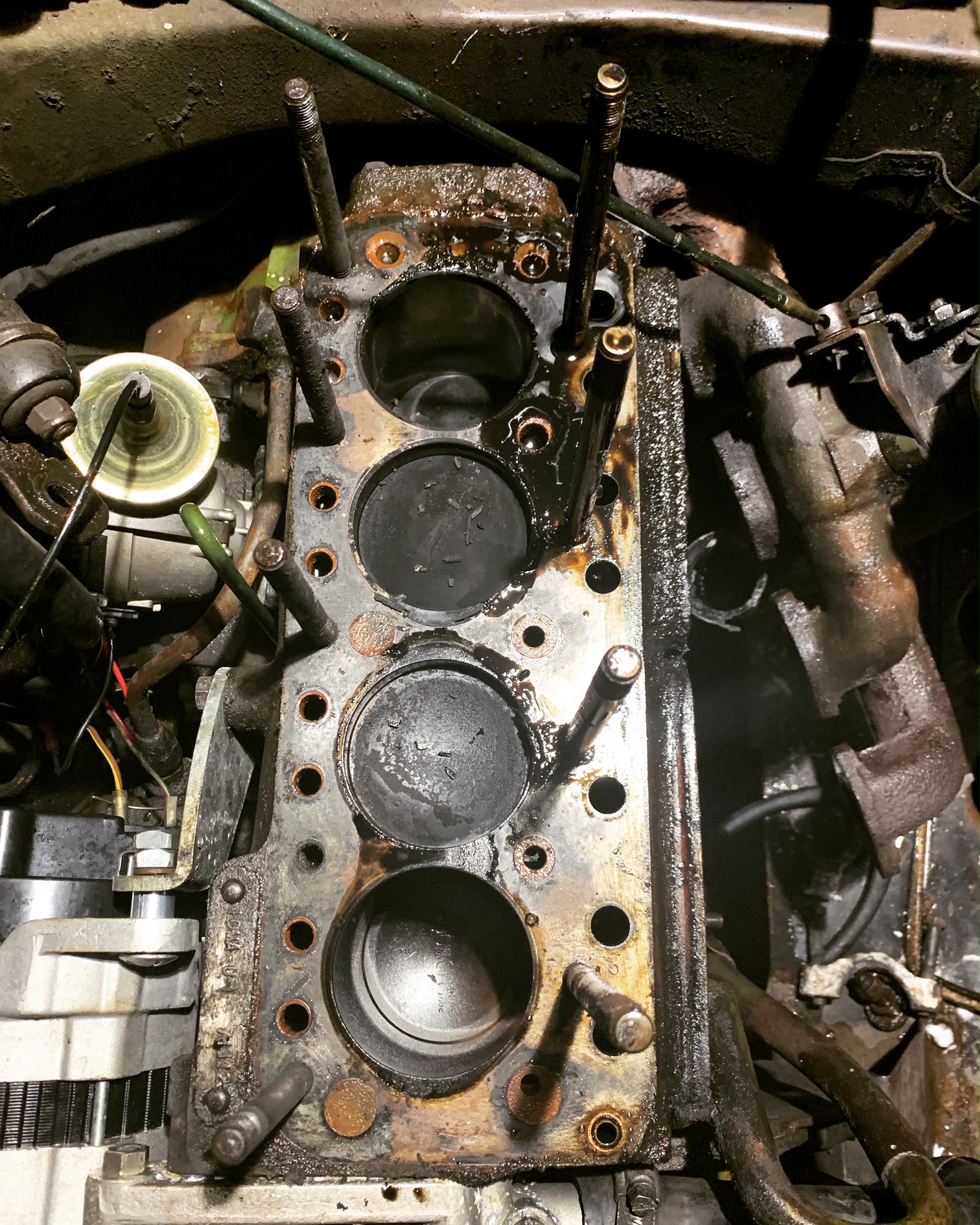
Off with it’s head!

Removing the head was easy once all the ancillaries were removed. It’s just a case of removing the rocker cover, gradually removing the nuts that hold the rocker assembly in place (be careful to release them in increments, so not to put any part of the assembly under too much stress) and following the pattern you would whilst torquing the head bolts!

With the rocker assembly out of the way I removed the valves – I made sure to number them so I knew which ones belong in which holes when it comes to reassembling, and I did this by sticking them in numbered holes in a sheet of cardboard.

Removing the head bolts was easy – removing the studs however was a bit of a challenge. I dare say a pair of molegrips would’ve been handy, but I’m not organised enough to have located a pair, so I instead spent a larger amount of time locking nuts together on the studs and attempting to remove the studs this way – eventually I got them all out.
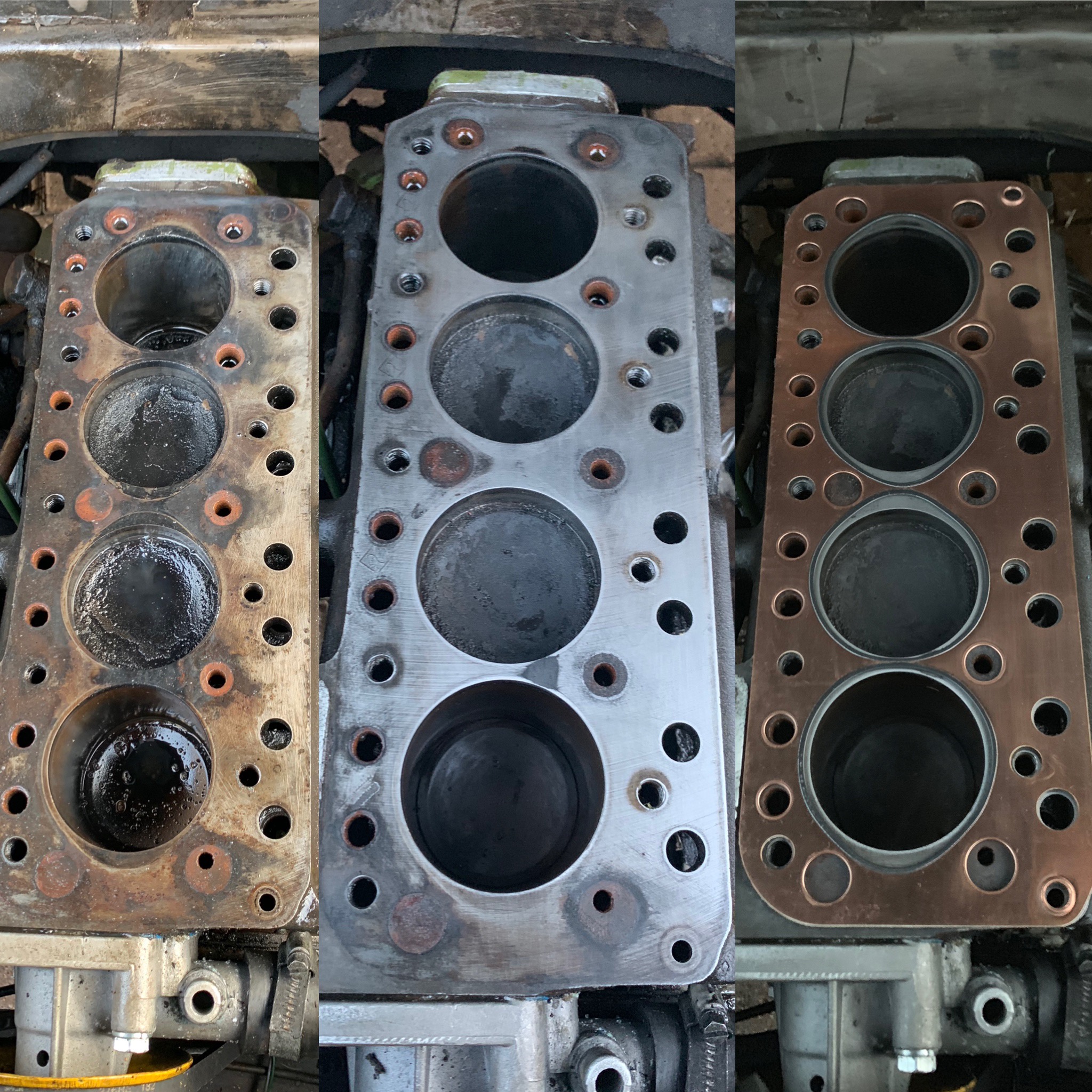
1) The engine block with the studs removed
2) The cleaned-up surface of the engine block
3) Checking that the new gasket lines-up properly before fitting studs

Once the studs were removed from the block, the surface needed some cleaning so that the head gasket’s seal would be as good as I could get it. I started by cleaning out the bores and drying up any oil or coolant that had leaked in.

To remove the surface rust and other debris I got a sanding block that was at least as wide as the surface I was cleaning-up and used a very fine sand paper to polish it up a bit. I made sure to sand in one direction, applying equal pressure/force in all areas equally so not to distort the surface.

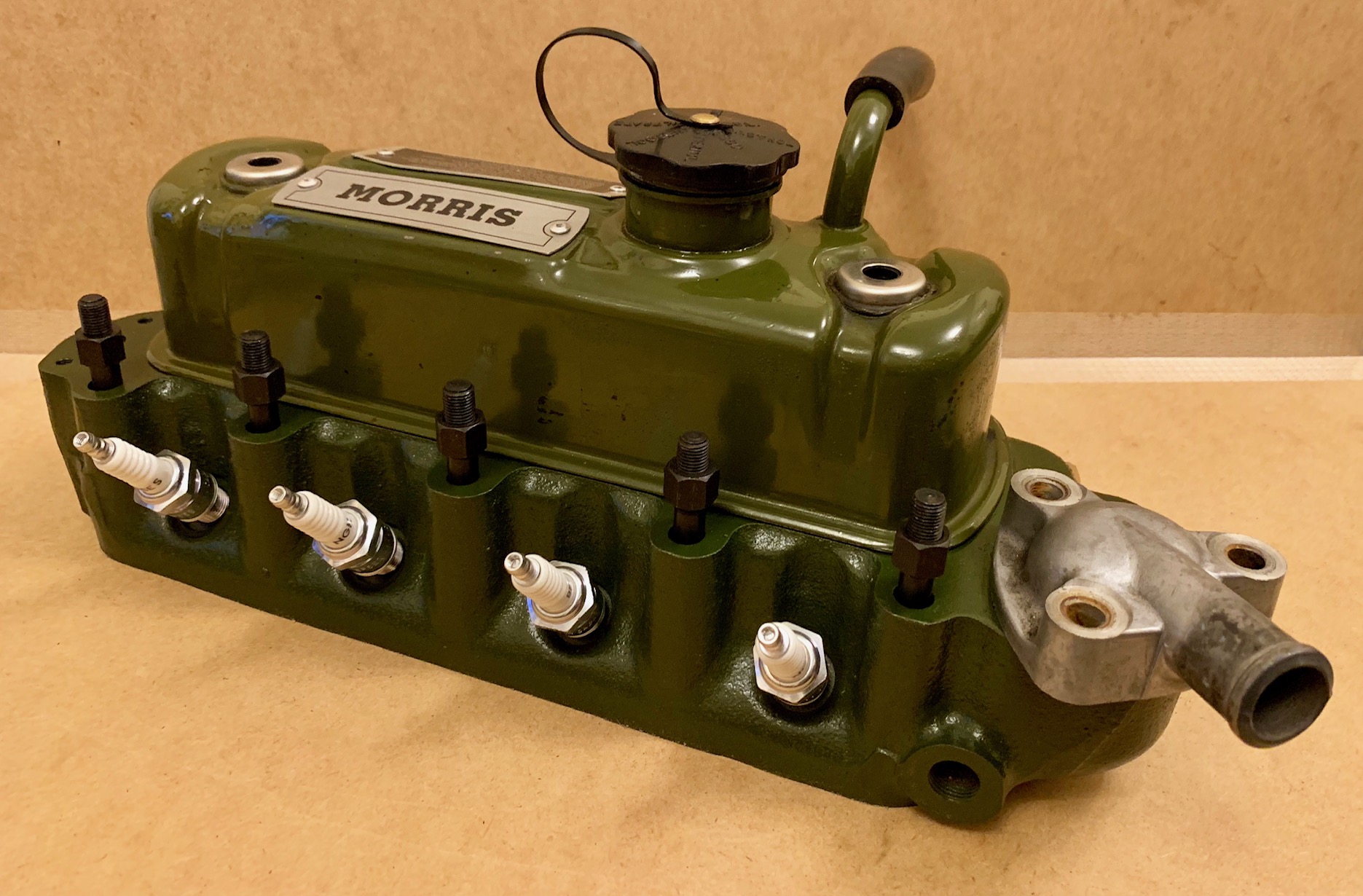
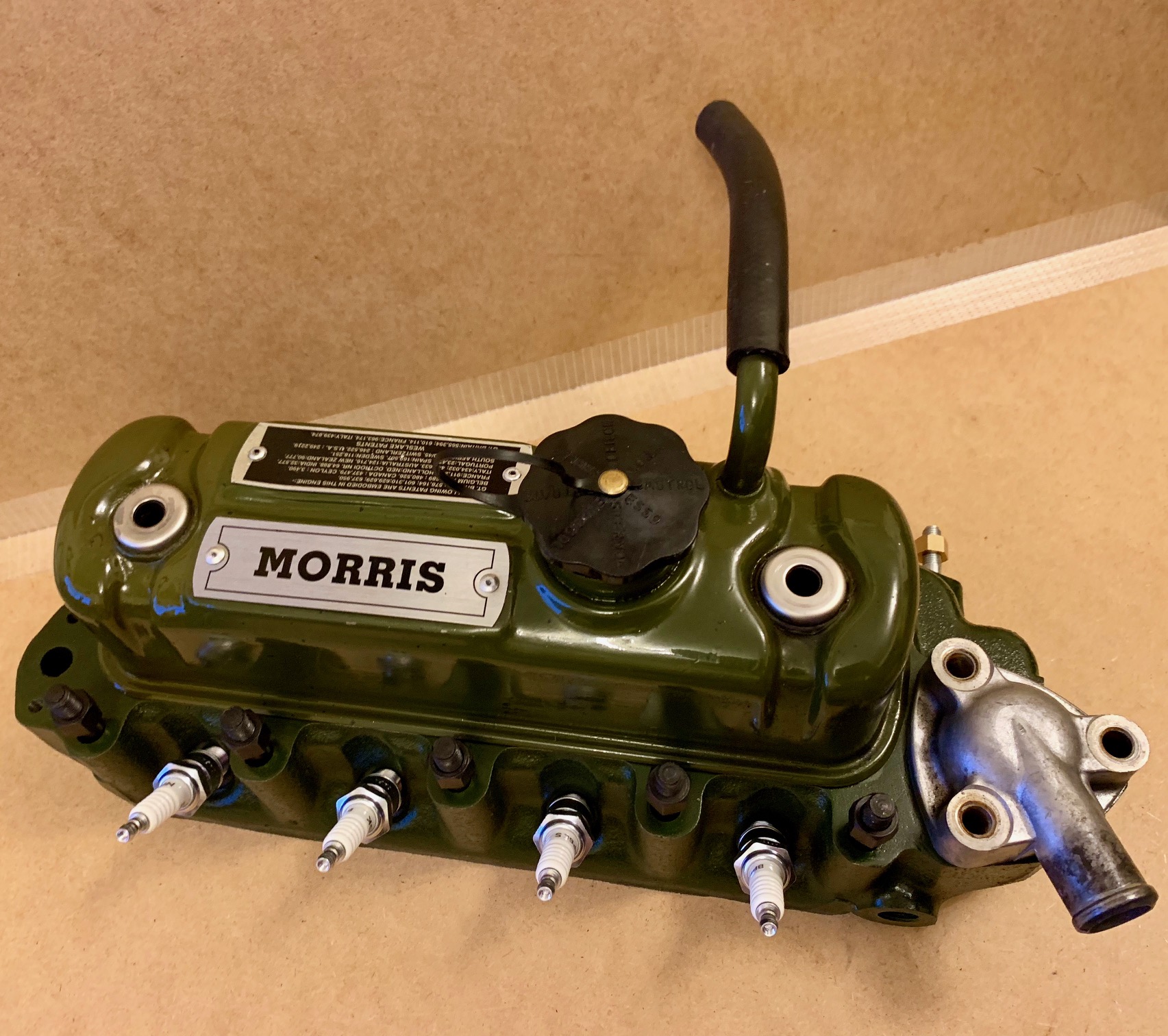
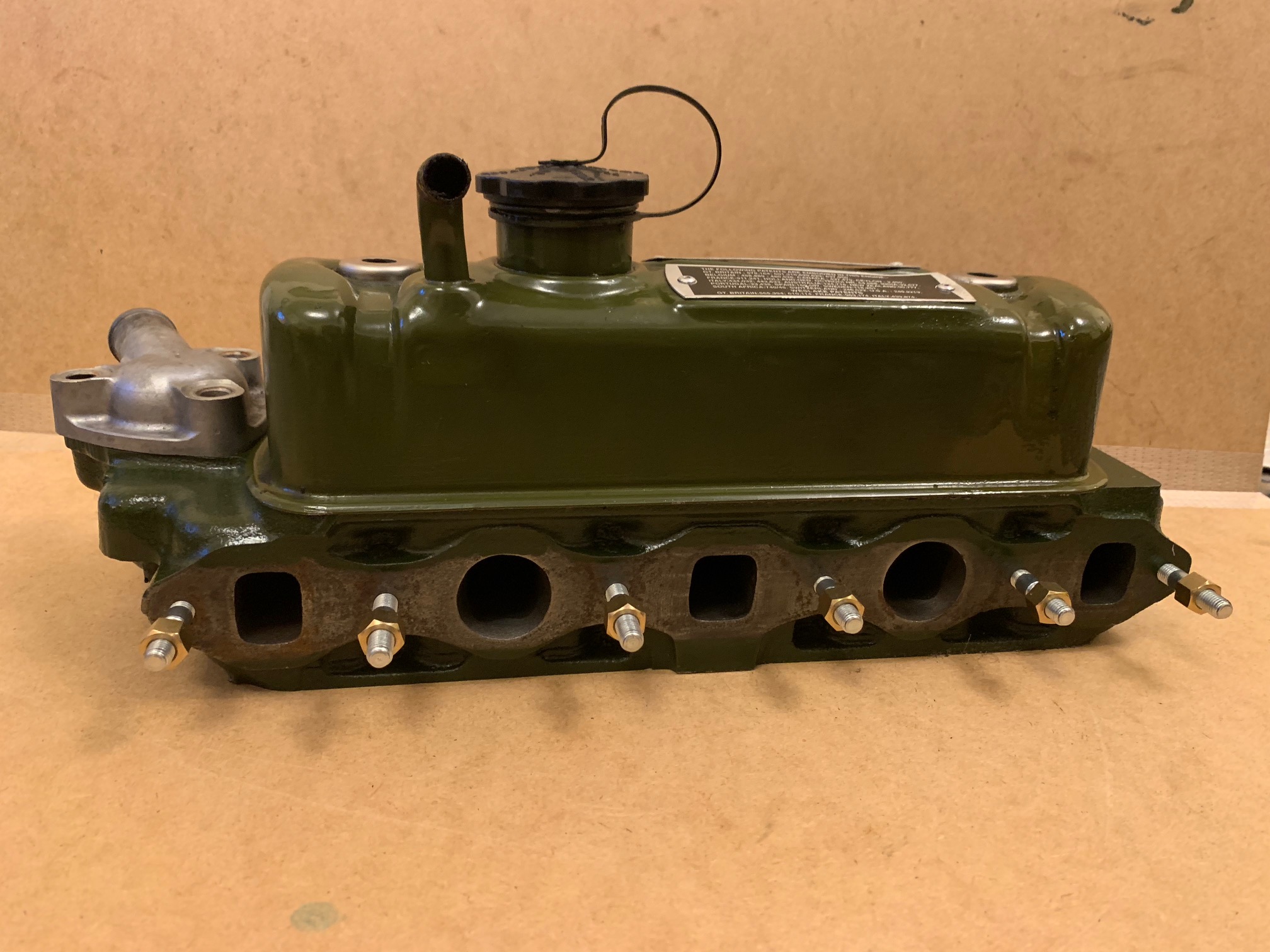
The new head:
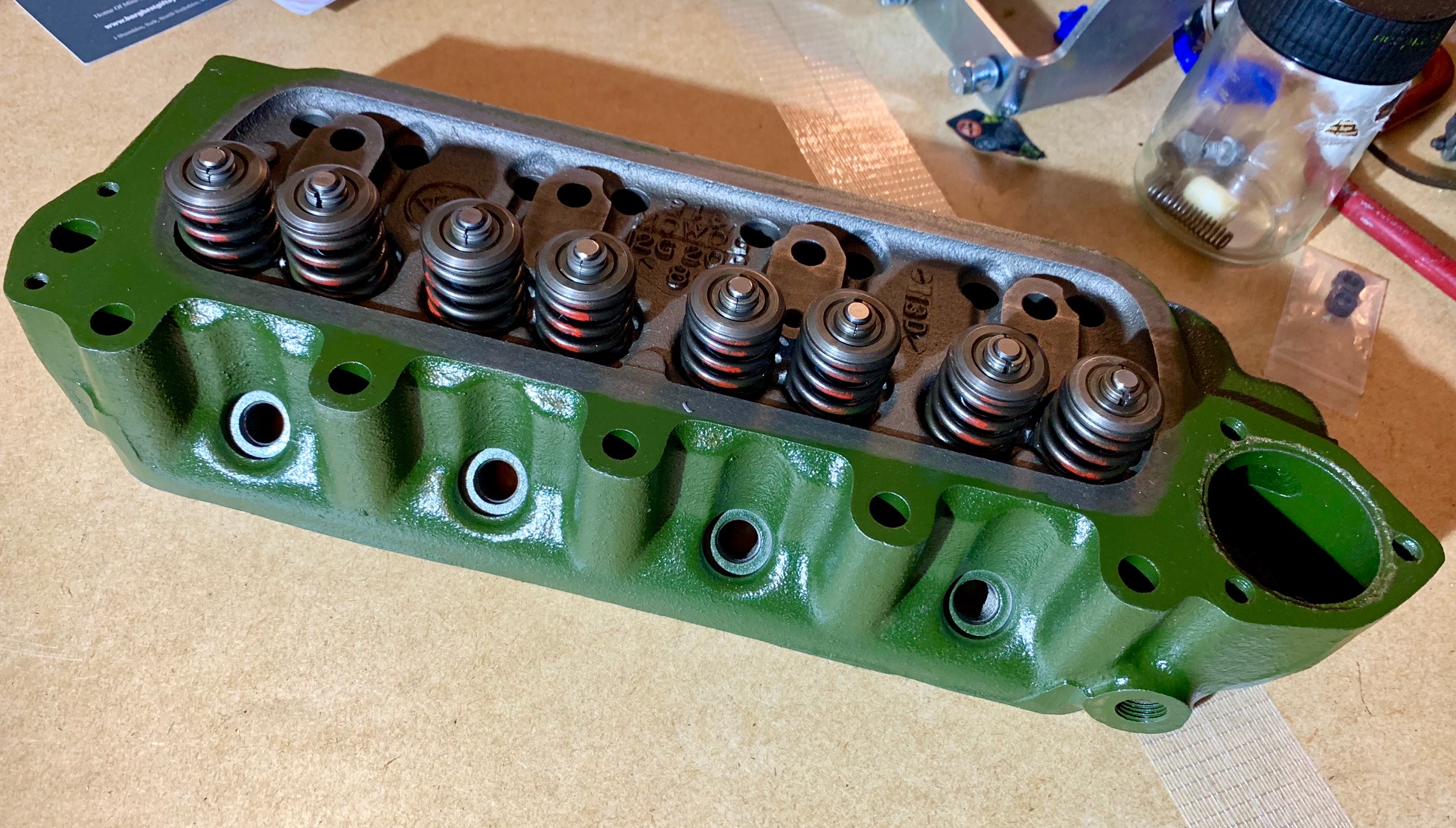
I ordered everything for this project from East Sussex Minors (ESM) – every time I’ve ordered from them I’ve had the item delivered the next day, and I’ve never had any problems with their service or their parts.
The new head arrived with all the studs, new nuts/bolts and gaskets, and it looked great! I decided to clean up the face of the head in a similar fashion to how I did the block.
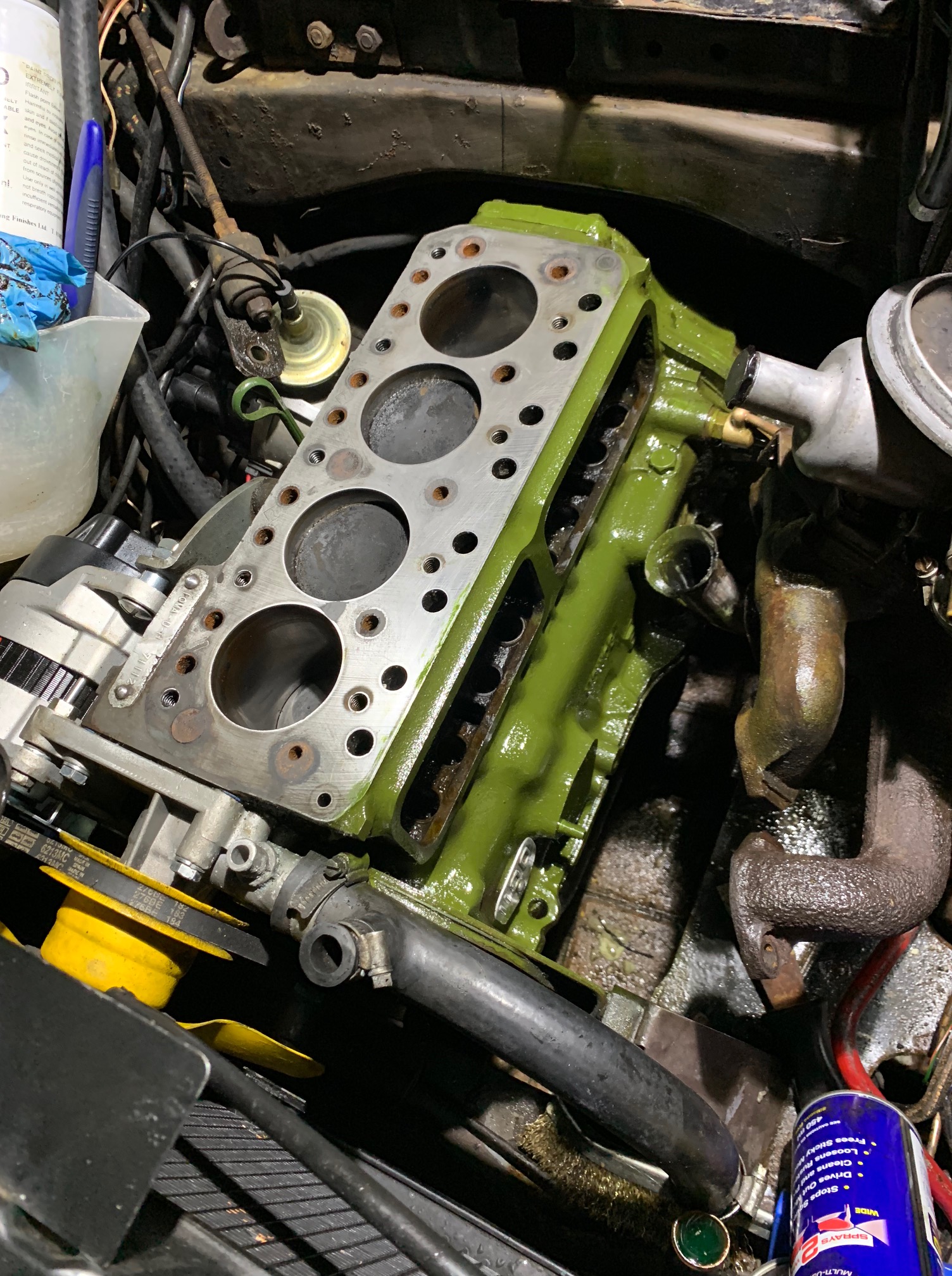
I also used the opportunity with the engine stripped down a bit to paint the sides. The job was far from anything professional as this photo probably demonstrates, but I was happy enough with it. I used Wd40 degreaser on the sides of the engine, and then used Ebay-bought Mowog Green VHT paint. I was pretty happy with the results!

Another good idea whilst you’re at this stage is to replace the bypass hose that goes between the head and the water pump. If it’s perished, it’s not very easy to get at without removing the head again in the future!
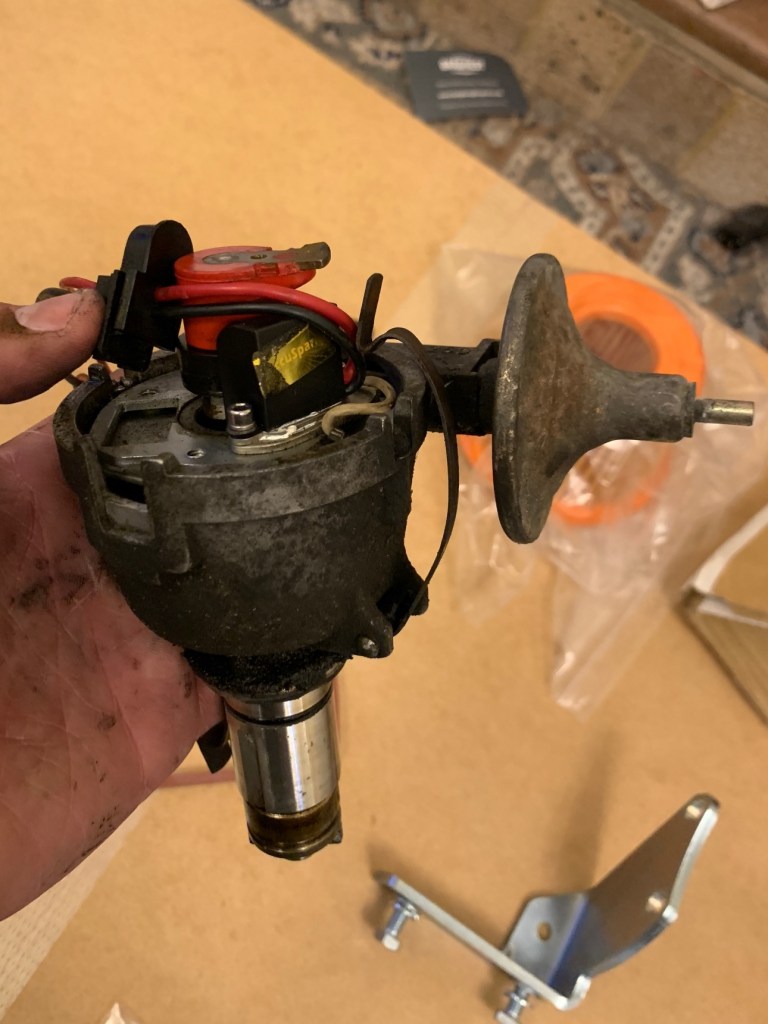
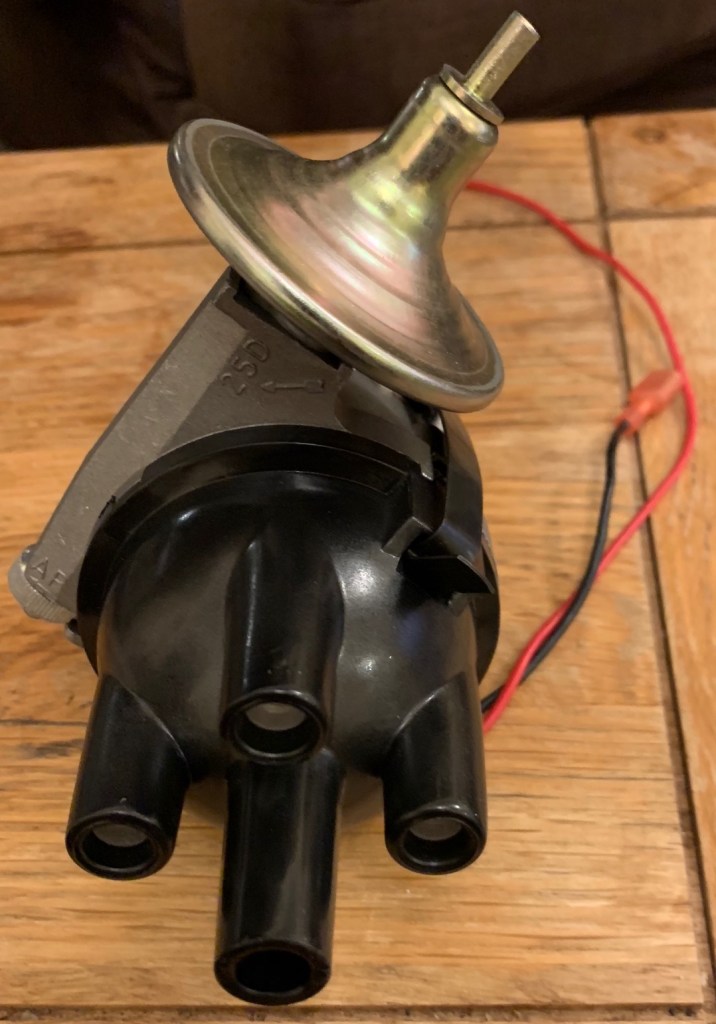
Distributor swap

After a disastrous journey home from work the other day in which the accelerator cable snapped (solved by a quick walk to a nearby Halfords for a bicycle brake cable) and the ignition packed in, I have decided to replace the distributor and electronic ignition (The ignition has always been of the electronic type since I have owned the car but I have no idea how old the distributor unit is)

The new unit is an autospark type that is available from all the major Morris Minor suppliers such as ESM.

Looking back now, fitting the distributor is an incredibly easy job that should’ve only taken a few minutes, however it took me a number of hours, as I could’ve sworn there was something I was missing – no matter how hard I tried I couldn’t seem to drive the distributor all the way into the hole in the engine block. I could feel that the driving dog/peg was aligned the correct way around inside the block, but I could not find any way to push it in the last few millimetres.

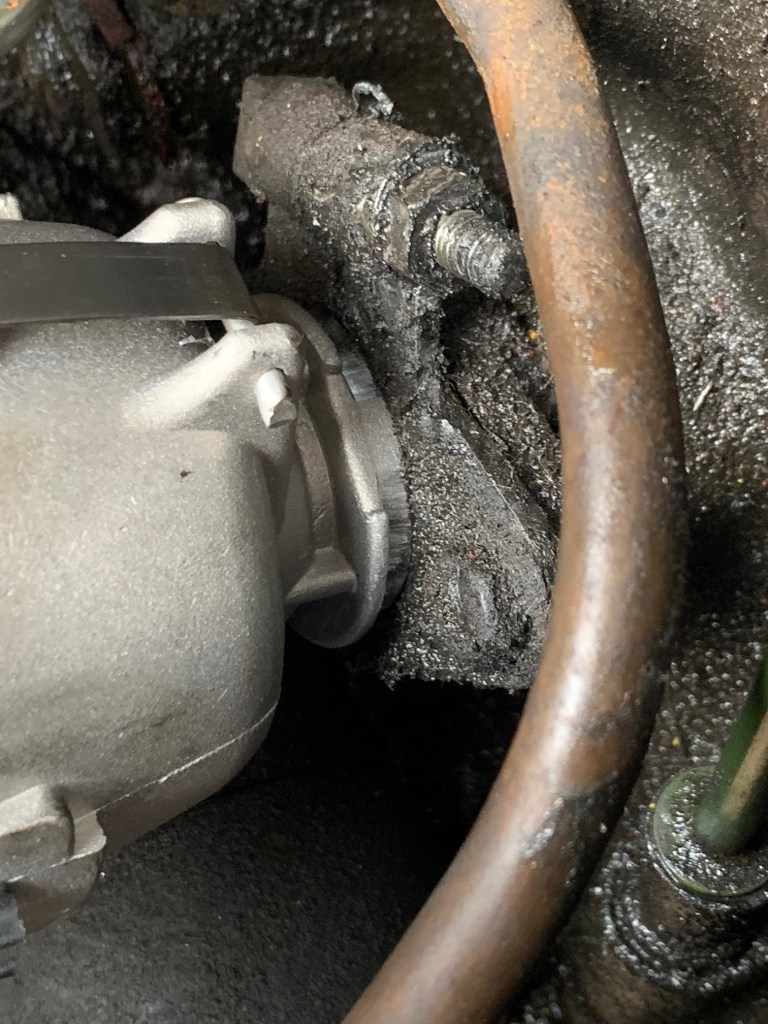
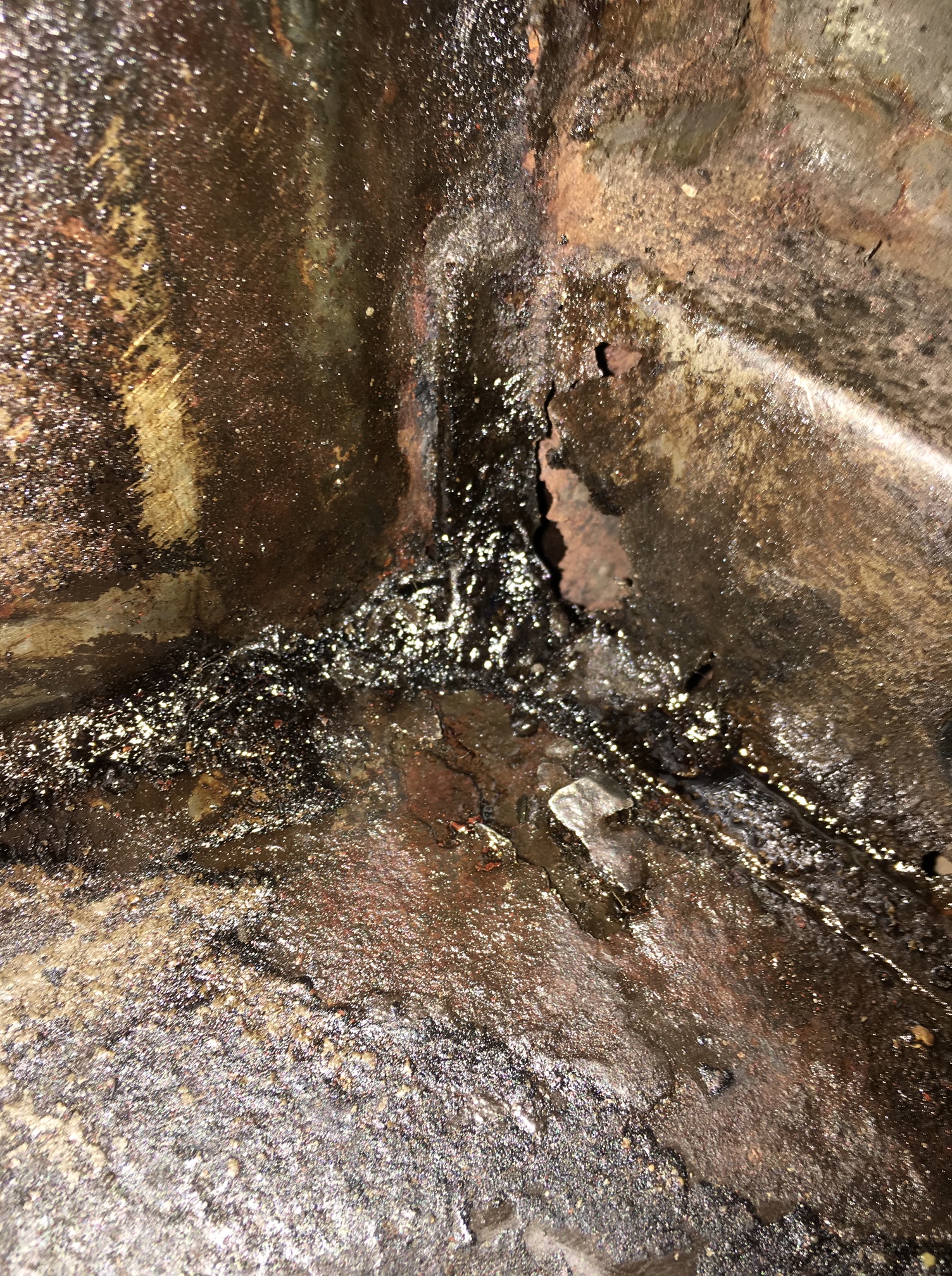
Note how the distributor isn’t pushed all the way in so that the flange edge is flush with the clamp.

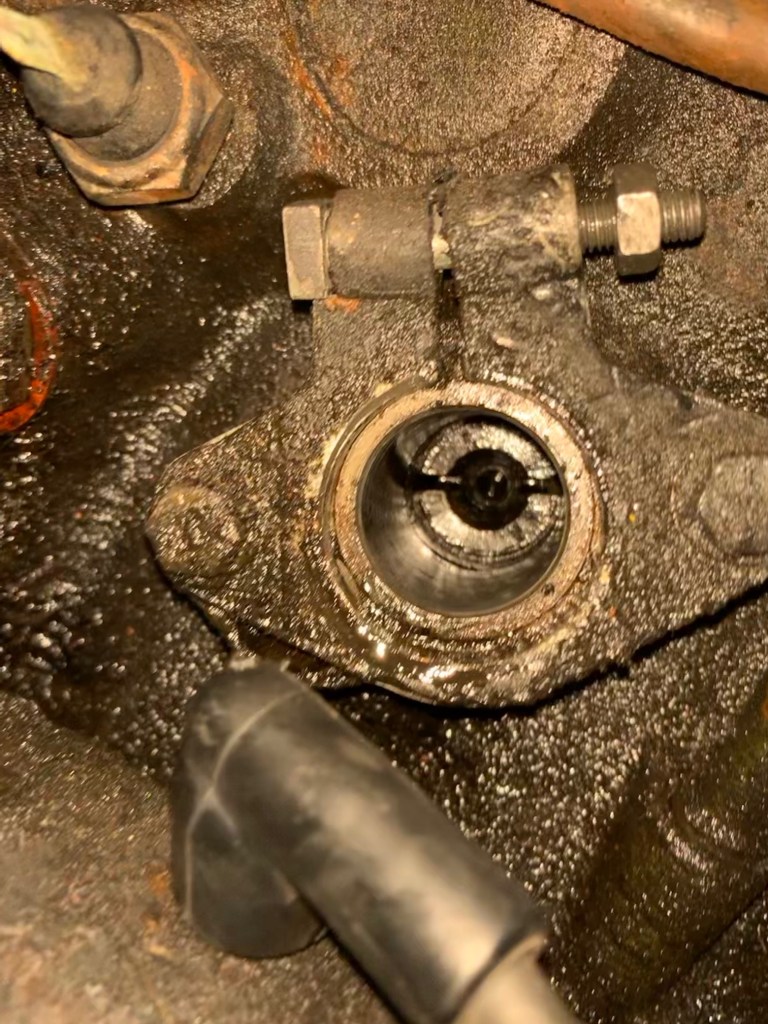
For a while I even considered that I might’ve purchased the incorrect distributor, but the actual problem was something easily solved; The clamping plate that locks the distributor in position had been over-tightened and bent at some point, not leaving a large enough hole for the distributor unit to be fitted into.

In this image it suddenly becomes quite apparent as to why the distributor hasn’t been fitting correctly – see how bent the top of the clamping plate has become from being over-tightened in the past!

Please ignore the large quantities of oil and grime around this part of the engine – For the sake of the wallet it’s best ignored.

Morris Minor national rally 2018

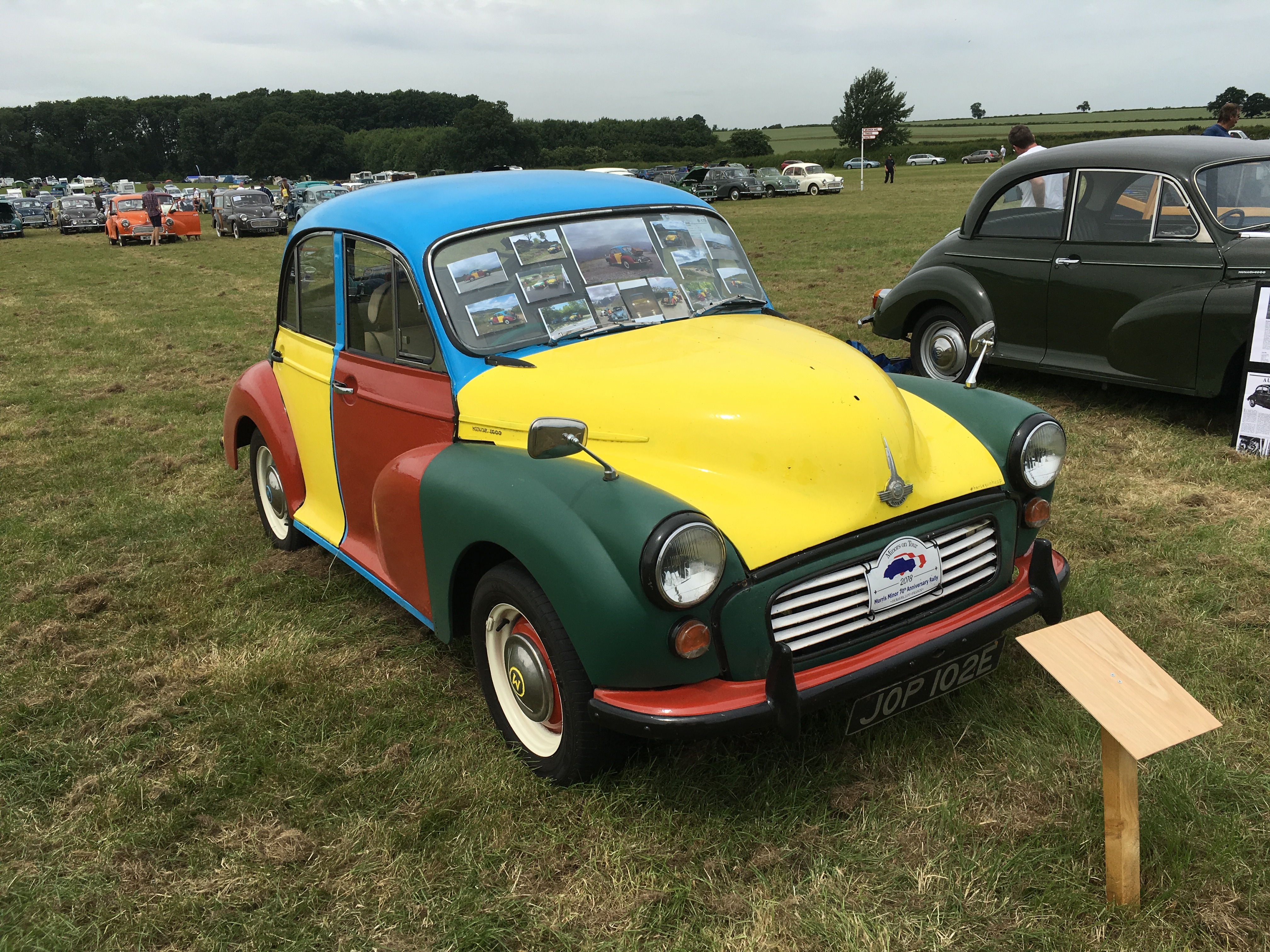
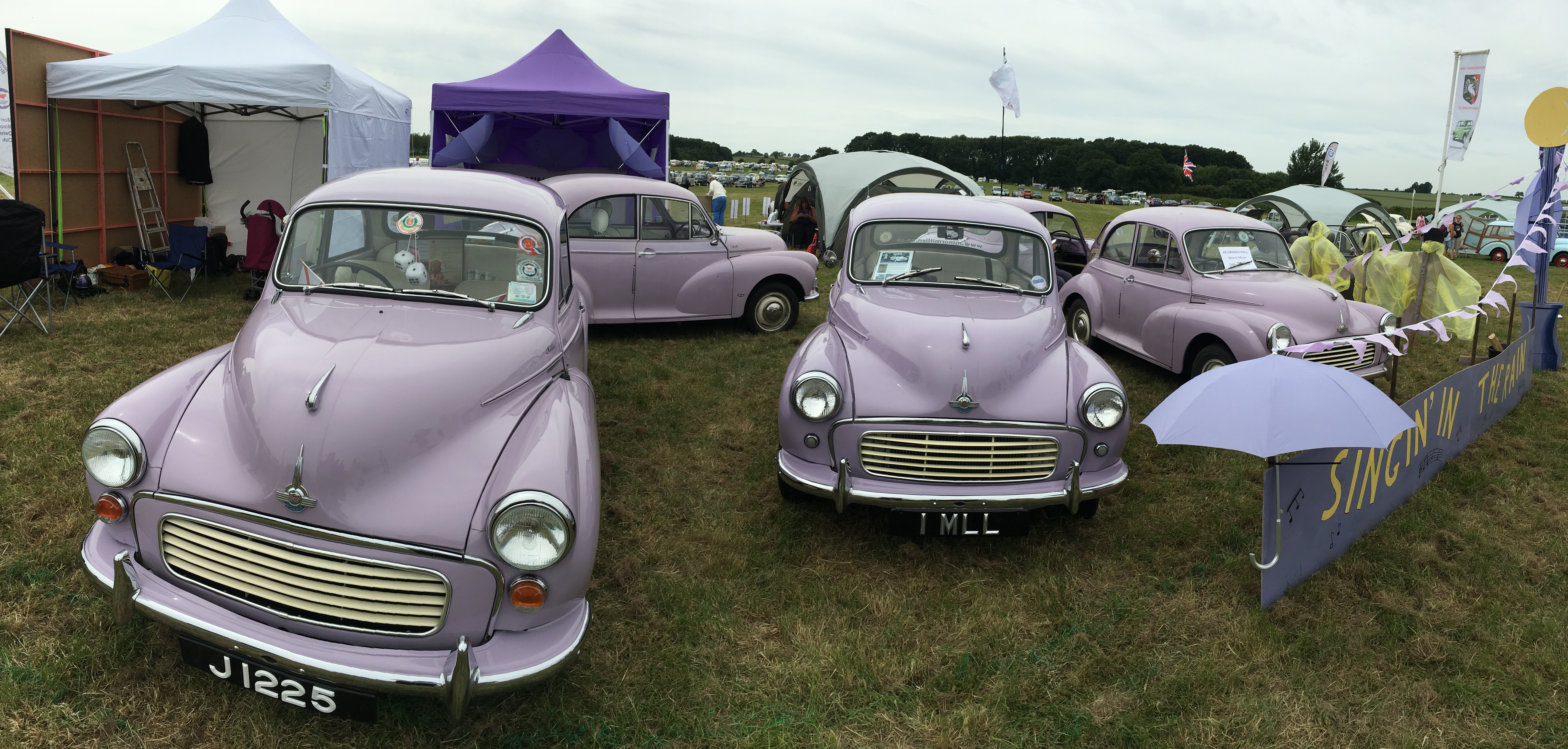
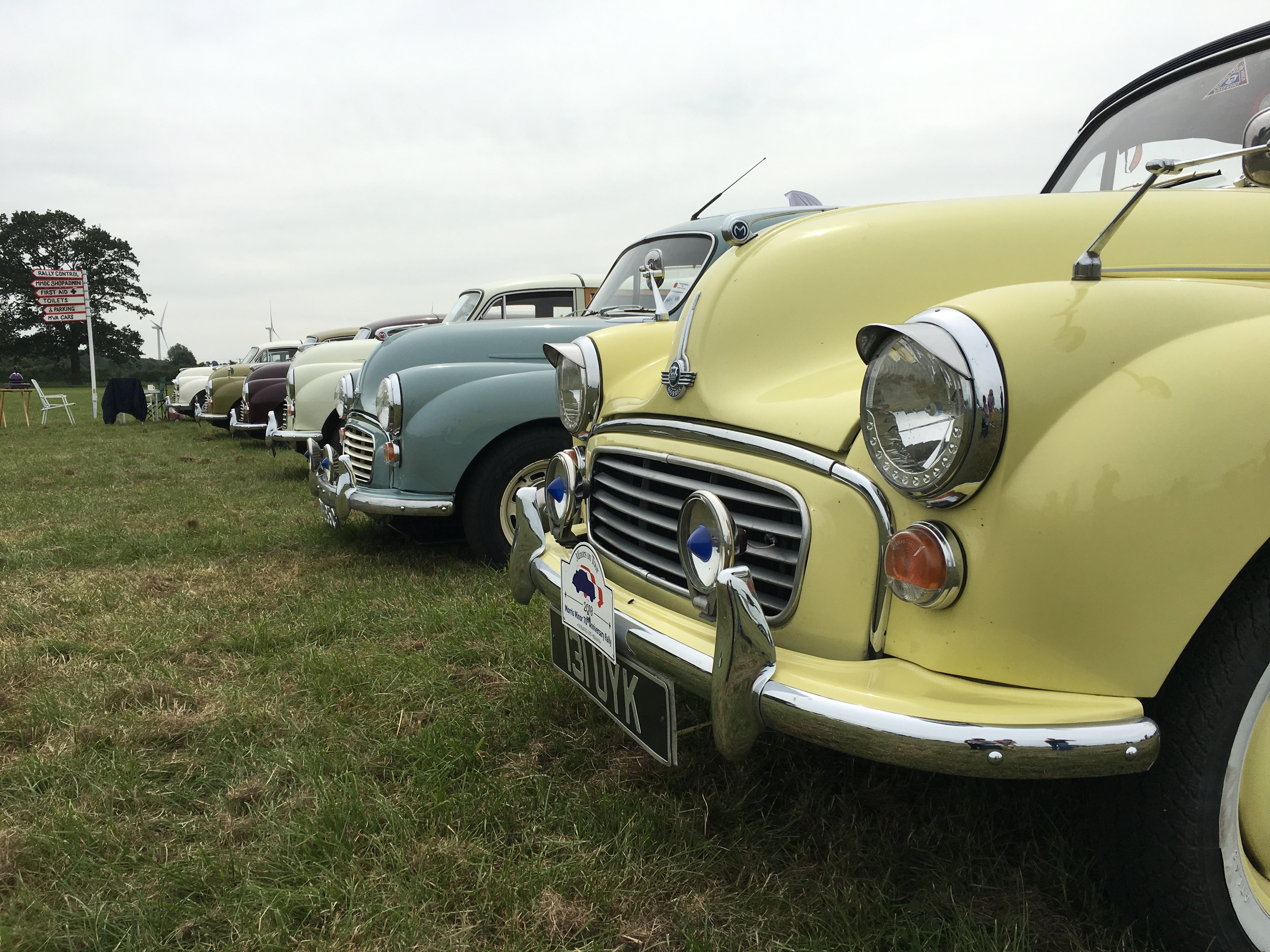
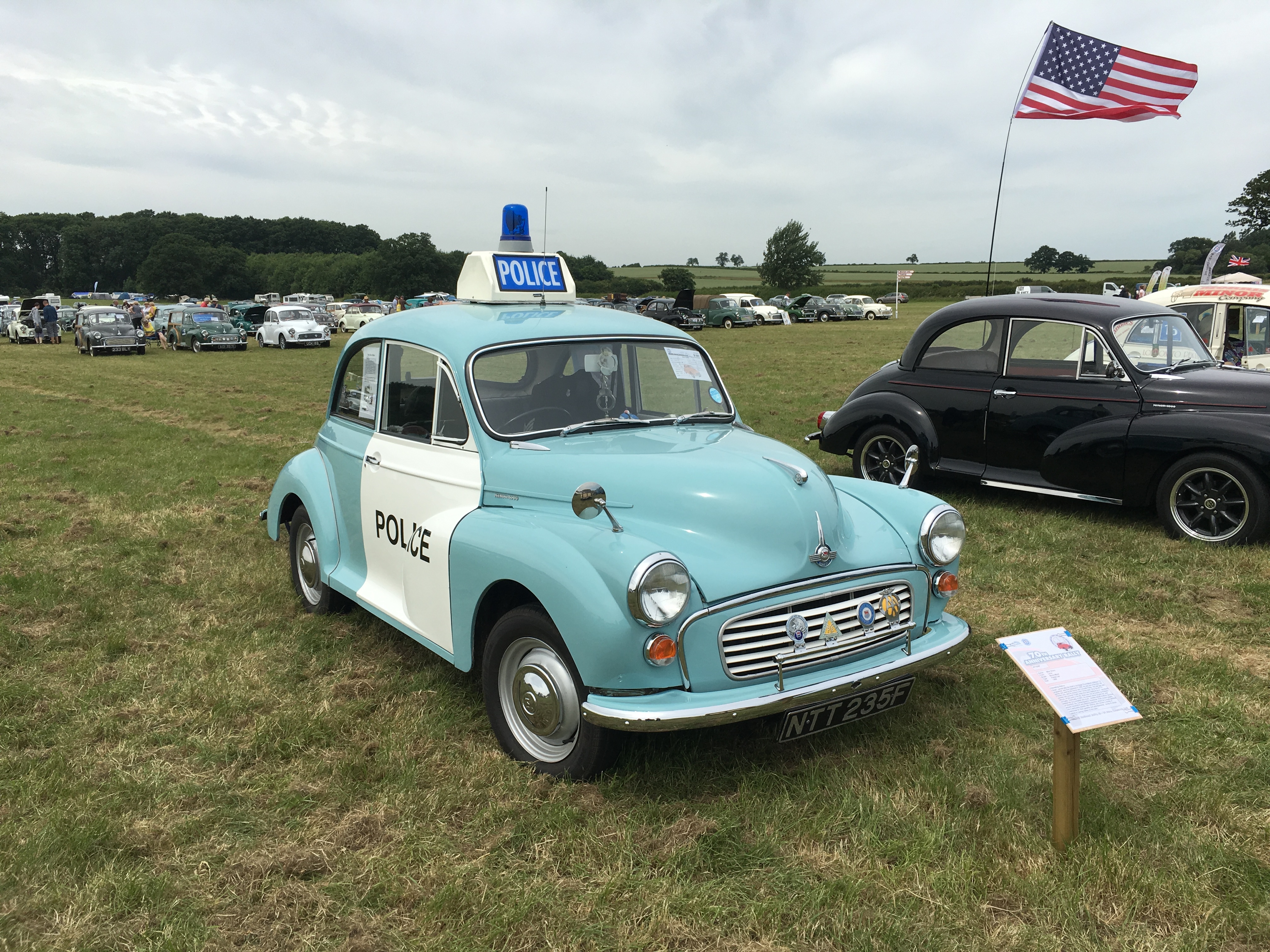
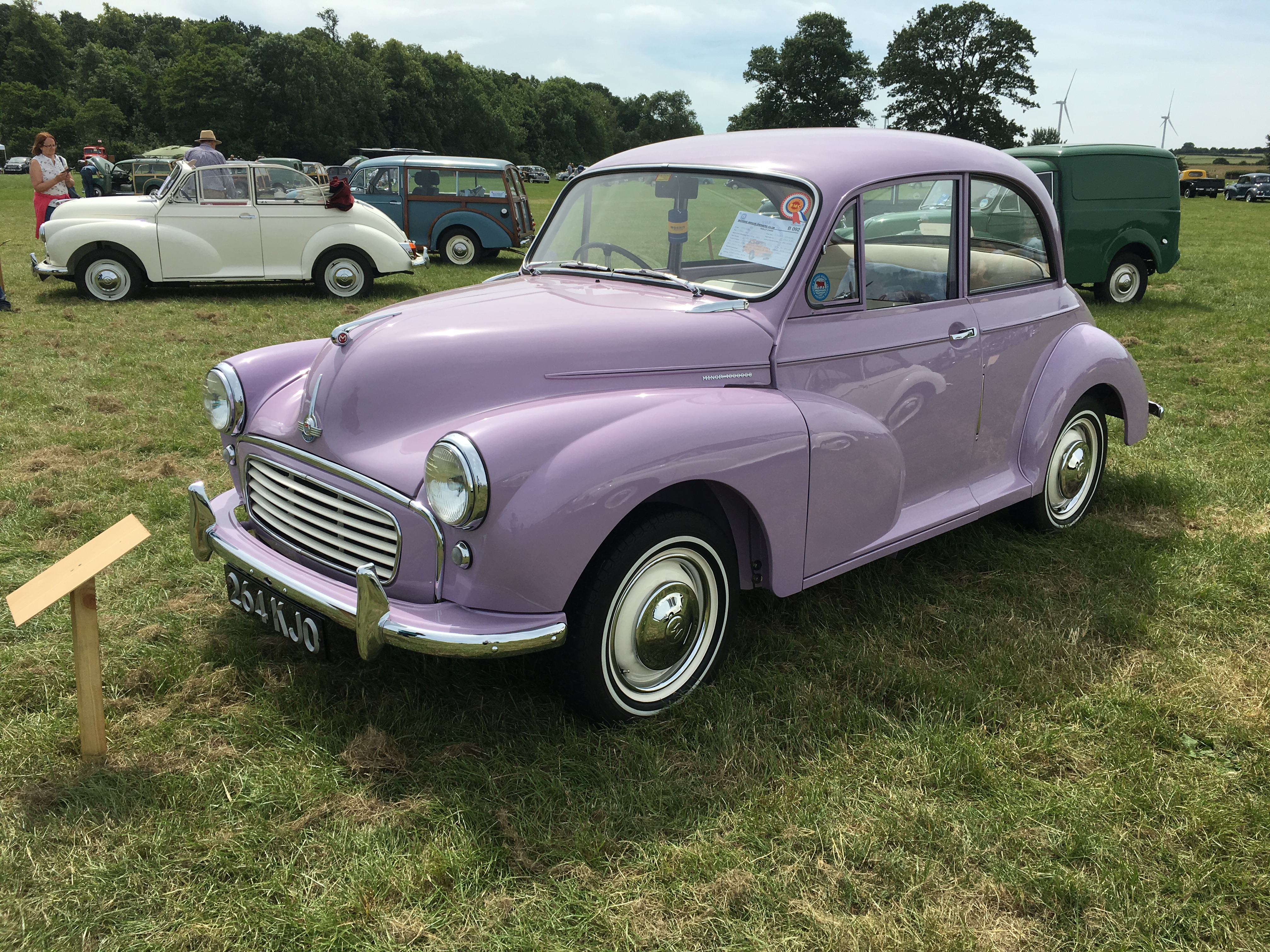
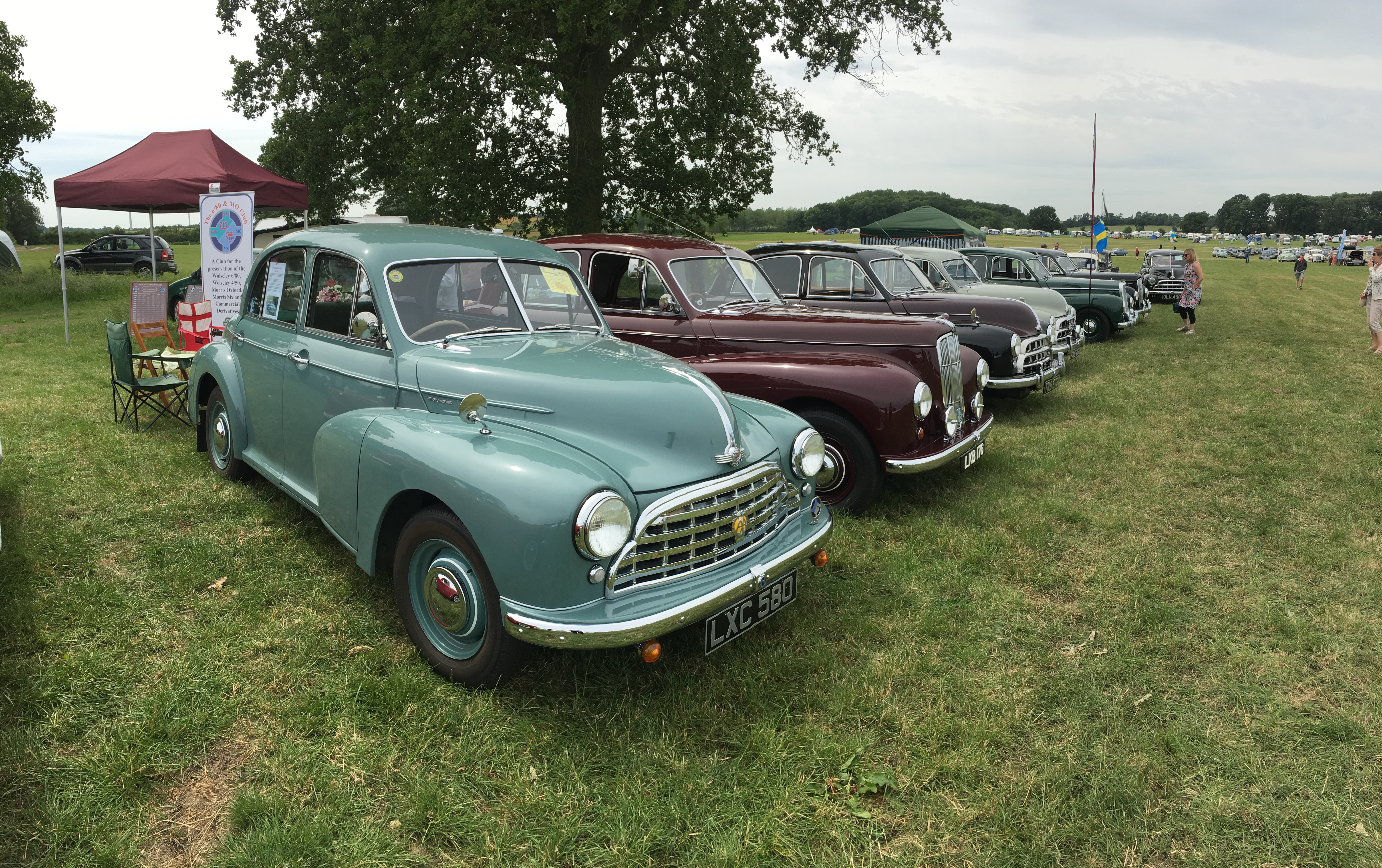
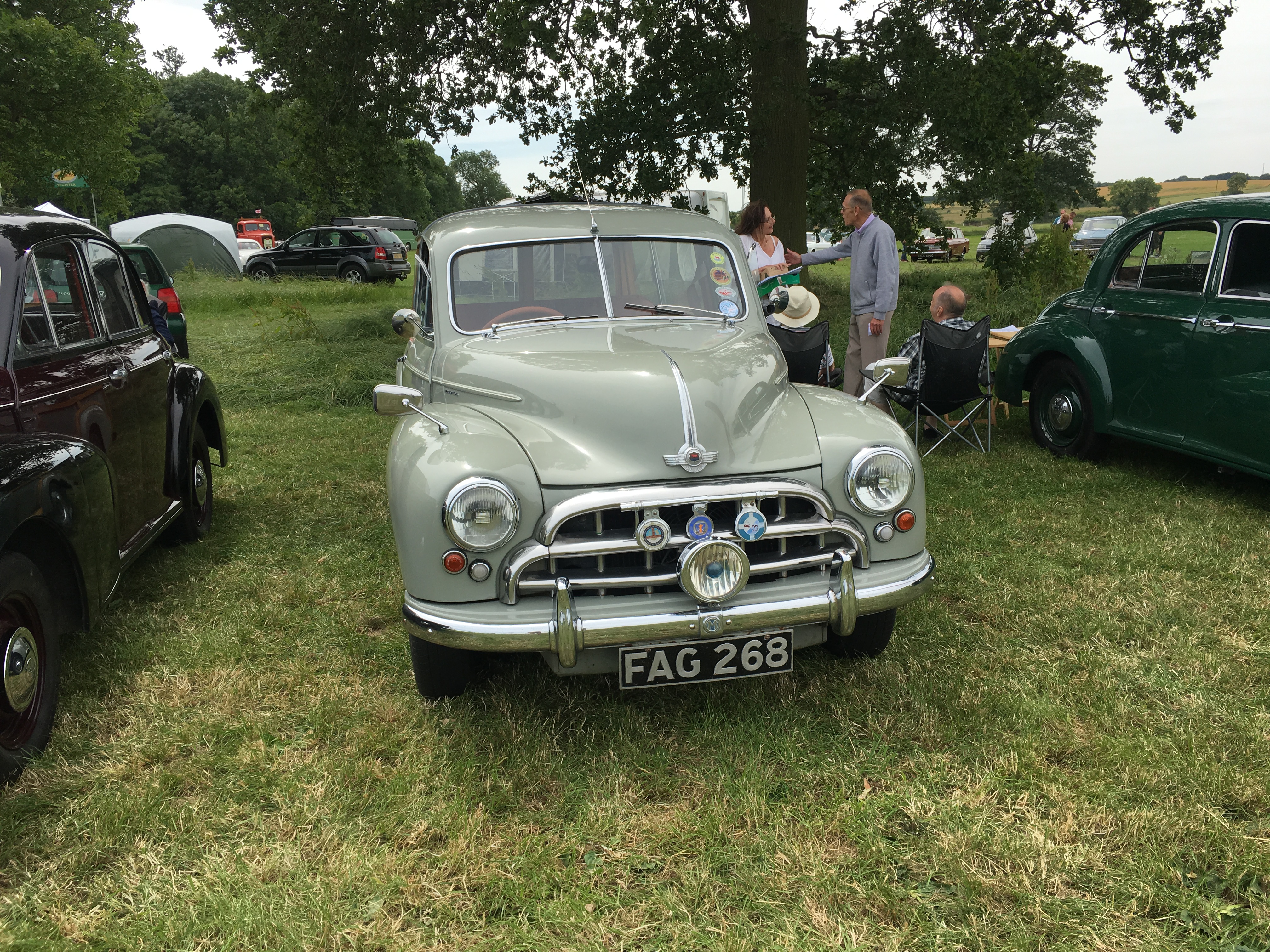
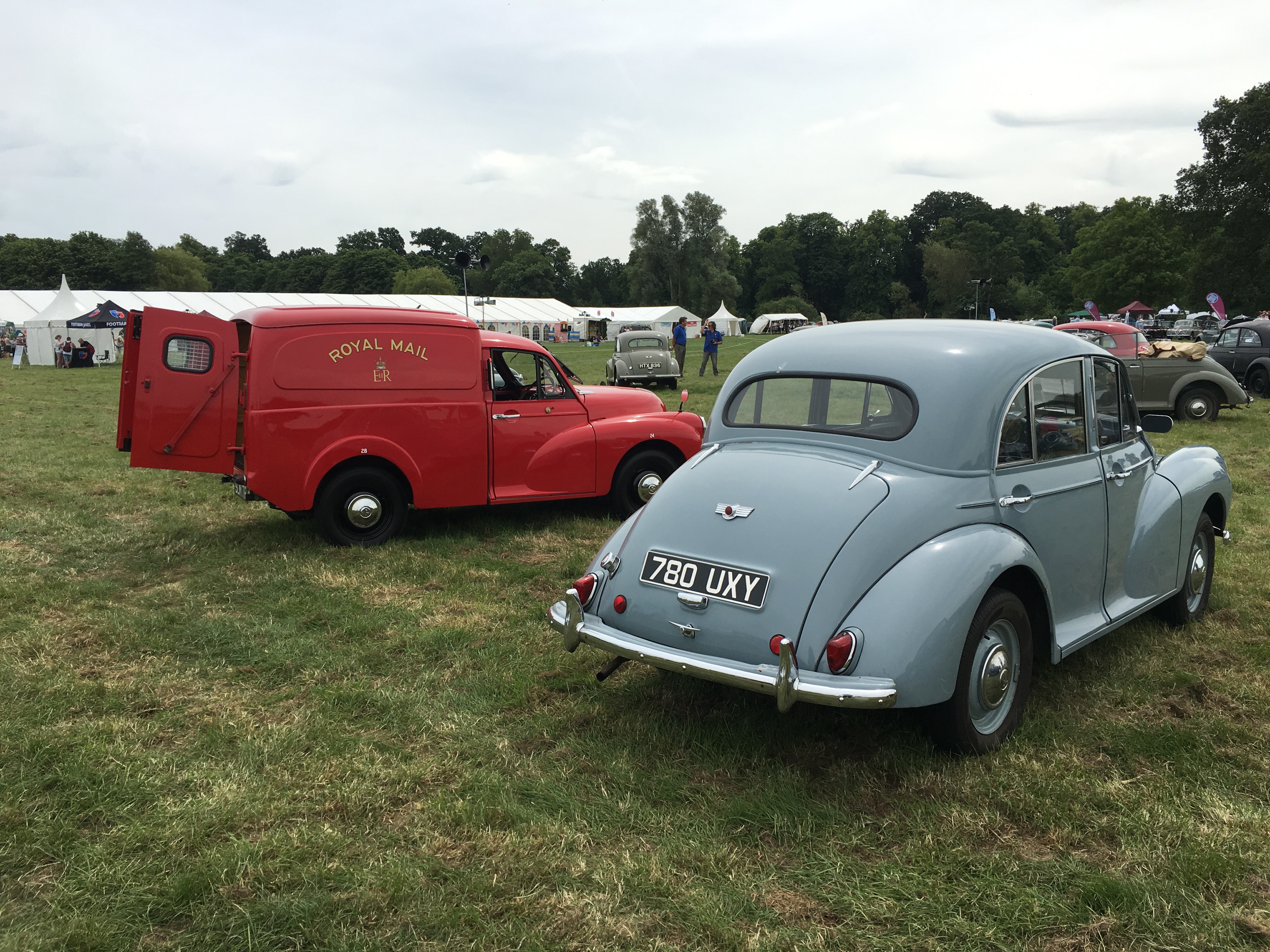
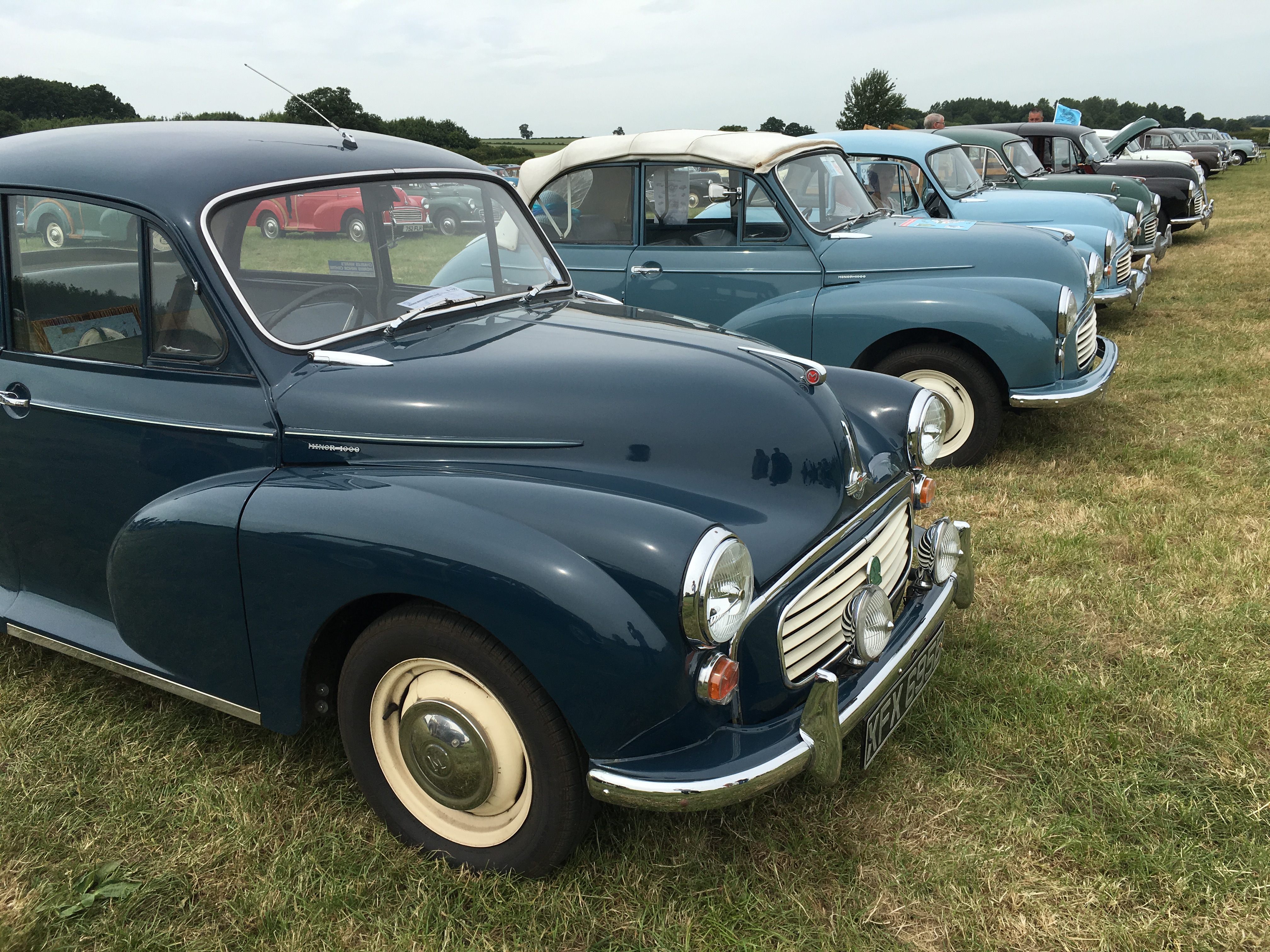
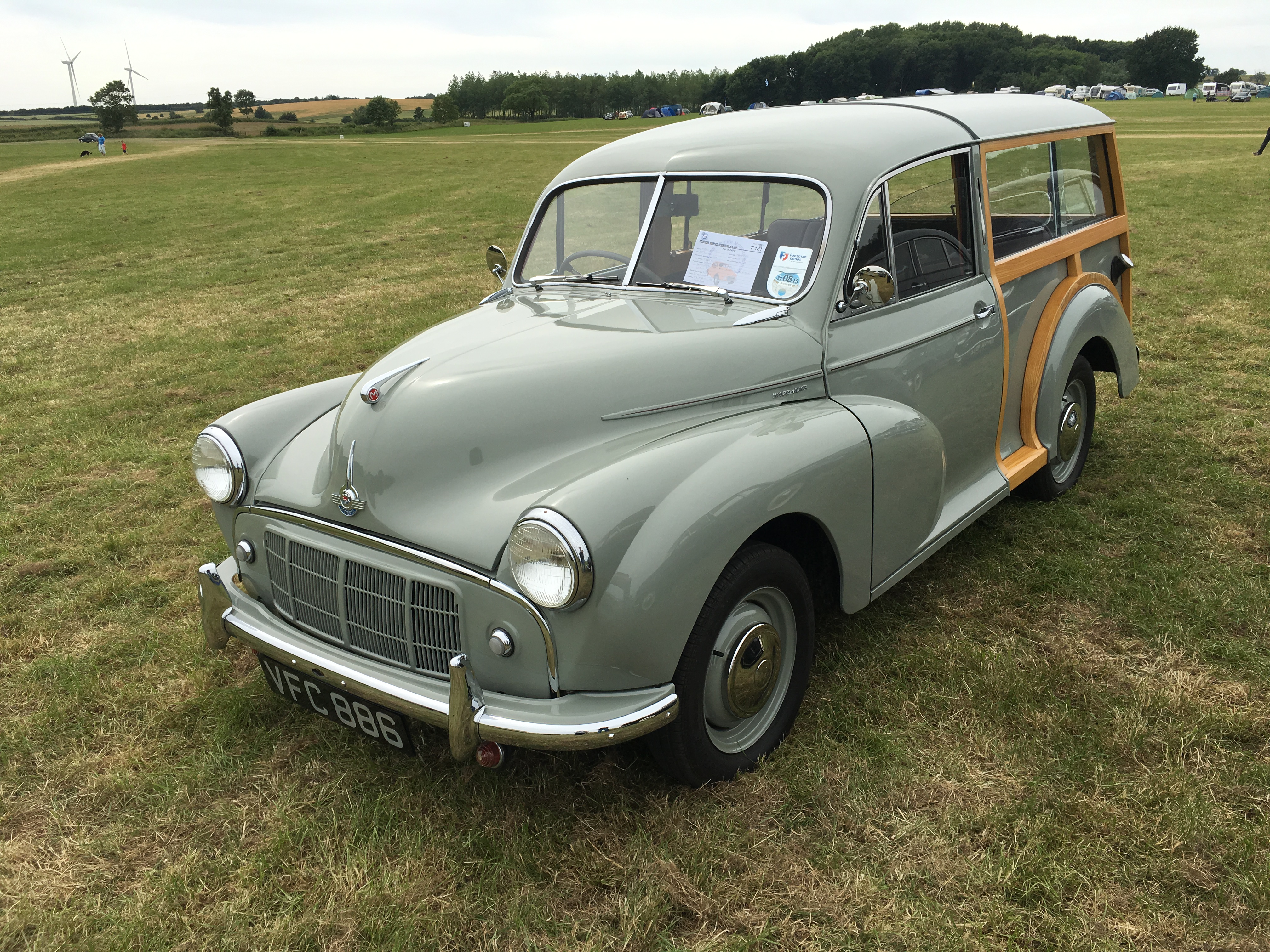
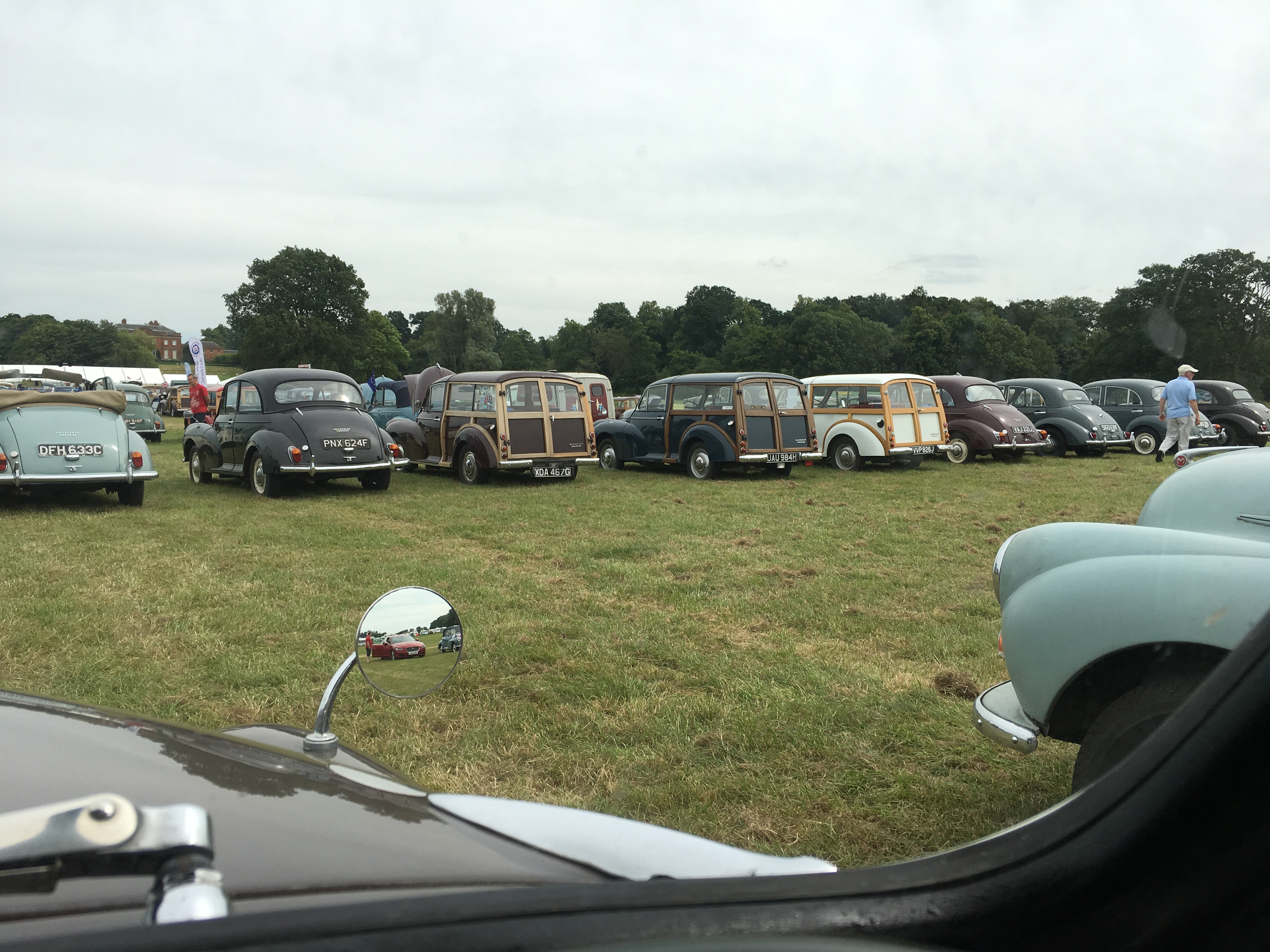
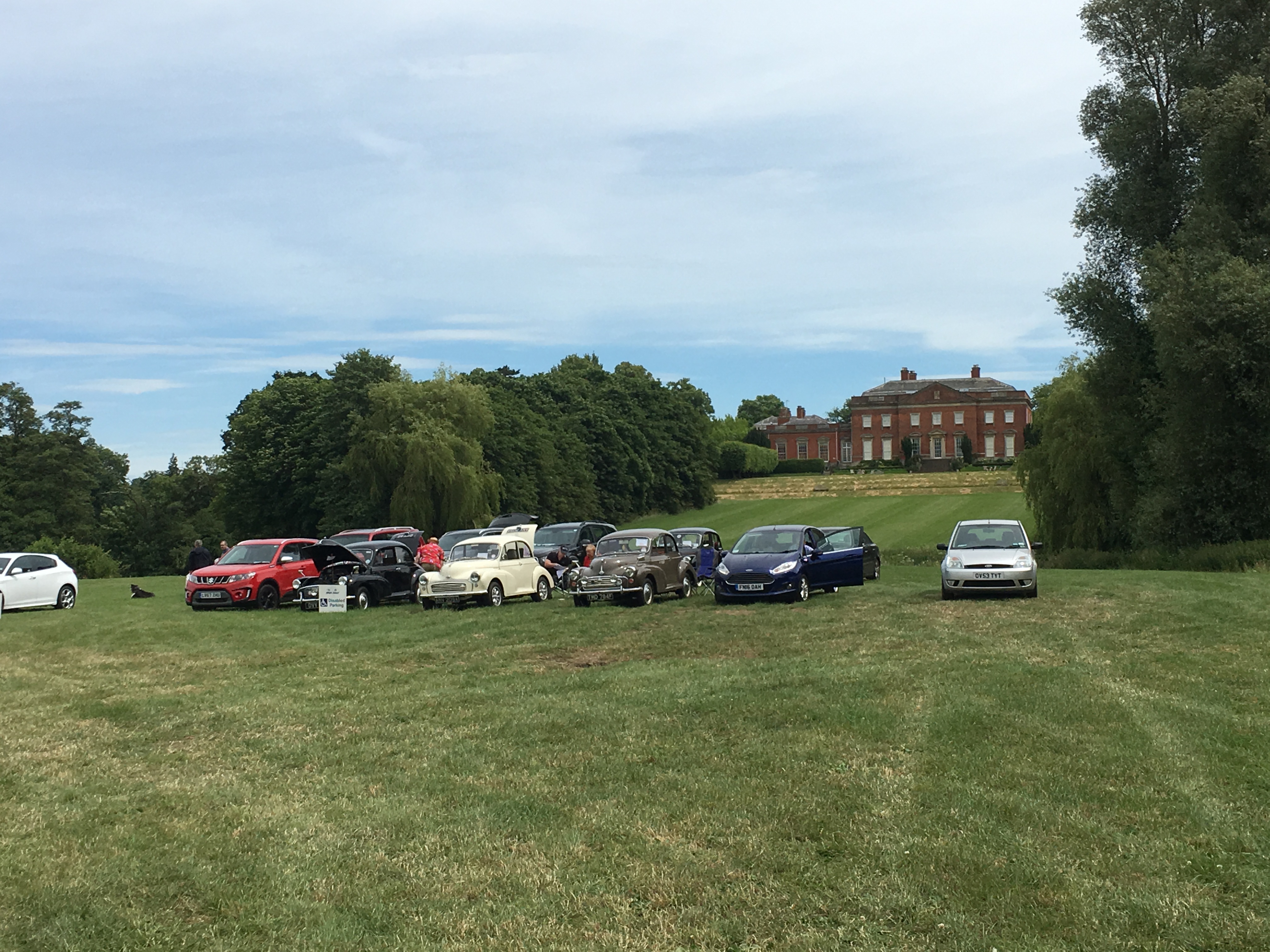
On the 24th June 2018 I attended my first Morris Minor national rally at Kelmarsh Hall, near Northampton. It isn’t too far from me – about an hour’s drive in total.

It was a great day out with equally fantastic weather, and quite a spectacular turn-out. I even managed to pick up a cheap replacement door handle, to replace the one on the front passenger side door, which had lost it’s return spring.

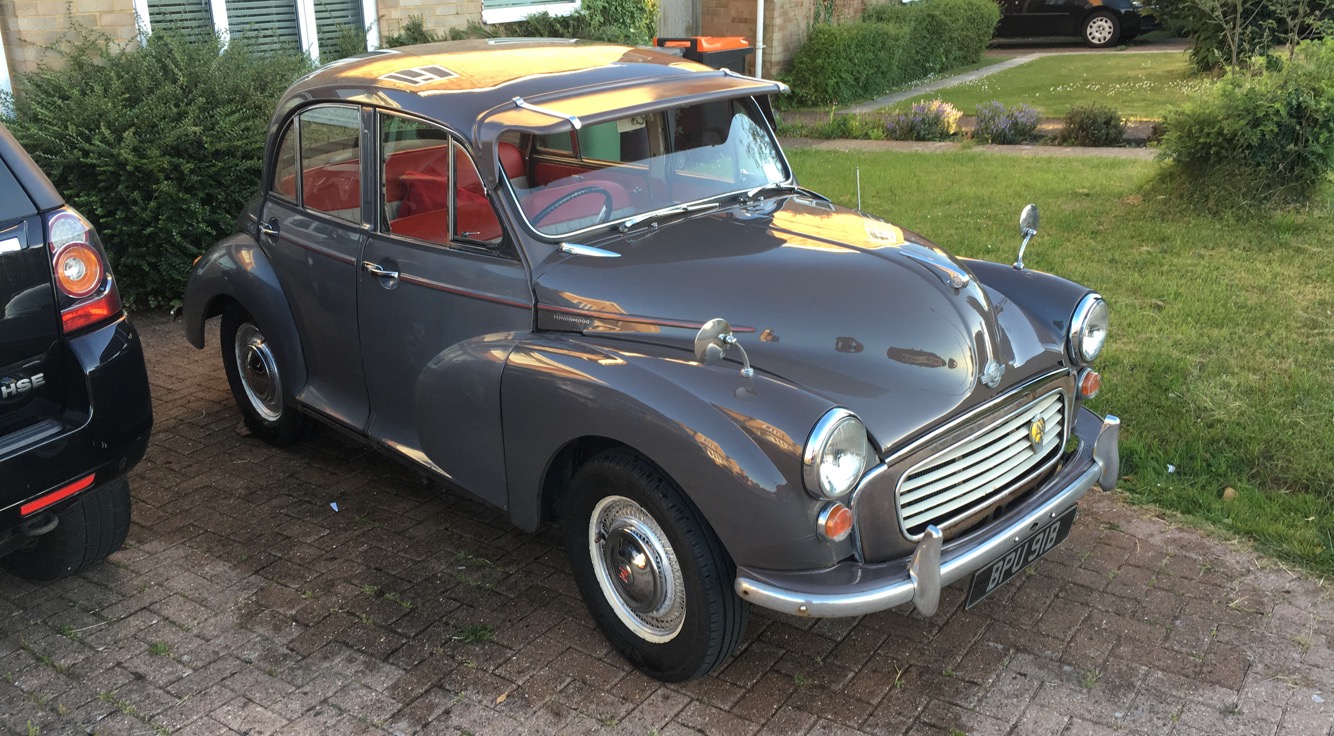
Washed and ready to attend the national rally the following day.
Note the fibreglass exterior sun-visor fitted. I removed it a few days later, as I wasn’t sure too fond of it for a number of reasons.
View from my car, with company.
Kelmarsh Hall in the background, with a row of Minors and Moderns in front.

Ventilator hinge replacement

Here’s a tricky job… In fact, that might be an understatement!

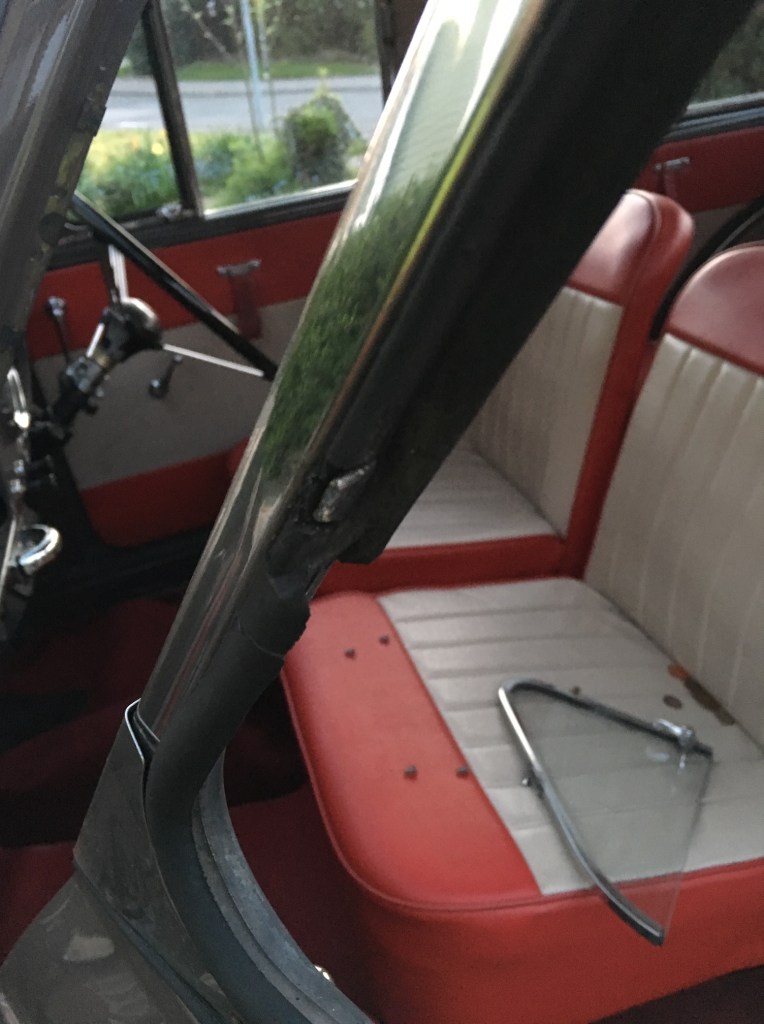
The replacement of the Quarterlight/Ventilator (the triangular hinged windows) seals is recognised by many Morris Minor owners as an absolute pig of a job – in this case I was replacing the top hinge which had sheered off at some point, leaving the window loose and able to fall out, and that requires the total removal of the ventilator window and the seal.

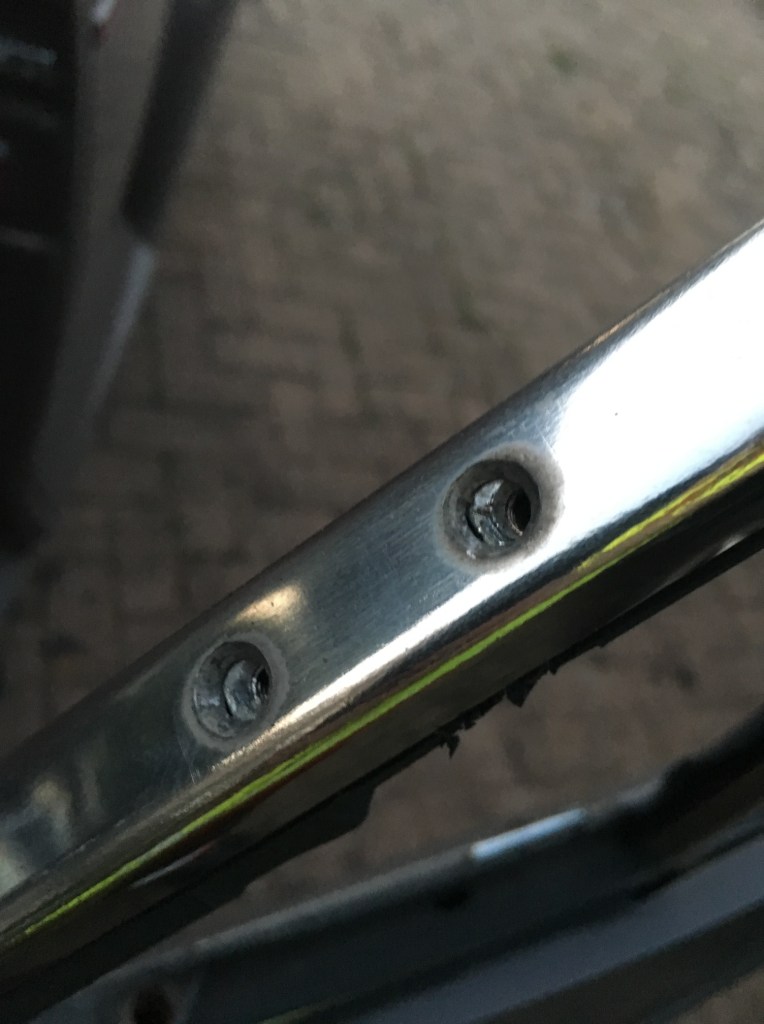
The hinge itself is attached to the top of the window frame by two screws on the top edge (Pictured below)

I’m not even going to try and explain how I completed this job – it was a lot of faffing about and involved a bit of head-scratching, and in the end I dismantled most of the passenger side window assembly, and it was still tricky. I found the worst part of the process was refitting the window once the hinges were in place – you can’t bend the window frame, but you can’t bend the ventilator! …Maybe there’s a trick to it, or maybe I’m missing something, but it’s not a task I wish to attempt again any time soon!

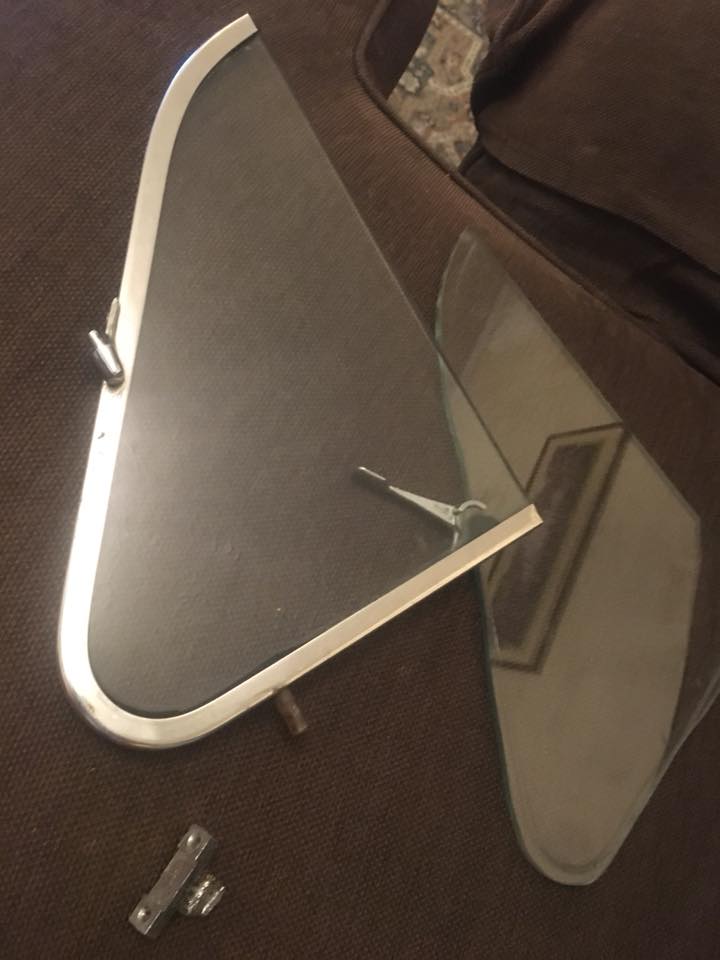
The original ventilator windows, and a new upper hinge ready to go in. (Easier said than done)
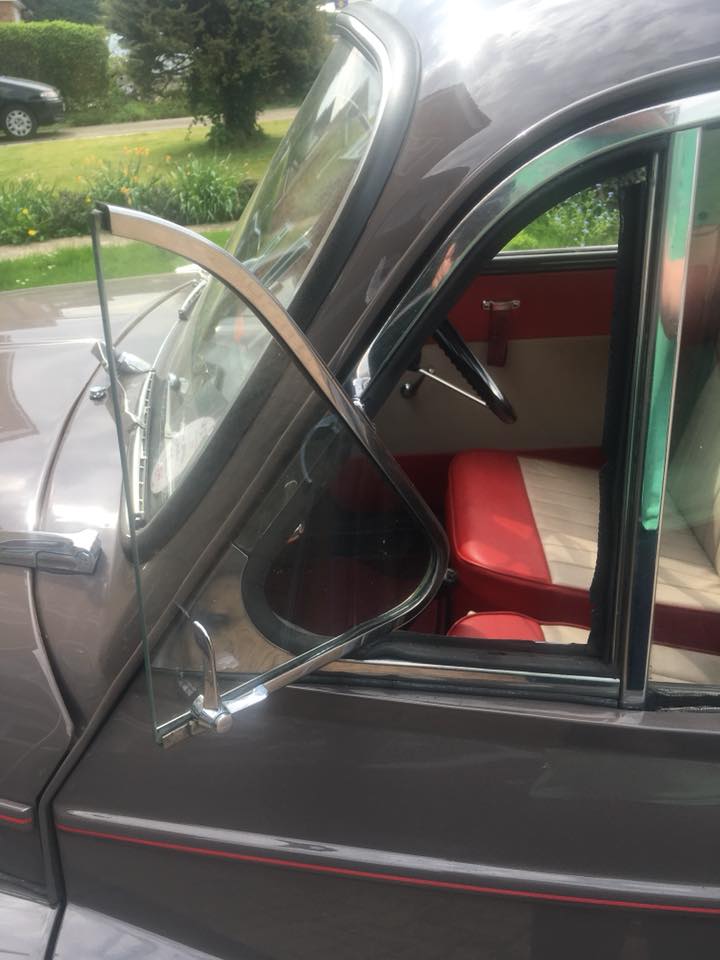
Fixed! The ventilator window is repaired and now fully functional (At speeds below about 40mph)

Mileage update + Stuck Odometer

Speedometer needle getting stuck, and a quick fix!

Unfortunately after a trip to Brighton and back the speedometer unit completely gave up.
The needle kept getting stuck at 20, and needed some gentle persuasion to drop back down again when stationary.

At the same time, the odometer stopped recording miles. The last accurate reading I got from this unit was 25660.9, which means the mileage on the car by this point would have likely been 125000+, which is over half way to the moon, or 5 and a bit times around the earth!

Flaws with the floor

What an ingenious title!
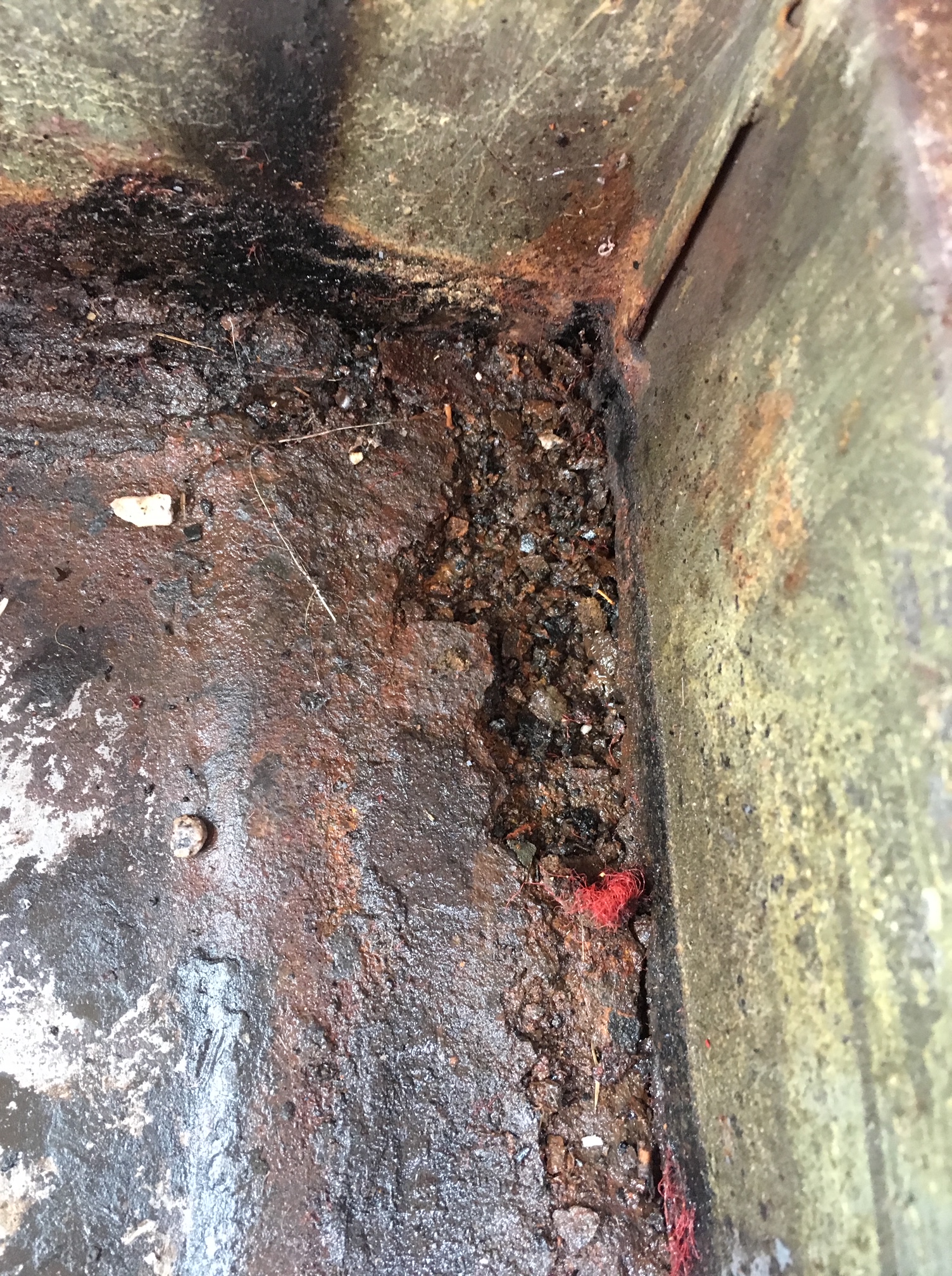
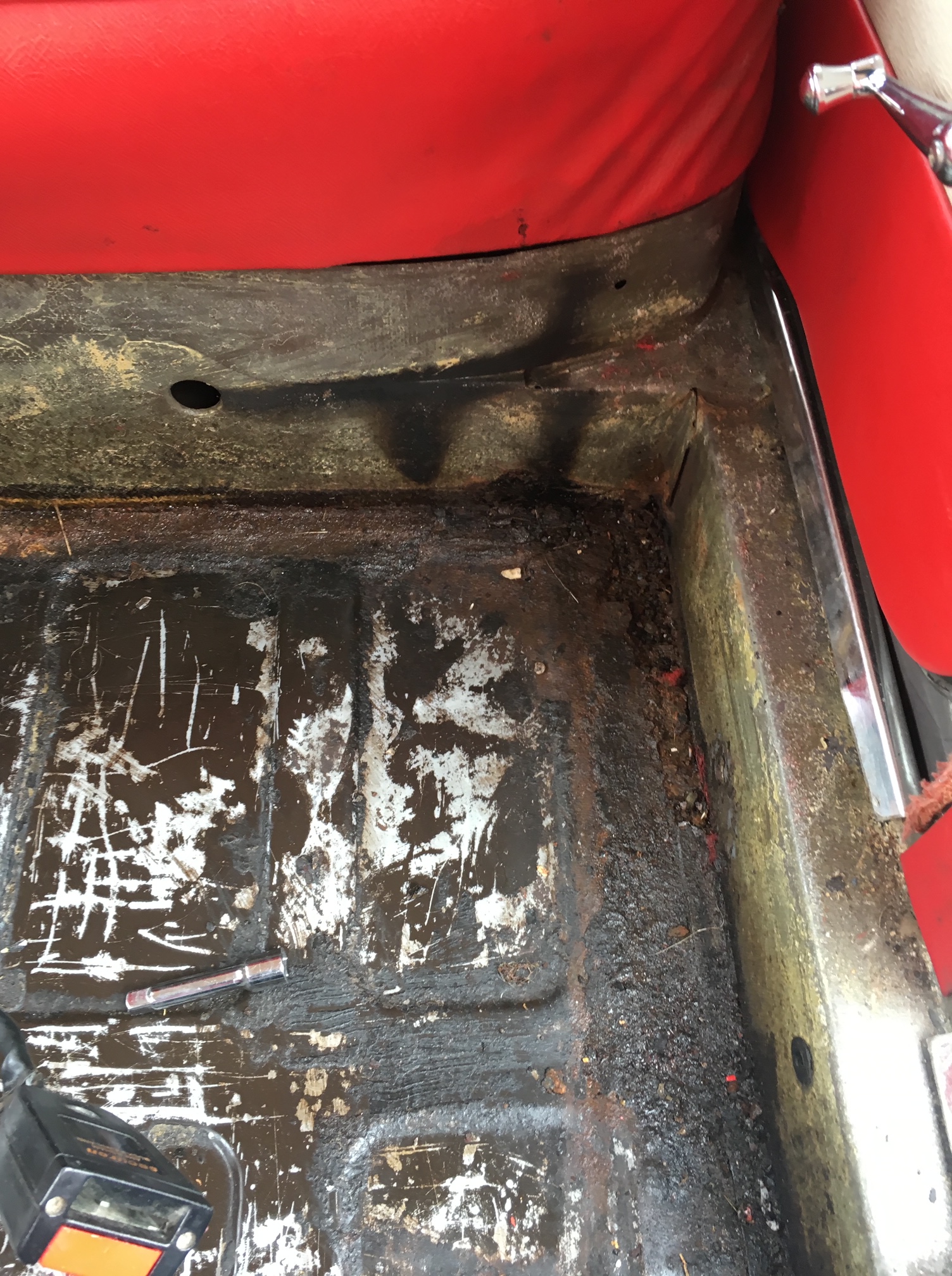
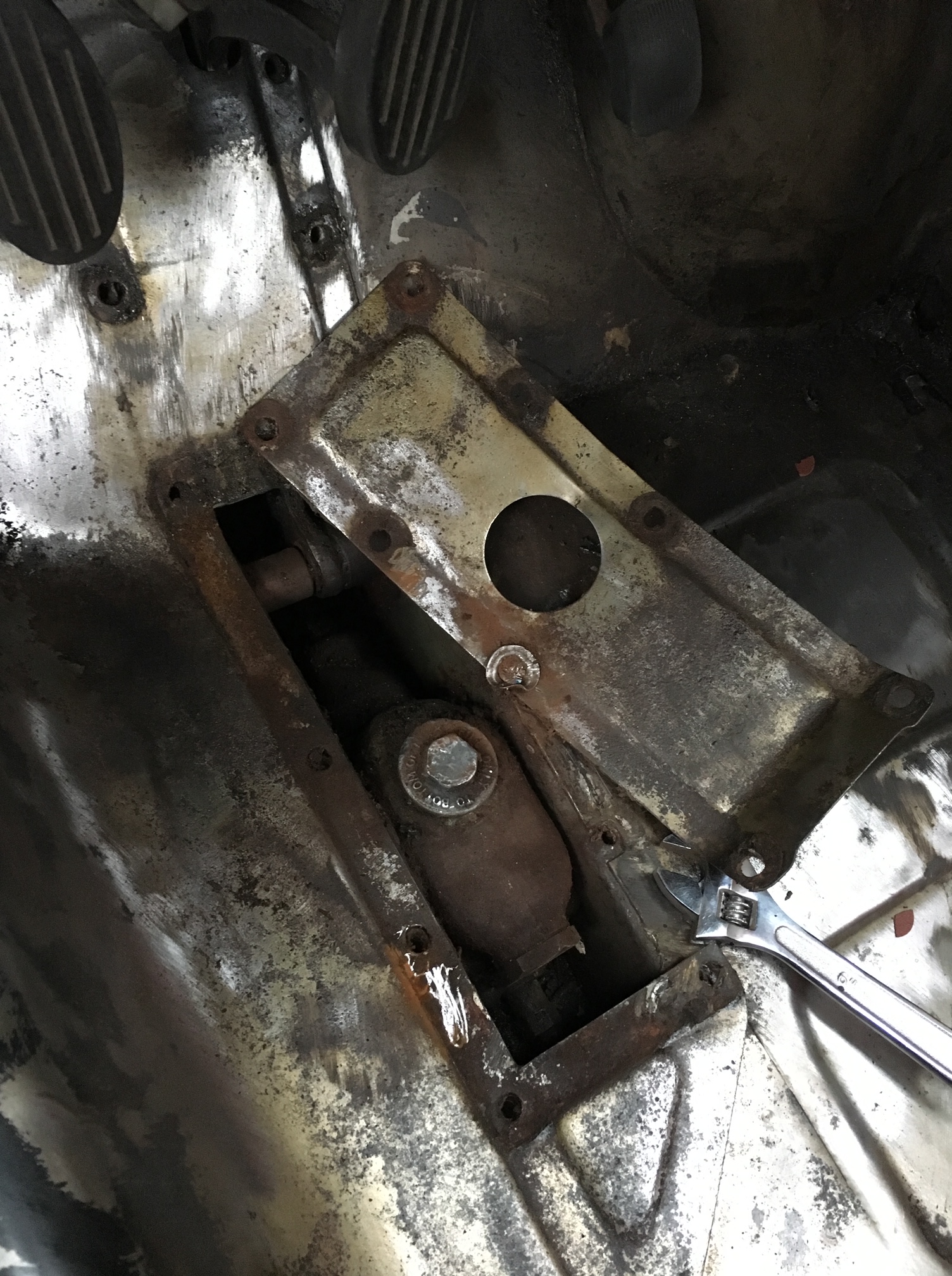
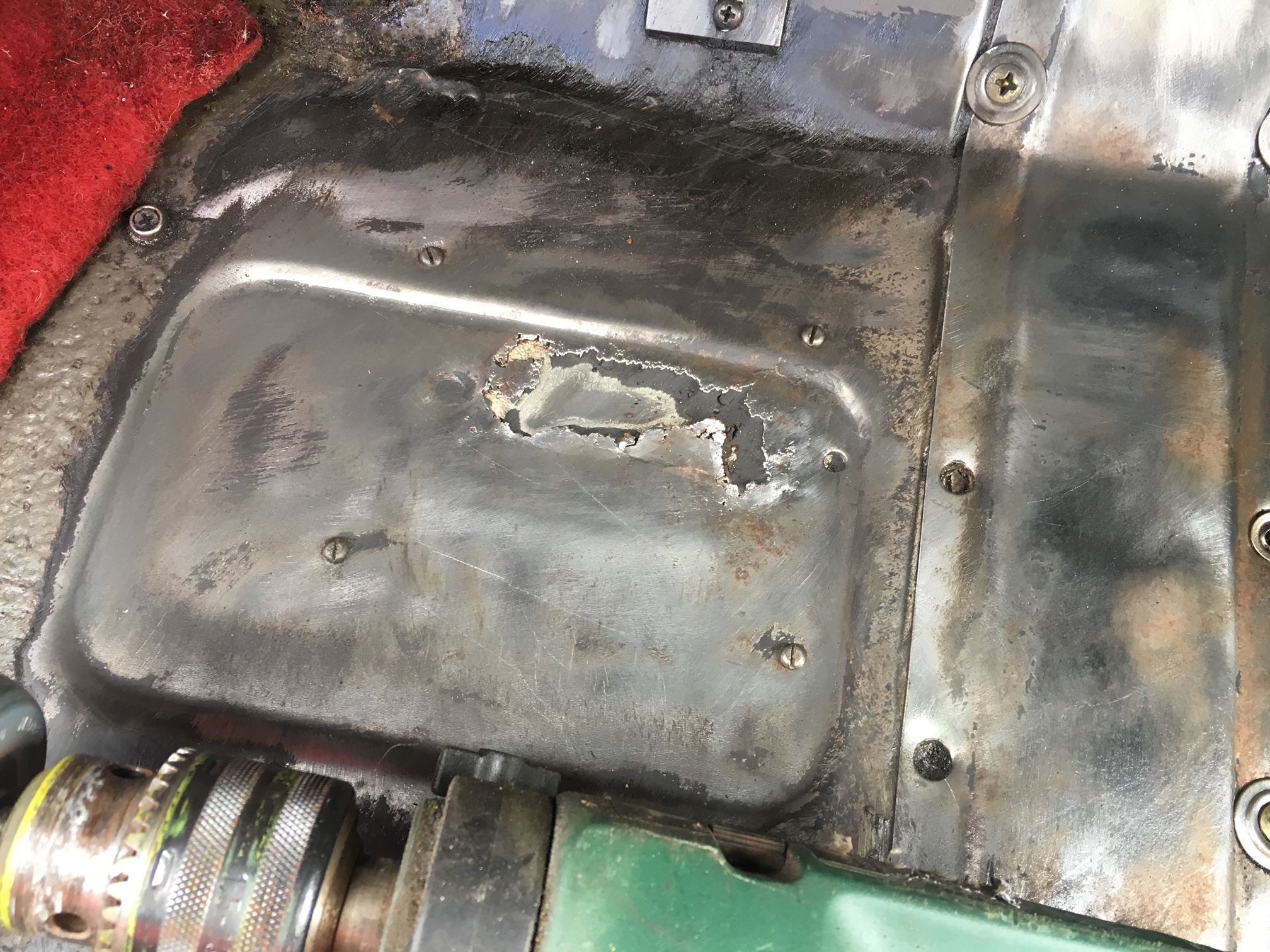
Anyway, this update regards the state of the floors – when I bought the car I thought it was fairly solid throughout, but as I dug further I began to find more and more problems, and one of the costliest and biggest parts of the restoration to date was the floor.

Now, this isn’t the worst starting point – the floor wasn’t absolutely shot, but there was a crack in the driver’s side floor that seemed to have been growing stemming from where the seats are affixed, part of the floor had holes that been patched underneath and filled on top, and the corners of the floorpans were crumbling, so I decided that I’d have the whole lot cut out and replaced.

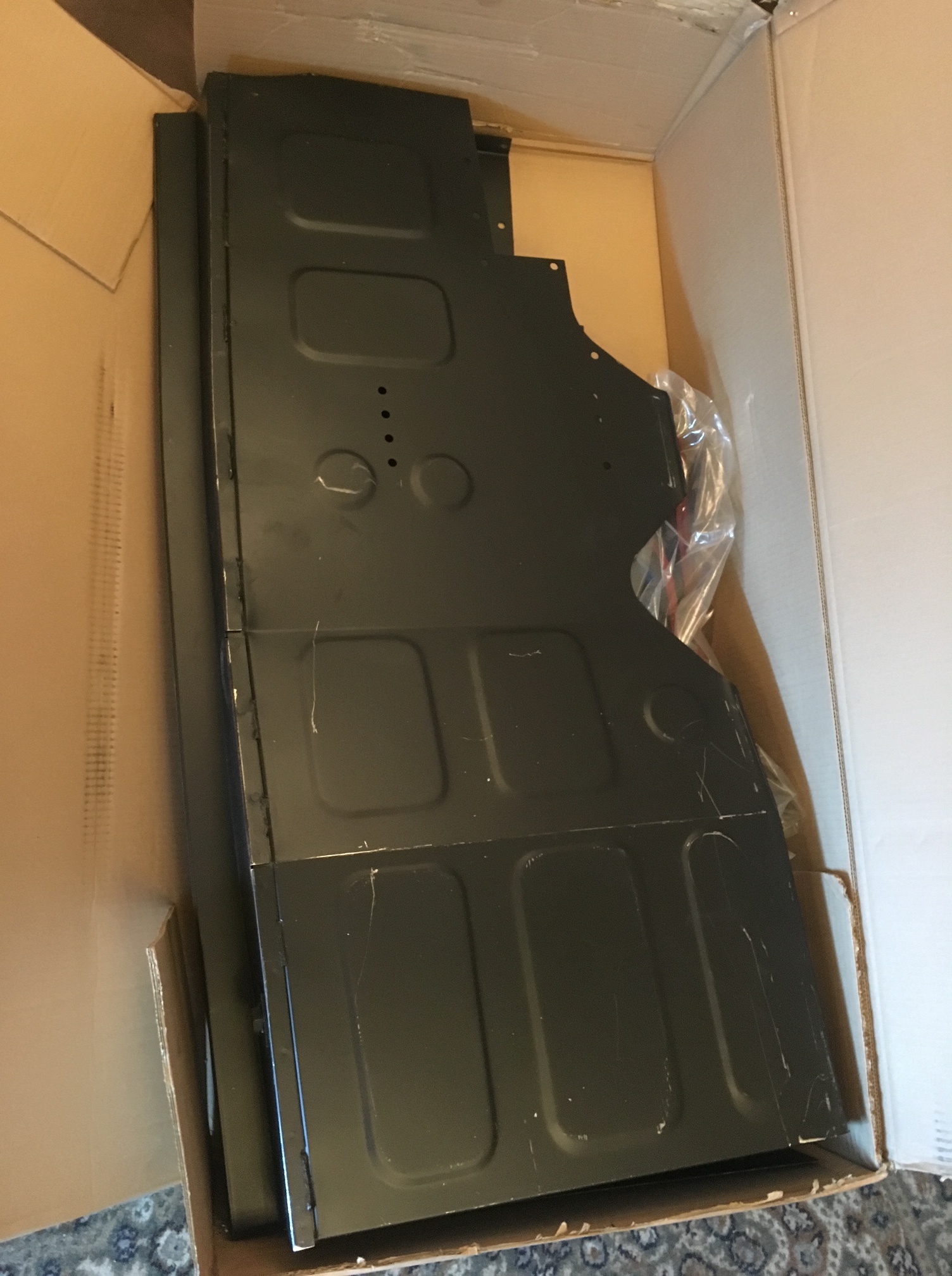
The new panels arrive!
On 8th January 2018 I decided for some reason it’d be cool to go to Boston, Massachusetts. I left my car and new panels with a welder that morning before hurrying to Gatwick Airport to catch an afternoon flight to New England. I enjoyed the getaway, but there isn’t much there for someone who isn’t really into the early history of the USA, and it was very very cold, so it probably wouldn’t be on my list of places to revisit in a hurry.

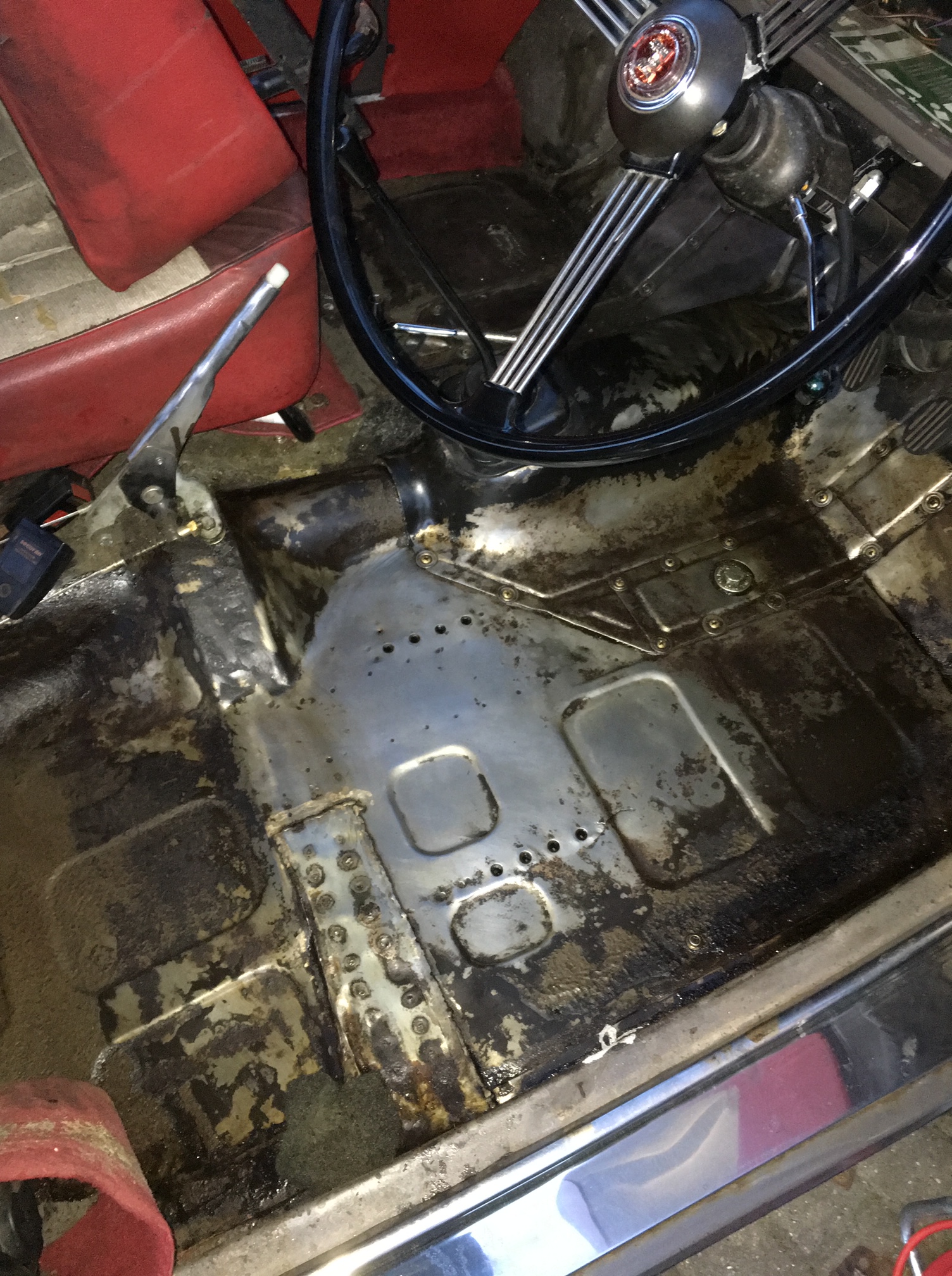
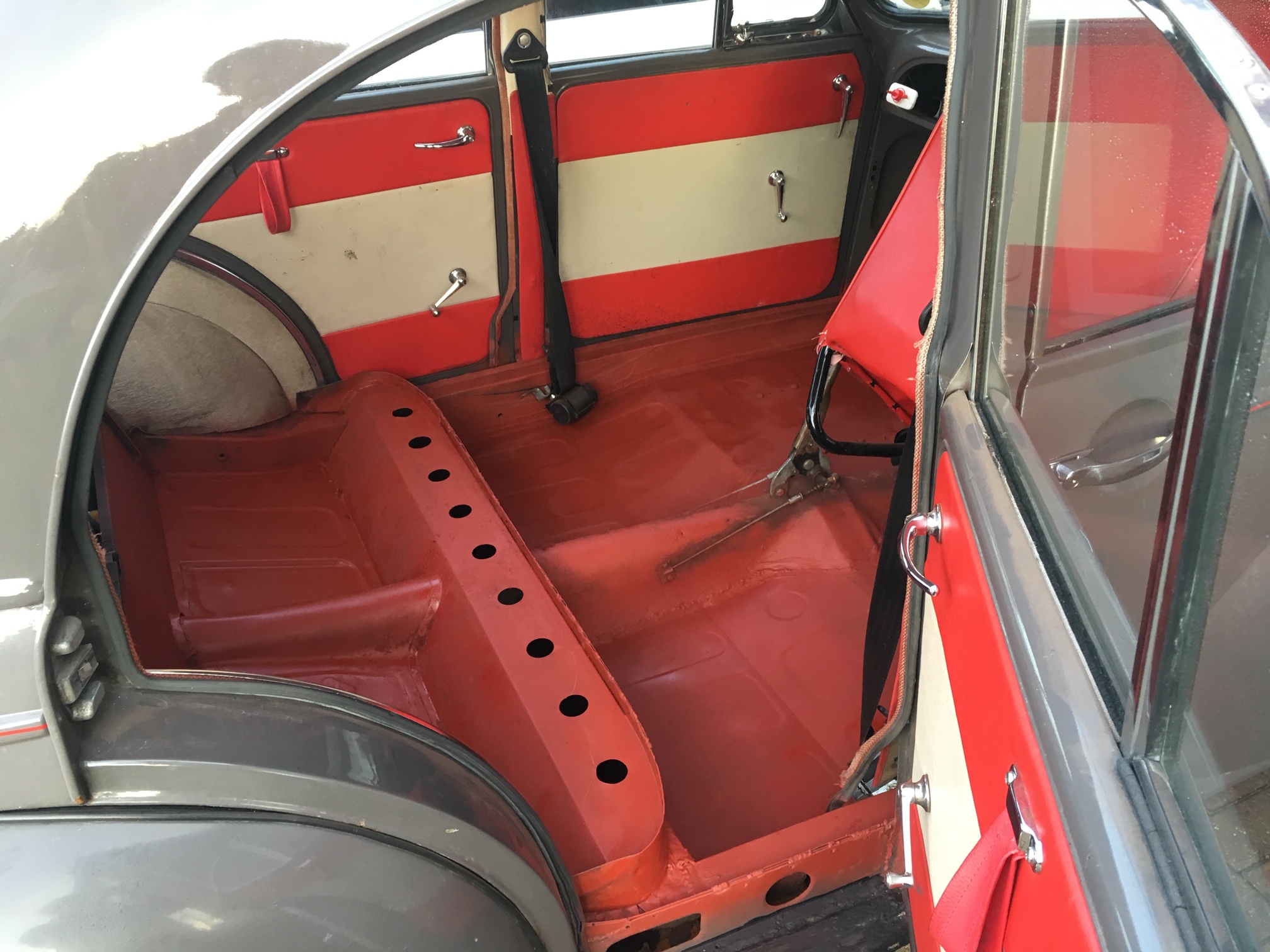
During the time I was away the welder had repaired some damage he found on the sills and replaced both floor-pans. Sure, there were probably cheaper ways to deal with the holes and filler patches, and I could’ve just had more plates patched on underneath, but the results wouldn’t have been half as satisfying! I intend to keep this car for as long as I can, so it was definitely a worthwhile investment in my eyes.

I think you’ll agree that it looks great, and I imagine it adds a bit more strength to the car.

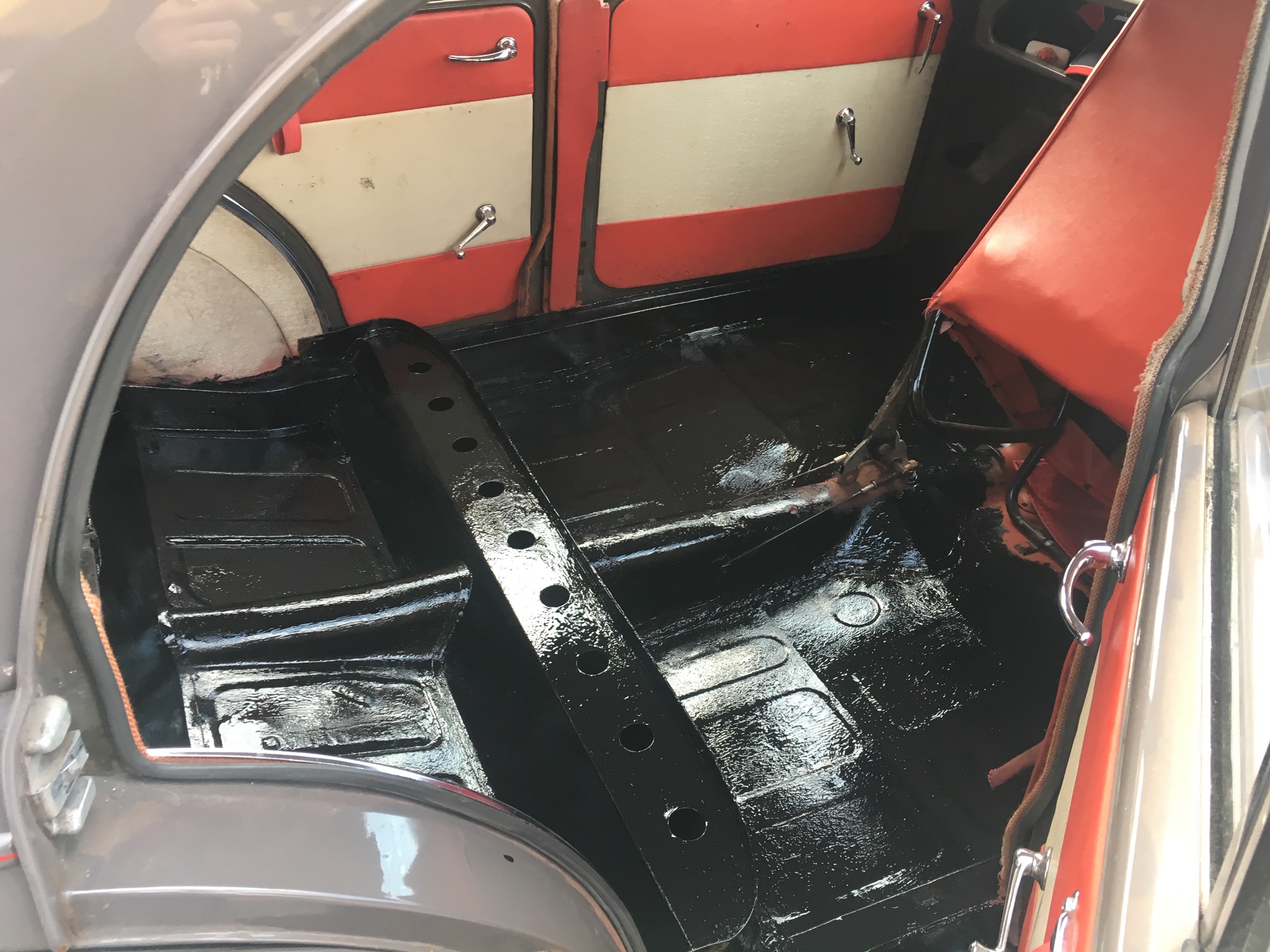
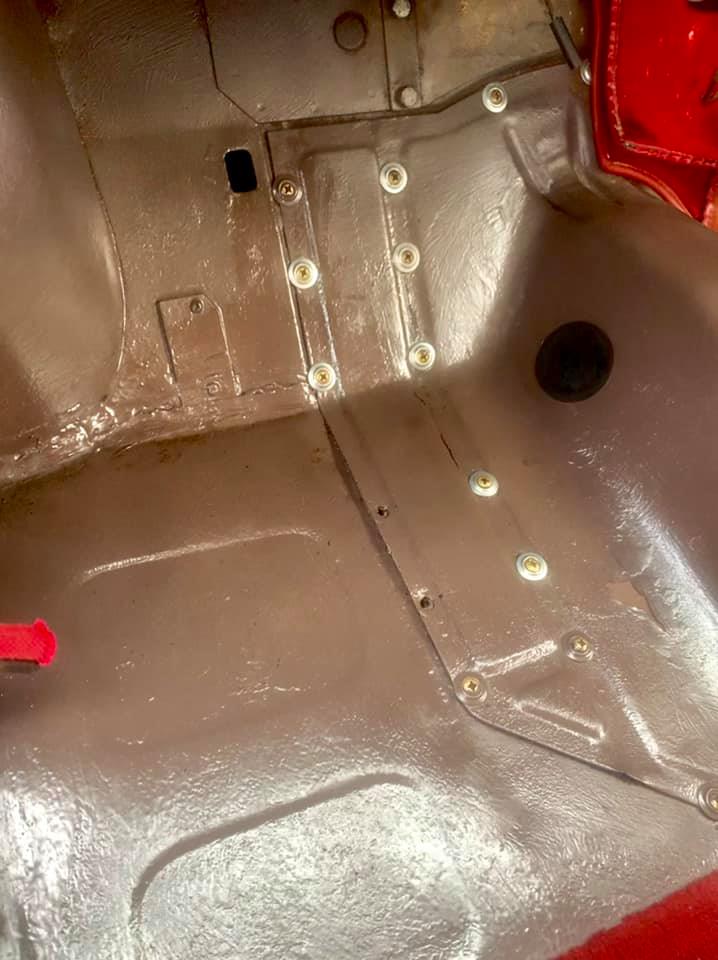
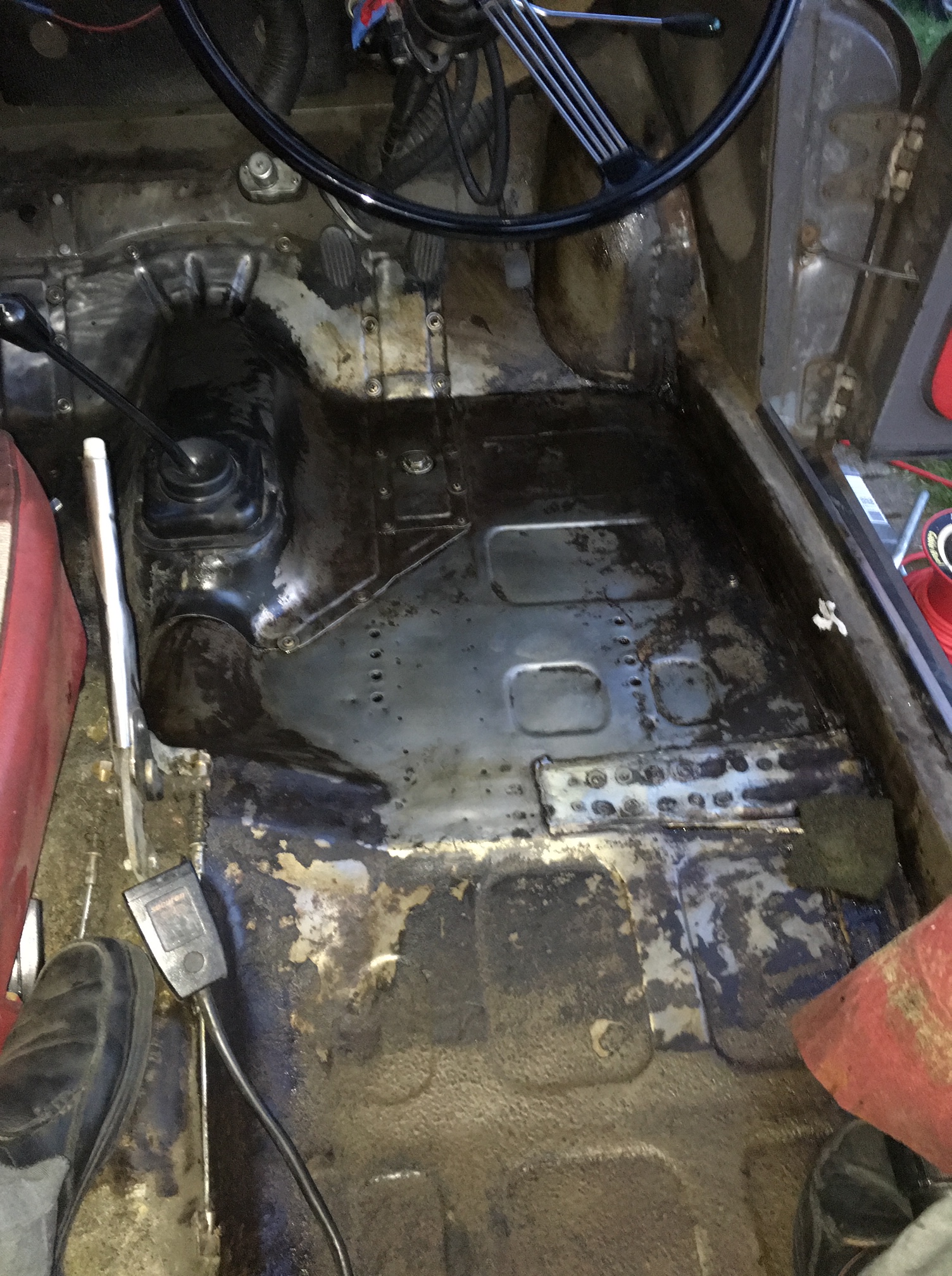
When I got the car back, the inside floor surfaces had been treated with a coat of red oxide paint, which I went over this with a product called Epoxy Mastic 121, which is described as a “two-pack high build primer/finish which can be used on Steel, Aluminium, Galvanised Metal and GRP”.

I have since painted over the EM121 with rose taupe paint to match the rest of the car’s colour – it looks fantastic, and it seems to be doing it’s job of protecting the new panels!

The floor, coated with EM121 and then painted-over with Rose Taupe paint to match the exterior. A DIY job on a tight budget, but I’m happy with it!

New seat covers!

About 6 weeks ago I finally bit the pricey bullet and ordered a set of new seat covers. The rear seat was mostly intact as the previous owner had never had any passengers ride in the back of the car, but it had somehow become badly torn along the top and was not reparable.

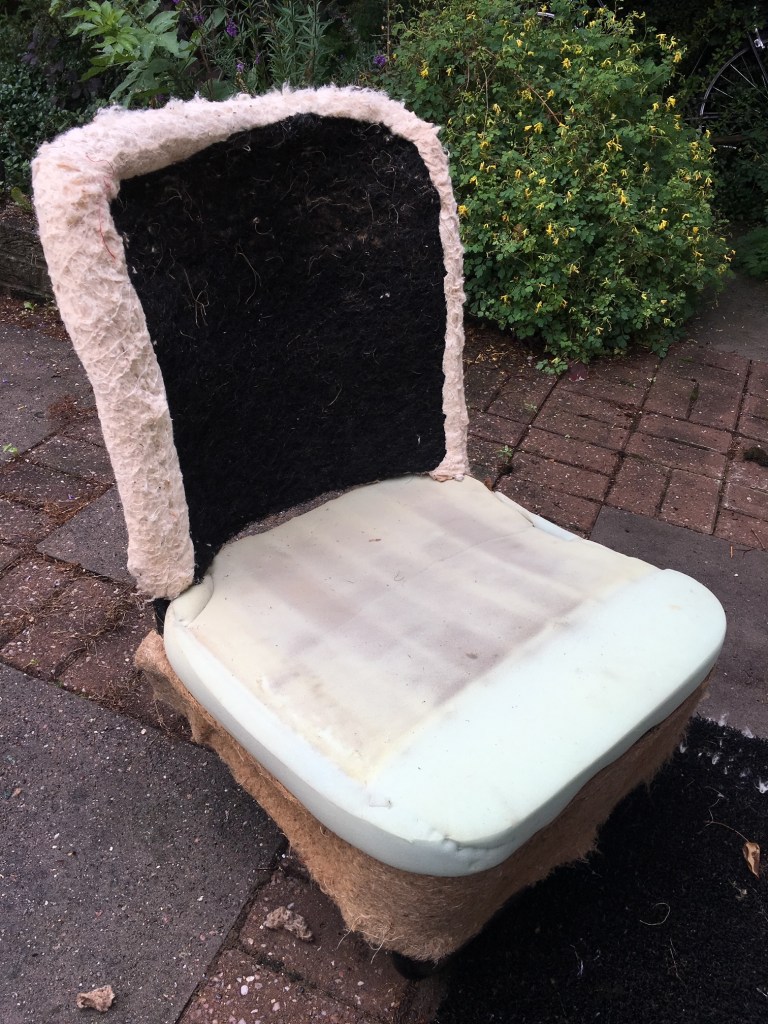
The front seats were a lot worse…

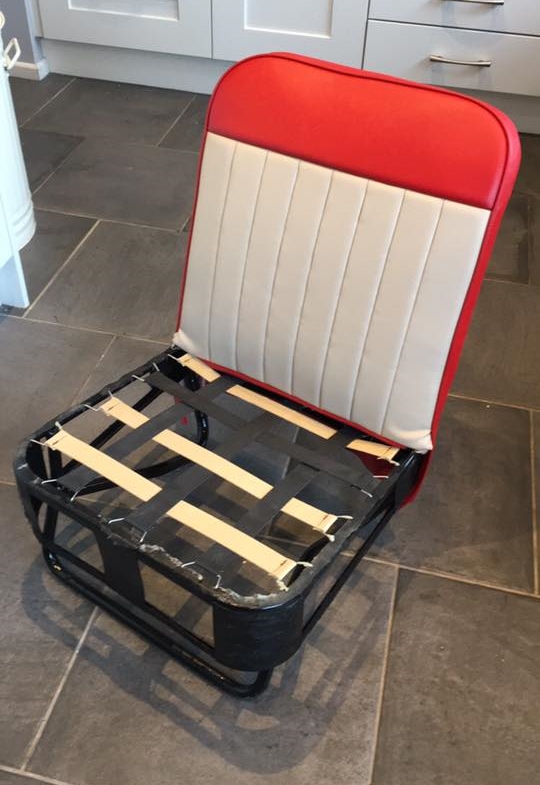
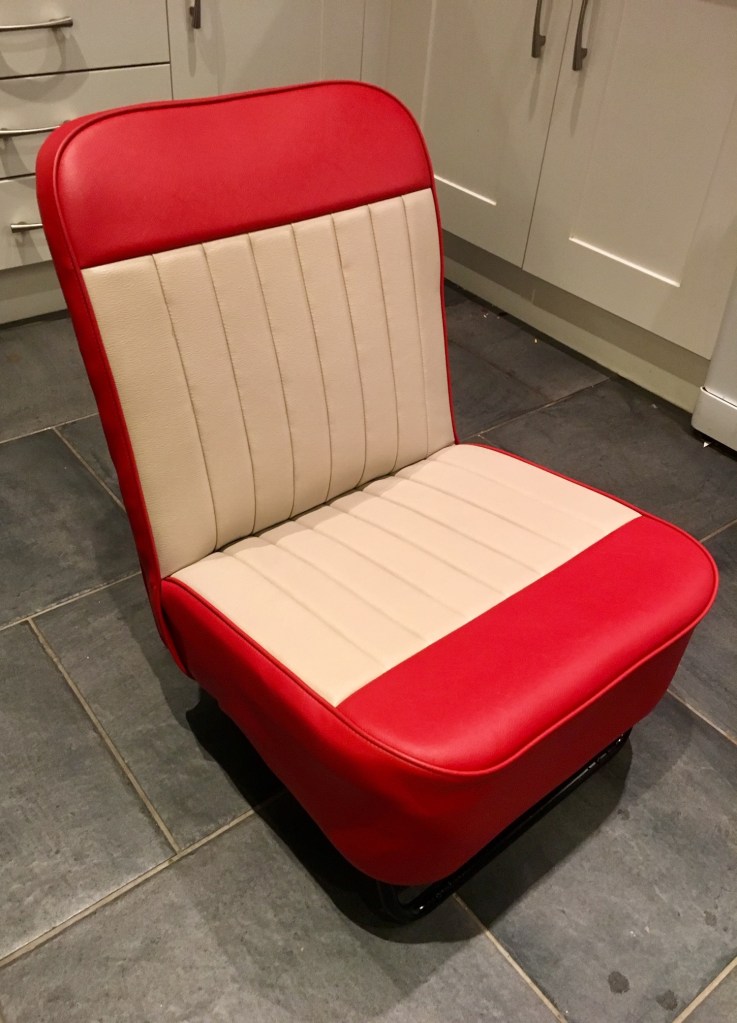
Old vs New: A before and after showing just how bad the seats in my car looked prior to their refurbishment!

The front seats were a doddle to restore. I have no prior experience with this kind of thing, but with new covers, new seat straps, new foam bases, a can of spray adhesive, a bit of thread and a pair of scissors I was able to re-cover these in no time at all! Once I had sussed how to do the first one the second seat probably only took around 30 to 45 minutes to make like new.

An upholsterer or professional trimmer would be able to do a much neater job I’m sure, but I’m very happy with how they came out!

Bristol and back.

A view of the Clifton suspension bridge, Bristol’s most famous landmark.

On 13th June 2017 I was given the opportunity to work at Bristol Airport for a couple of days – to date it’s the furthest I’ve travelled in the Morris in one go without stopping, nearly 150 miles away!

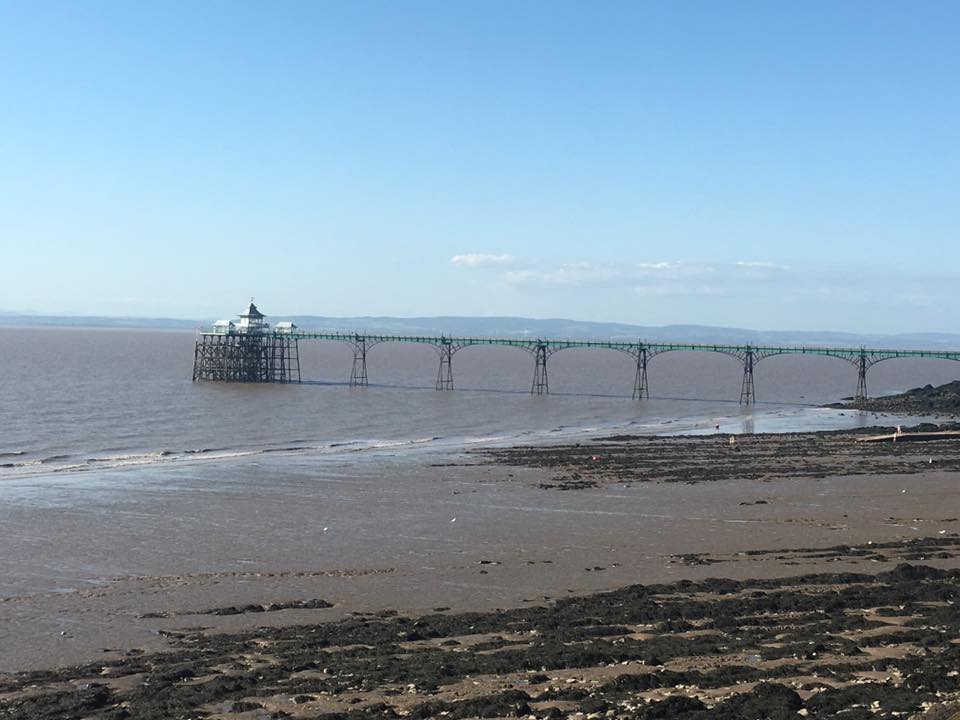
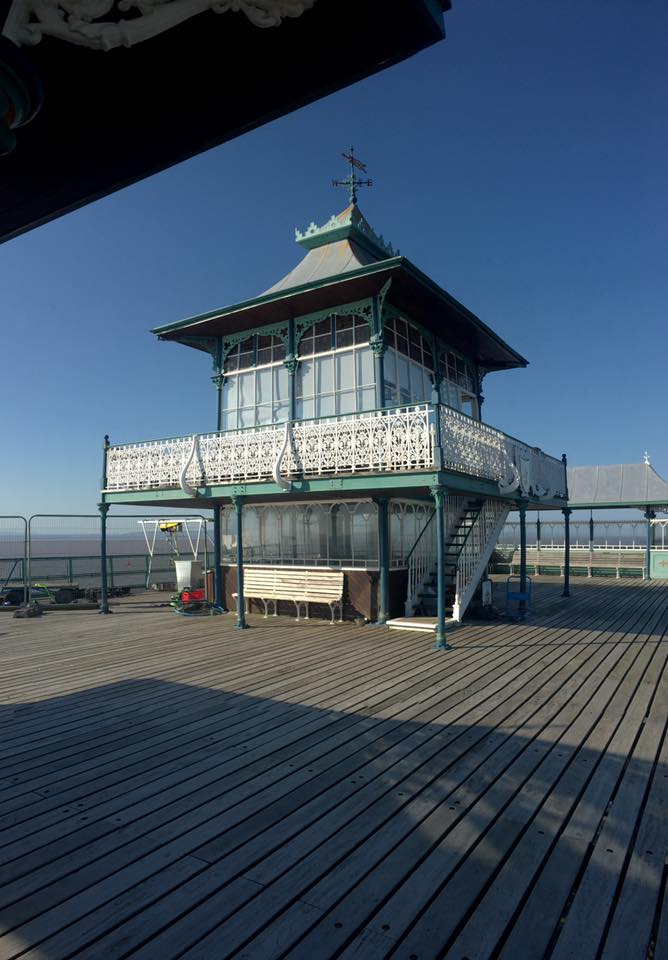
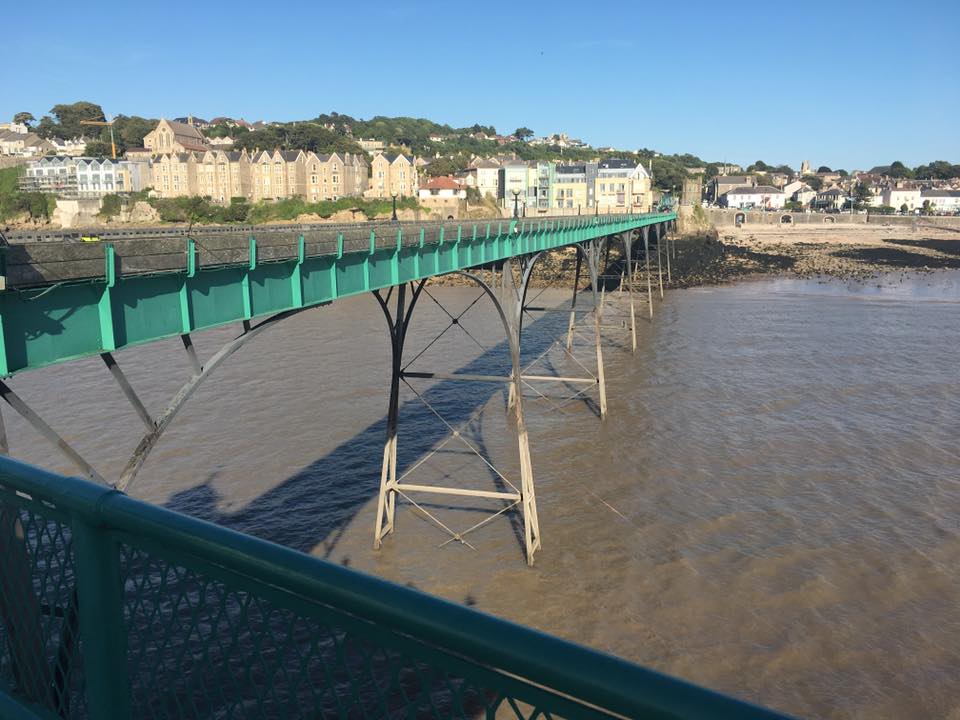
After work on the first day I drove to the nearby seaside down of Clevedon, which is home to England’s only grade 1 listed pier, built in 1869. Sir John Betjeman described the pier as “the most beautiful pier in England”.

On the return from my brief visit to Clevedon I made sure to plot a route to the hotel that would take me over the Clifton suspension bridge, which was a highlight of the trip.

I’ve always wanted to see this iconic structure, and it didn’t disappoint. I parked the car up on the west side before crossing and walked over the bridge, and up to the Clifton Observatory. The observatory provides the perfect view of the bridge and the Avon Gorge which it spans.
After a while taking in the views I went to pay my toll, then returned to the car to cross and find my way back to the airport and hotel.

A front-facing passenger’s eye view of me driving my Morris Minor over the Clifton suspension bridge in Bristol
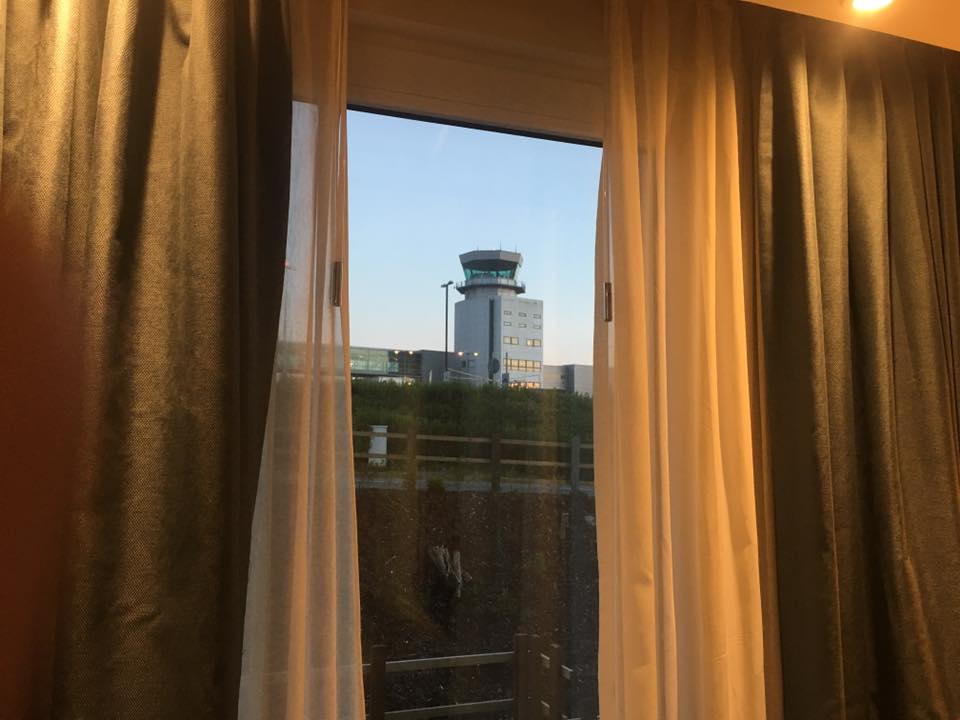
A room with a view

Holes!

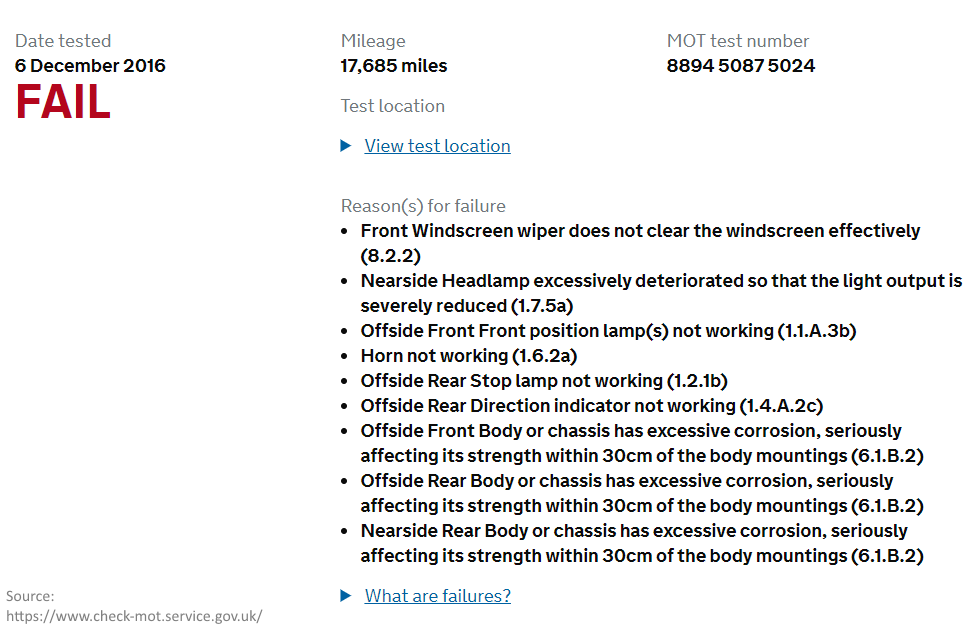
On 6th December 2016 the car failed an MOT for a number of reasons. A fair few issues on the car were relating to the state of the underneath, or the lack of an underneath in some places!

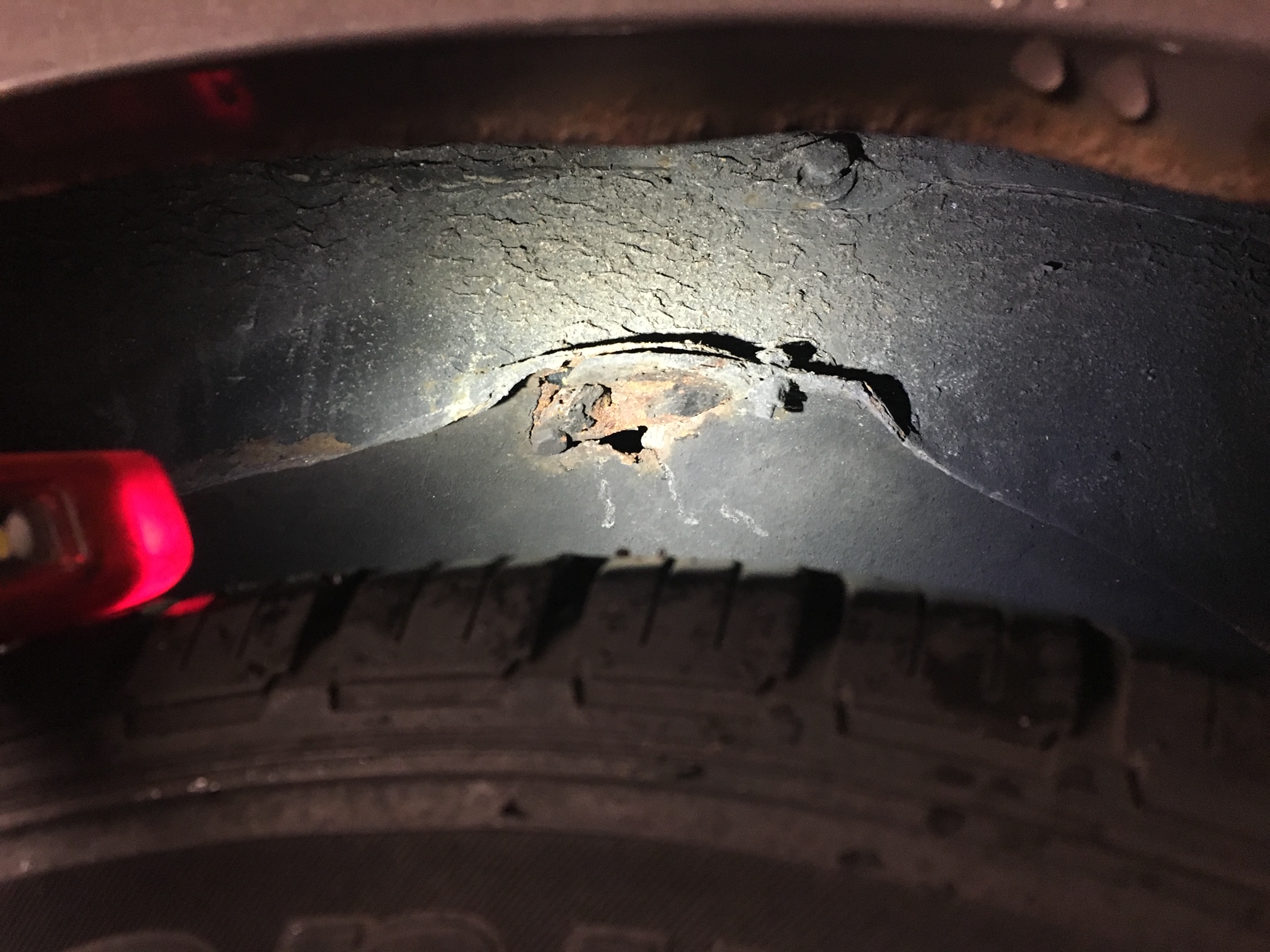
The inside of the driver’s side front wheel arch – in this image you can see the remnants of where the rubber bump-stop should be – I didn’t know about this at the time and the garage simply plated-over the hole.
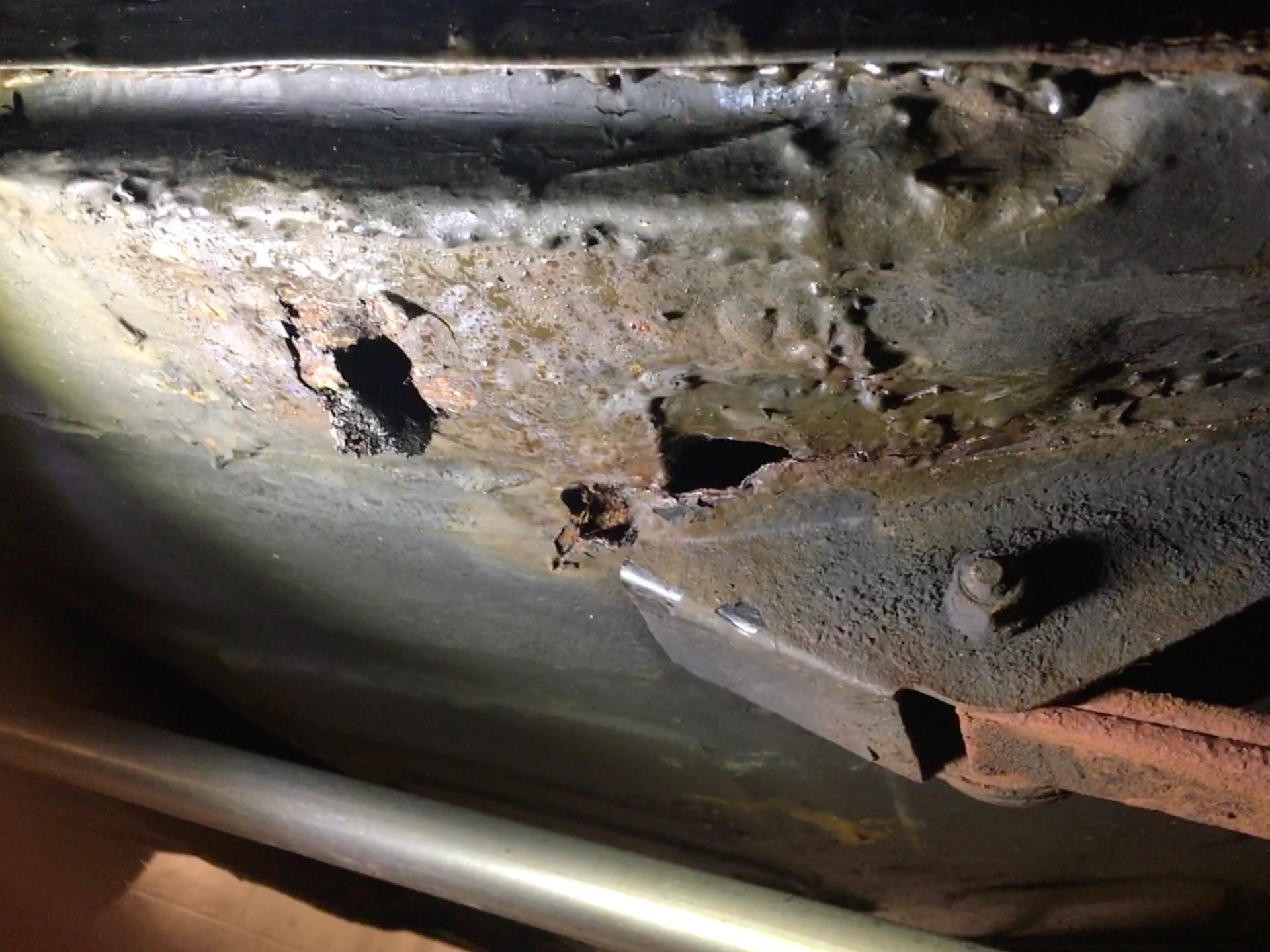
The rear of the car hadn’t fared much better! (Photo from passenger side)

The metal around the front leaf spring mount was severely corroded, and there were holes you could poke your finger through. It looks like it was about one speed-bump or pothole away from disaster!

I had this replaced with a new repair panel.

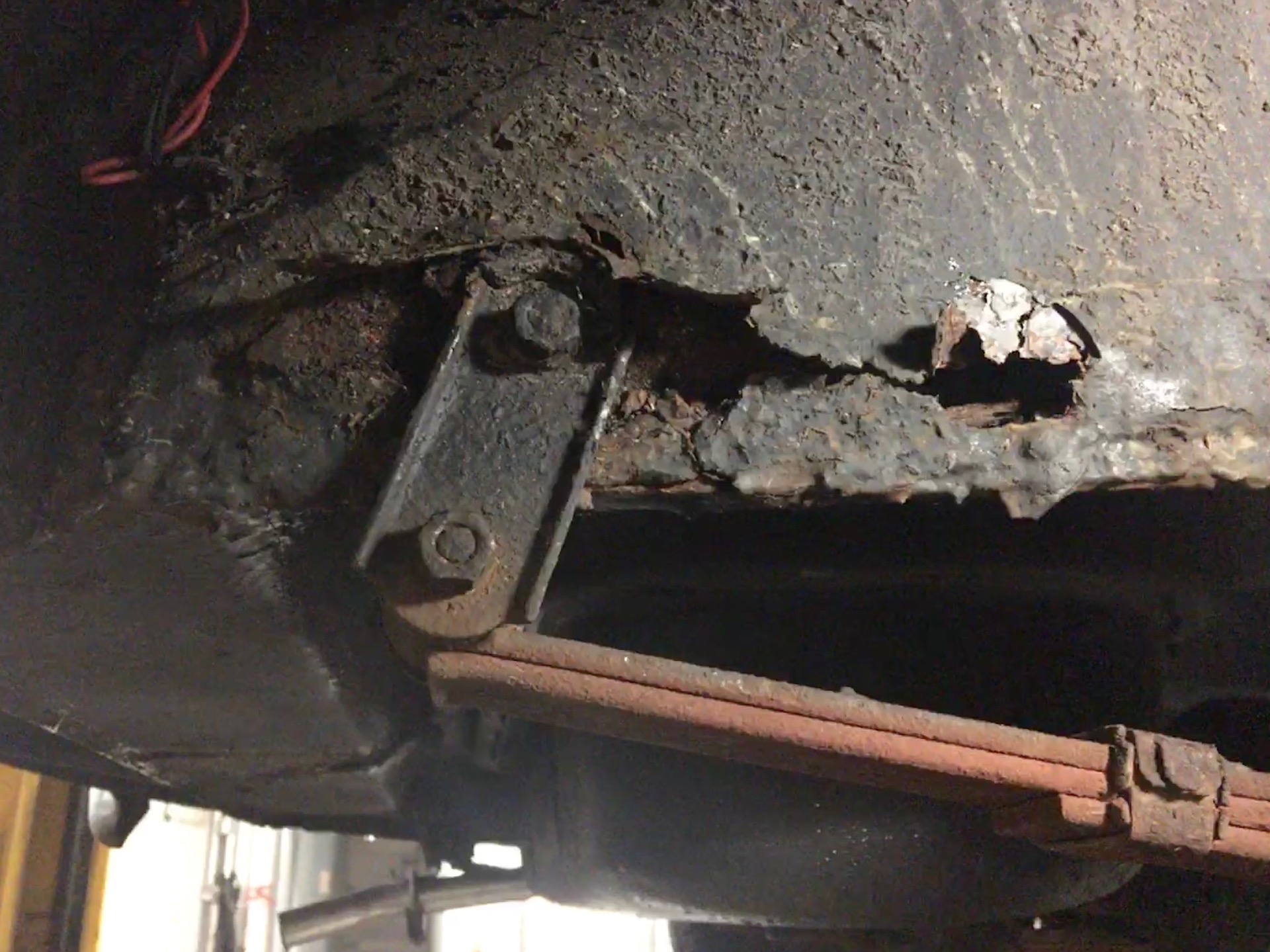
The rear leaf spring mount wasn’t a lot better! Again, this was repaired.

A complete circuit of the M25

Travelling in style

Over the weekend of 30th-31st July 2016 I put the car to its first real test. Previously I had driven to Southend, which is about 70 miles, but on this trip some friends and I drove to Brighton, via Southend, travelling clockwise around the M25 and over Dartford’s Queen Elizabeth II Bridge, racking up about 160 miles in all. We returned home the following day, continuing clockwise, bringing the total round-trip to over 260 miles.

The car didn’t miss a beat and the trip was successful, if not somewhat tiring.

On the way home I found an 1950 AEC Regent III bus in a service station and couldn’t resist a side-by-side photo. This particular bus was built in 1950, although the prototype of the design was produced as early as 1938, and the last of these buses operated in London until 1979.